


A New Frontier in Cybersecurity Auditing
The digital asset landscape is facing a significant wake-up call. A coordinated effort by a team of sixteen developers has utilized advanced AI models to scan Bitcoin wallets, cryptographic libraries, and core infrastructure. The results have been staggering: in just over twenty-four hours, the audit identified 4,962 total findings across 390 different Bitcoin-related projects.
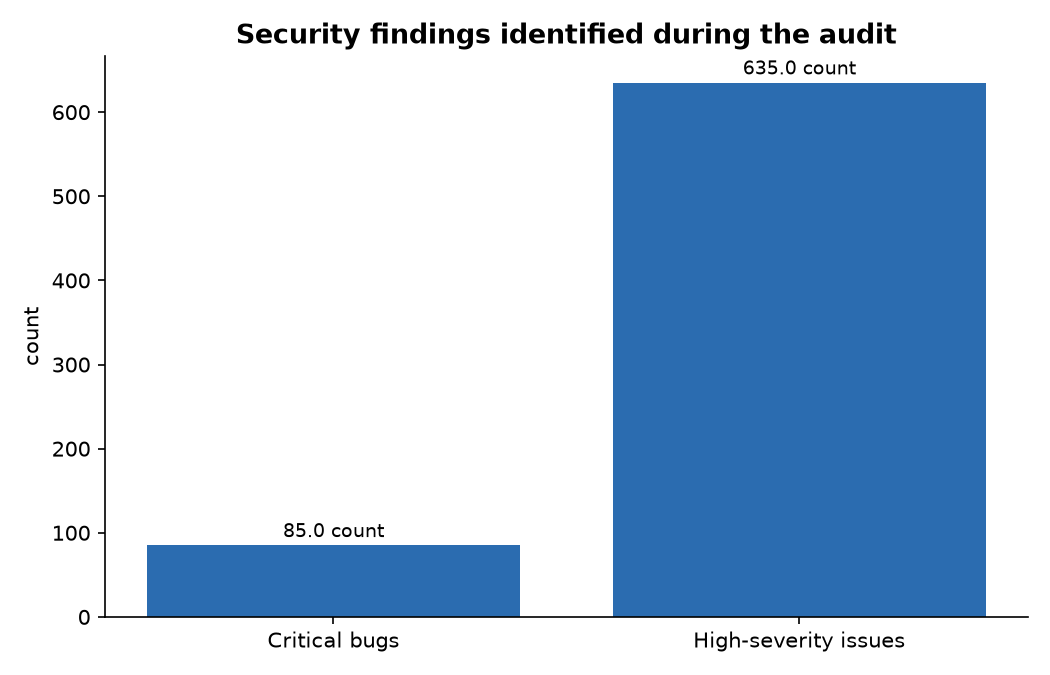
The scale of these discoveries is unprecedented. The audit flagged 85 critical vulnerabilities and 635 high-severity issues. While many of these flaws have already been verified by project owners through local proof-of-concept testing, the sheer volume of reports is creating significant logistical challenges for ecosystem maintainers.
The Role of Artificial Intelligence in Threat Detection
This audit represents a shift in how blockchain security is managed. By leveraging AI, developers can scan vast amounts of code and infrastructure far faster than human auditors alone. However, the process is currently a hybrid approach, requiring manual oversight to guide the AI models and manage the influx of data.
The developers involved noted that while the ability to find bugs is accelerating, the primary bottleneck has shifted from discovery to coordination. The challenge now lies in efficiently routing these critical findings to the correct maintainers before they can be exploited by malicious actors.
A Growing Race Between Defenders and Attackers
This surge in automated auditing comes at a sensitive time for the industry. The ecosystem is already recovering from previous vulnerabilities, such as recent hardware wallet flaws that allowed for significant unauthorized fund movements. The reality is that as defensive teams adopt AI to secure networks, bad actors are also gaining access to similar tools.
Recent industry observations confirm this trend. AI models have already demonstrated the ability to find long-dormant flaws in widely used encryption software—flaws that protect everything from banking connections to internet servers—often at a negligible cost. This arms race highlights a critical truth: as software complexity increases, the tools used to defend it must evolve even faster.
Looking Ahead: Version 1.0
The current audit is viewed by its organizers as merely a first iteration of a much larger potential capability. As automated harnesses improve and the ability to filter through the ‘noise’ of automated reports increases, the industry can expect even more frequent and comprehensive security reviews. For the Bitcoin ecosystem, this means a more rigorous, albeit chaotic, path toward long-term stability and security.