

A Drastic Shift in Crypto Derivative Returns
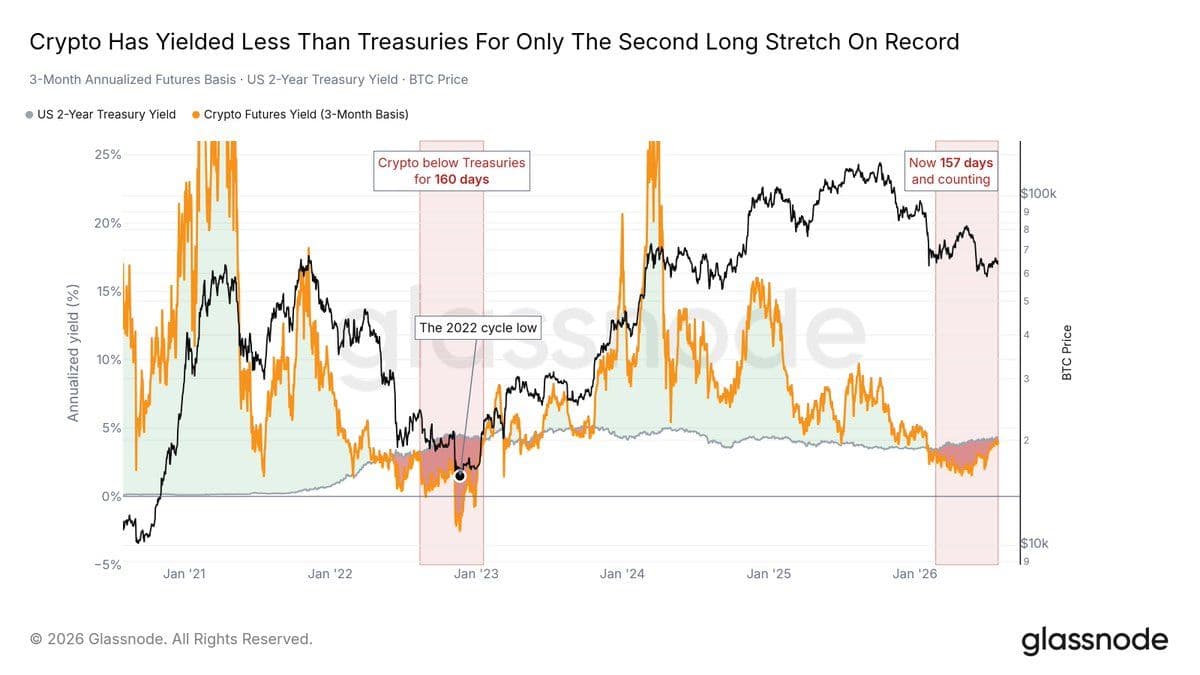
For a significant period, the Bitcoin futures market offered a lucrative environment for traders seeking high yields. It was not uncommon to see annualized returns exceeding 20%, making it an incredibly attractive option for those looking to capitalize on the volatility of the digital asset market. However, recent market shifts have triggered a dramatic collapse in these yields.
The volatility that once fueled these high returns appears to have stabilized in a way that has compressed the premium on futures contracts. This shift represents a fundamental change in how the market prices risk and opportunity in the crypto-derivative space.
The Comparison with Traditional Finance
What makes this collapse particularly striking is the comparison with traditional financial instruments. In previous cycles, the yield gap between Bitcoin derivatives and traditional fixed-income assets was vast. Today, that gap has narrowed significantly.
Current data suggests that the yield on Bitcoin futures has dropped so sharply that it now sits below the returns offered by standard Treasury notes. For institutional investors who typically weigh crypto-assets against low-risk benchmarks, this change alters the risk-reward calculus significantly. When the ‘risk premium’ of Bitcoin derivatives falls below that of government-backed securities, the incentive to hold leveraged positions in the crypto market diminishes.
Key Factors Driving the Decline
- Increased Market Maturity: As more institutional liquidity enters the market, the inefficiencies that once allowed for massive yields are being smoothed out.
- Volatility Compression: A reduction in the expected magnitude of price swings directly impacts the funding rates and yields associated with futures contracts.
- Competitive Benchmarking: As digital assets become more integrated into broader portfolios, their performance is increasingly measured against traditional safe-haven assets.
As the market continues to evolve, the era of extreme, double-digit yields in the futures market may be giving way to a more stable, albeit less explosive, trading environment.