


The Genesis of the BIP-110 Split
The Bitcoin ecosystem recently witnessed a rare and controversial event: a chain split triggered by the implementation of Bitcoin Improvement Proposal-110 (BIP-110). This proposal seeks to restrict the use of transaction data for non-financial purposes, such as storing text or images, for a one-year period. Proponents argue this is essential to prevent network congestion and keep transaction costs low for actual payments. However, critics view this as an infringement on the freedom of users to utilize the space they pay for.
A Stalled Chain: The Technical Reality
While the split was intended to create a new path for the protocol, the reality on the ground has been underwhelming. Shortly after the split, the new chain produced only two blocks before grinding to a halt. This lack of activity is largely due to the fundamental mechanics of Bitcoin mining.
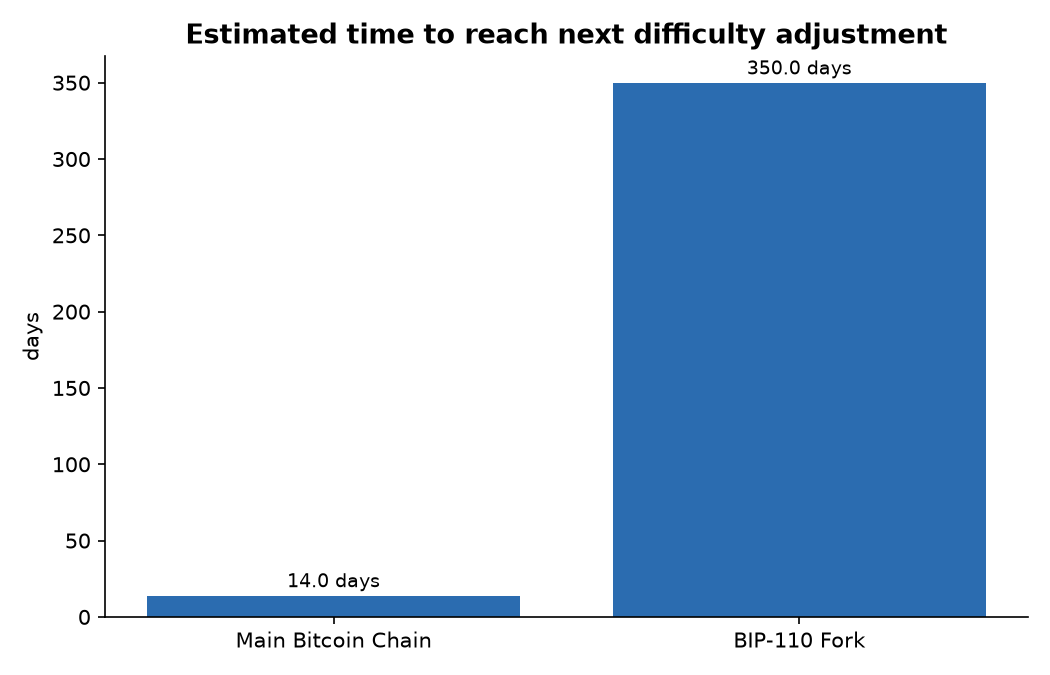
Bitcoin adjusts its mining difficulty every 2,016 blocks to ensure a consistent ten-minute interval between new blocks. Because the breakaway chain possesses only a tiny fraction of the total network computing power, it cannot generate blocks at a functional pace. Based on current activity, the new chain is projected to take hundreds of days to reach its next difficulty adjustment, whereas the main network typically completes this cycle in about two weeks.
Key Divergence in Block Production
- Main Bitcoin Chain: Maintains a steady rhythm, completing cycles in approximately 14 days.
- BIP-110 Fork: Estimated to take roughly 350 days to reach the next adjustment due to minimal hash power.
Risks and Economic Implications
The split introduces significant complexities for market participants. Because both the original chain and the new fork initially accept the same set of transactions, a unique vulnerability arises. A user could theoretically send funds on the fork and simultaneously broadcast the same transaction on the main chain, creating a potential double-spend or arbitrage risk that requires careful monitoring.
Furthermore, the lack of block production makes the fork nearly useless for commerce. With blocks arriving only every few hours rather than every ten minutes, the time required to confirm a transaction is far too high for practical use. For a chain that was meant to optimize the network, this slow confirmation speed achieves the exact opposite of its intended goal.