


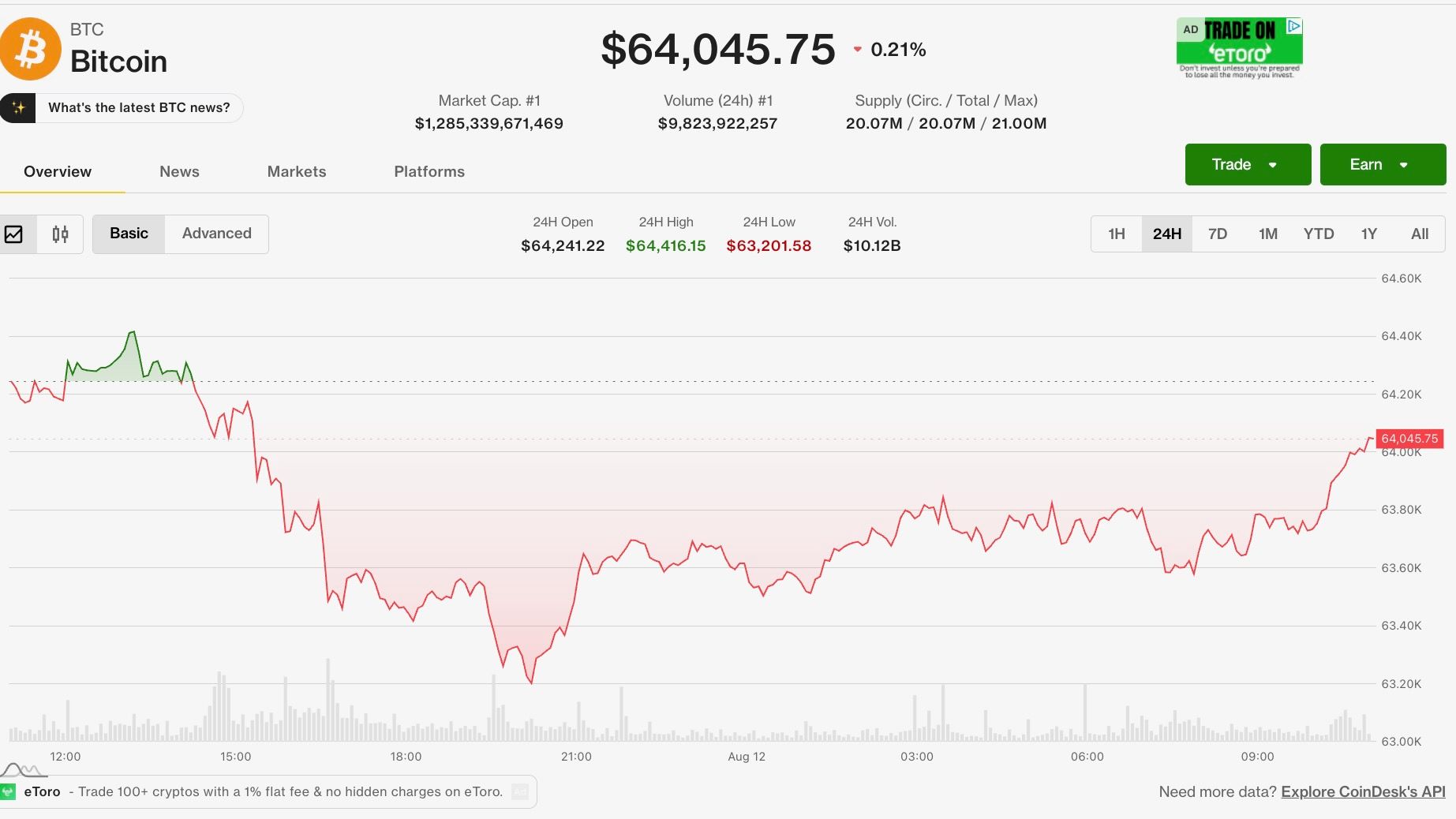
A Wait-and-See Approach for Bitcoin
Bitcoin has entered a phase of consolidation, maintaining its value near the $64,000 threshold. This sideways movement suggests that major market participants are taking a defensive stance, waiting for clearer signals from the traditional financial sector. The primary driver of this uncertainty is the upcoming release of U.S. inflation data, which is expected to influence the Federal Reserve’s future monetary policy decisions.
For crypto investors, inflation figures are a critical barometer. Higher-than-expected inflation could lead to prolonged high interest rates, which typically pressures risk-on assets like Bitcoin. Conversely, cooling inflation might pave the way for a more dovish central bank, potentially fueling a new rally in the digital asset space.
Security Breaches and Altcoin Volatility
While the flagship cryptocurrency finds stability, the broader altcoin market is facing its own set of hurdles. Recent security exploits in certain decentralized networks have introduced a layer of volatility and skepticism among retail investors. Such incidents often trigger a chain reaction, causing sudden price fluctuations across various smaller-cap tokens as traders move to secure their holdings or exit risky positions.
The intersection of macroeconomic data and network security creates a complex environment for traders. While Bitcoin often acts as a bellwether for the entire sector, the technical vulnerabilities found in specific altcoin protocols can cause localized turbulence that disrupts the overall market sentiment.
Key Market Drivers to Watch
- U.S. Macroeconomic Data: Inflation reports remain the most significant catalyst for near-term price direction.
- Network Security: The ability of blockchain protocols to withstand exploits is crucial for maintaining long-term investor confidence in altcoins.
- Liquidity Trends: Market participants are closely monitoring how capital flows between fiat currencies and digital assets in response to central bank signals.