

Market Overview
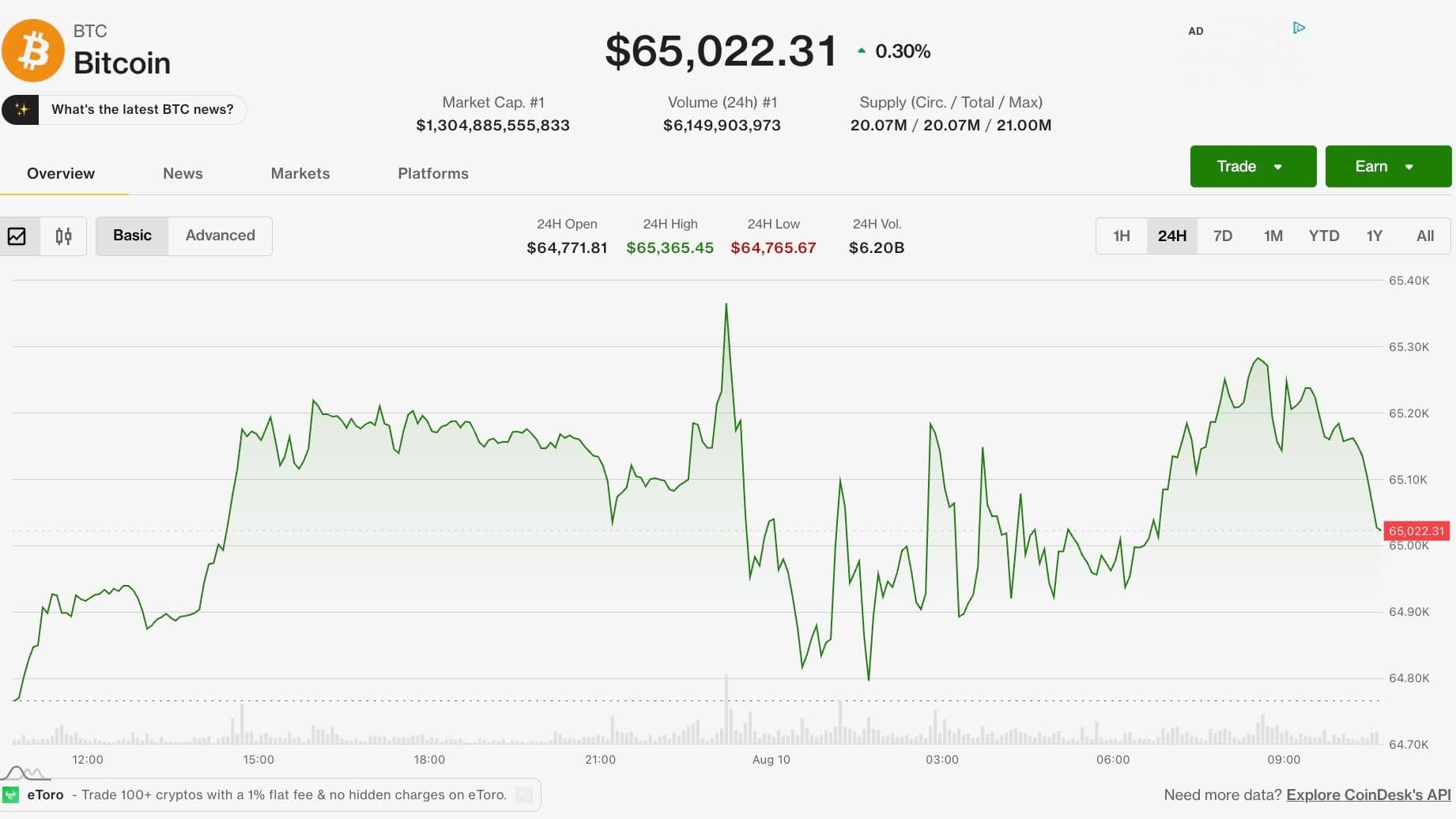
For the past week, Bitcoin traders have watched a steady climb that has kept the digital currency above the psychological barrier of $65,000. The rally has been accompanied by a subtle shift in risk sentiment across global markets, as investors look beyond short‑term volatility to longer‑term fundamentals.
The Geopolitical Backdrop
At the core of this market lull are ongoing discussions between Iran and Oman regarding navigation rights and potential sanctions relief in the Strait of Hormuz—a chokepoint that supplies roughly 20% of the world’s petroleum. Historically, any hint of tension in the region has prompted a flight to safe havens, such as gold, Treasury bonds, and, increasingly, cryptocurrencies.
Why the Strait Matters
- It is one of the world’s busiest maritime corridors, with a daily throughput of more than 5 million barrels of oil.
- A disruption could trigger a sharp rise in oil prices, which would ripple through equity markets and inflation expectations.
- The region is a flashpoint where geopolitical and economic issues intersect, making it a frequent source of market stress.
Bitcoin’s Resilience in a Volatile Landscape
Bitcoin’s price movement suggests that the cryptocurrency has entered a phase of relative stability. While the market still displays short‑term swings—often as a reaction to macro news—the long‑term trend shows a steady upward trajectory. This resilience is partly due to the growing perception of Bitcoin as a digital store of value, especially when traditional assets feel pressured by geopolitical uncertainty.
Key Drivers Behind the Upswing
- Increased institutional interest, with several hedge funds adding Bitcoin to their portfolios.
- Positive sentiment from global regulators, who are tightening frameworks yet maintaining a balanced approach to innovation.
- Improved liquidity in major exchanges, which has reduced the impact of large sell orders on price.
Risk Asset Rally and Broader Market Implications
As investors feel less compelled to seek absolute safety, risk assets across the board have experienced a modest rebound. Equity indices in the United States and Europe have posted gains, while commodity prices—particularly oil—have stabilized below the $80 per barrel mark. This dovetailing of positive sentiment across multiple asset classes is a sign that the market is moving away from a purely defensive posture.
What This Means for Investors
- Diversification: Bitcoin continues to offer a hedge against traditional market swings, but it should be part of a broader portfolio.
- Timing: The current steadiness presents a window for traders to consider long‑term positions, bearing in mind that volatility can resurface.
- Regulatory Landscape: Ongoing dialogue between nations may influence policy decisions that could either support or constrain digital assets.
Looking Ahead
While the current environment feels more tempered, the global market will remain sensitive to any flashpoint in the Middle East. Should diplomatic progress falter or unexpected geopolitical events arise, Bitcoin could revert to a more defensive asset, with prices potentially dipping below $60,000. Conversely, sustained diplomatic success could push the digital currency toward new highs, as market participants look for inflation‑protected alternatives in an uncertain world.
In the meantime, investors and traders should keep a close eye on geopolitical developments, regulatory announcements, and macroeconomic data to navigate the evolving landscape with informed confidence.