

Old Wallets Wake Up
Several Bitcoin addresses that have sat untouched for over a decade suddenly became active this month, moving roughly $40 million worth of the cryptocurrency. The reactivation of these aging wallets reignited familiar debates about whether Bitcoin’s earliest supporters are finally liquidating their holdings.
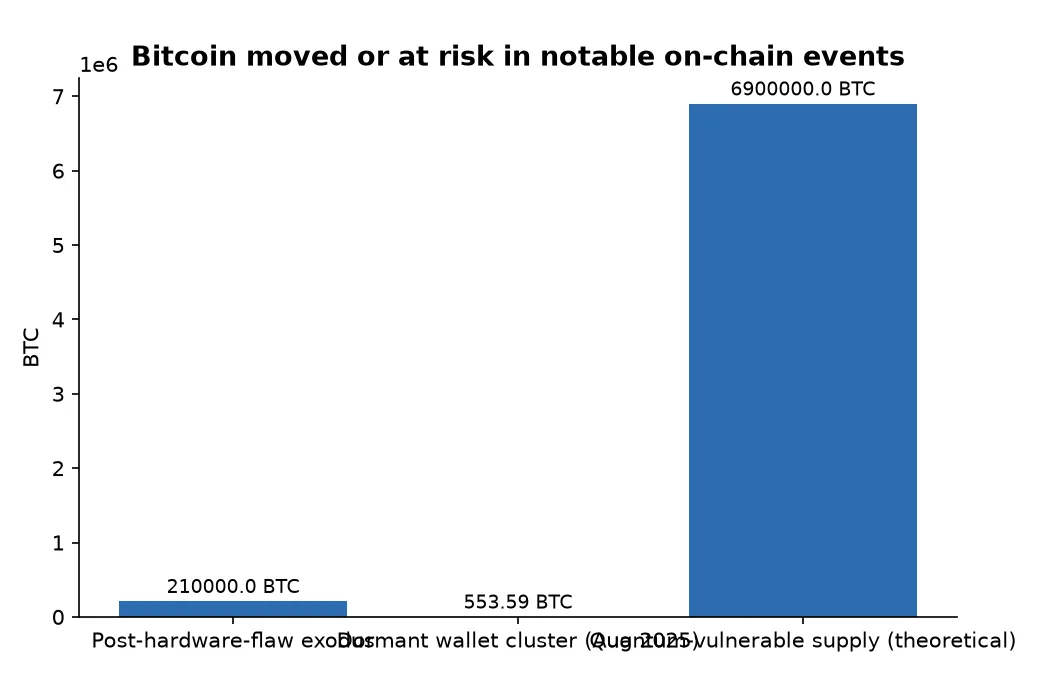
Six wallets, last active between 2011 and 2014, collectively transferred 553.59 BTC in late August. One of those addresses had not moved a single coin in more than 15 years. While such movements often trigger alarm among traders, the broader on-chain data paints a calmer picture.
The Bigger Picture Shows a Slowdown
Overall, the volume of dormant Bitcoin shifting on-chain dropped in the second quarter to its lowest level since late 2022. This slowdown followed two exceptionally active years in which old coins moved at rates comparable only to the 2017 bull run, a period widely described as a major redistribution phase. Current projections suggest that 2026 will see less than half the dormant Bitcoin turnover recorded in 2025.
Importantly, on-chain movement does not equal selling. The blockchain records coins leaving one address and arriving at another, but it cannot reveal whether the owner sold, switched wallets, transferred to a custodian, or simply reorganized holdings.
Where the Coins Actually Went
Five of the six reactivated wallets this month sent their Bitcoin to addresses with no known ties to exchanges. The sixth transferred 40 BTC to a German digital asset custody and trading platform. This pattern suggests that reorganization and security upgrades — not profit-taking — may be the primary motivations behind these transfers.
Some of these wallets are connected to a New York legal dispute in which a pseudonymous plaintiff is seeking control of Bitcoin held across tens of thousands of dormant addresses under the state’s abandoned property laws. The plaintiff has sent small amounts of Bitcoin to those addresses alongside on-chain legal notices, arguing the coins could be classified as abandoned if no ownership claim is established.
A Hardware Wallet Flaw Added Fuel
A separate catalyst for old-wallet movement emerged in late July, when a vulnerability in certain hardware wallets was disclosed. In the week following the disclosure, a large volume of Bitcoin left wallets categorized as long-term holdings. The flaw made poorly generated cryptographic keys easier to crack, prompting many users to transfer their coins into freshly created wallets or regulated custody — even if their own funds were not directly compromised.
The Quantum Question Keeps Surfacing
The quantum computing debate also resurfaces whenever ancient Bitcoin moves. A significant portion of the total supply could theoretically be at risk if future quantum computers break the cryptography protecting current digital signatures. However, industry researchers note that none of the large holders they work with have cited quantum concerns as a reason to sell, though some institutional investors have mentioned quantum risk as a reason to hesitate before buying.