

The Case for Monetary Easing
As Brazil navigates a complex economic landscape, the heads of the country’s largest banking institutions are making a unified plea for further monetary easing. Following a recent decision by the central bank to lower benchmark rates, top executives suggest that the current restrictive stance has already begun to yield the desired results, specifically regarding inflation control.
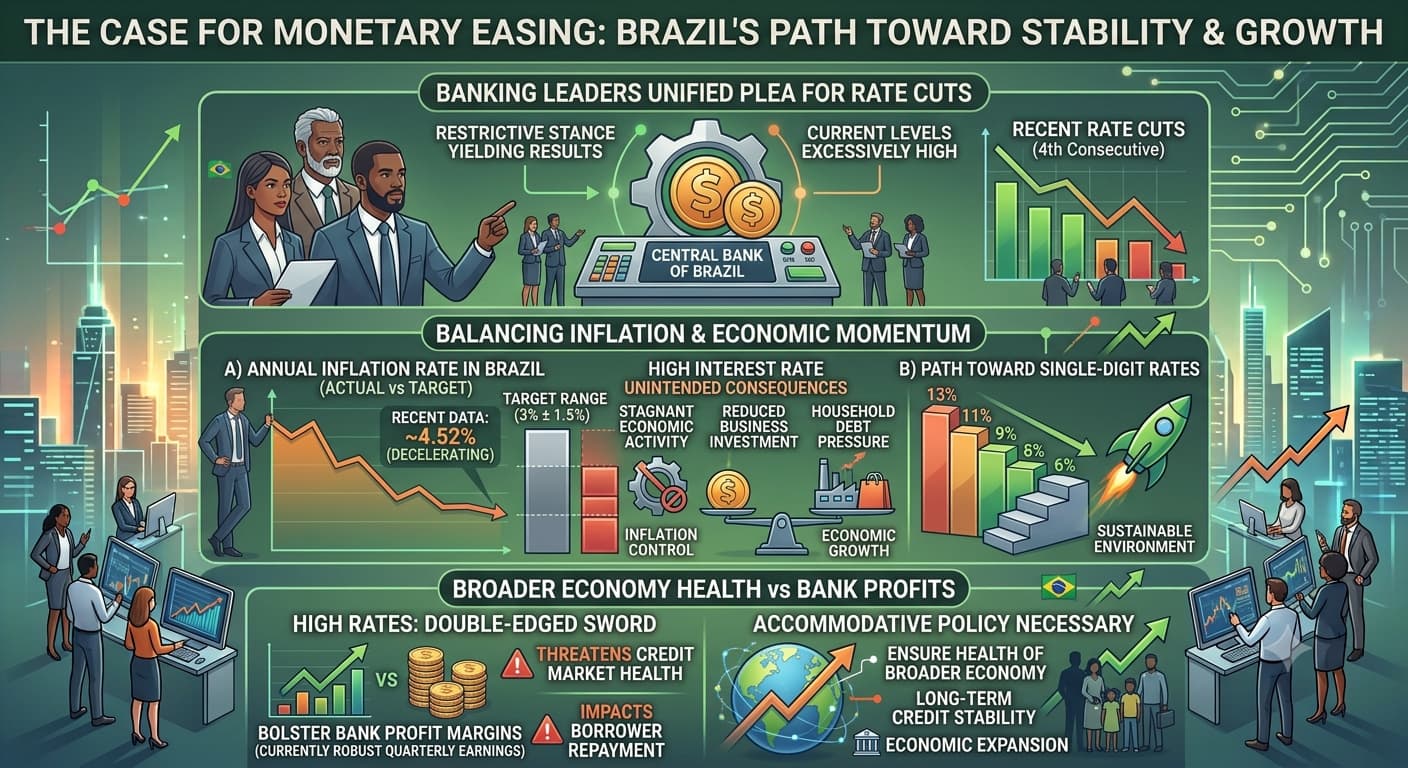
The recent move to reduce rates by 25 basis points marks the fourth consecutive cut, a response to cooling economic indicators and a noticeable slowdown in inflationary pressures. While the central bank’s actions are aimed at stabilizing prices, banking leaders argue that the current levels remain excessively high by global standards.
Balancing Inflation and Economic Momentum
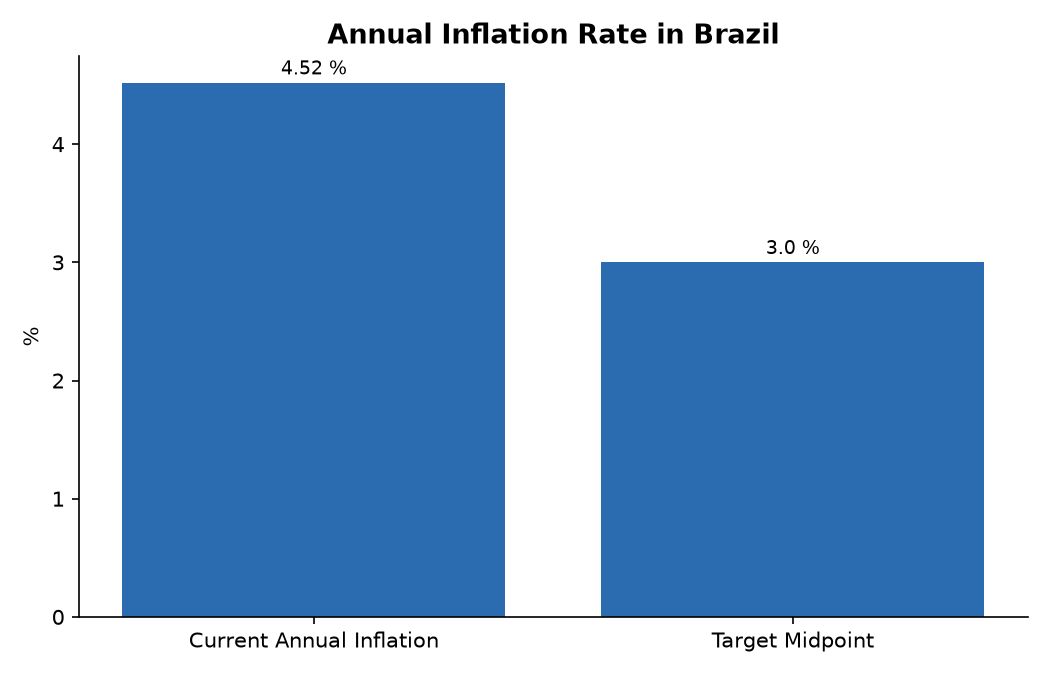
The primary objective for policymakers has been the containment of inflation. Recent data shows that annual inflation has decelerated to approximately 4.52%, moving closer to the official target range of 3% (with a margin of error of 1.5 percentage points).
However, the banking sector warns that maintaining high interest rates for too long could create unintended consequences, such as:
- Stagnant Economic Activity: High borrowing costs act as a brake on overall market movement.
- Reduced Business Investment: Increased capital costs discourage companies from expanding operations.n
- Household Debt Pressure: High rates exacerbate the burden on families, limiting consumer spending power.
The Path Toward Single-Digit Rates
Financial leaders are pushing for a strategic shift toward bringing interest rates down to single-digit levels. This transition is seen as vital for creating a sustainable environment for long-term borrowing and economic expansion.
While high interest rates traditionally bolster bank profit margins, the current environment is proving to be a double-edged sword. Despite robust quarterly earnings reported by major lenders, there is a growing consensus that a more accommodative monetary policy is necessary to ensure the health of the broader economy and the long-term stability of the credit market.