


The Bond Market Trigger
Bitcoin recently experienced a rapid price jump of approximately 25%, climbing past $78,000. While crypto markets are often driven by internal narratives, this specific rally was sparked by an external factor: the U.S. Treasury’s decision to increase its buyback operations for long-dated government bonds. By doubling the operation size from $2 billion to $4 billion, the government effectively eased pressure on the long end of the yield curve.
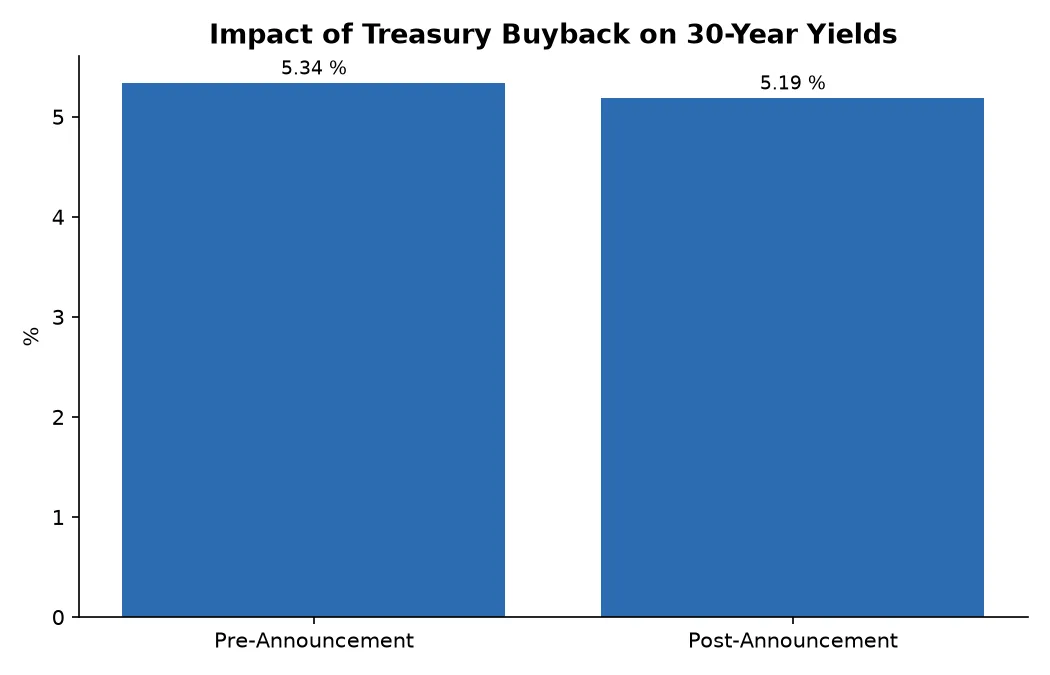
This move caused the 30-year Treasury yield to drop from a 19-year peak of 5.34% to around 5.19%. While this is not quantitative easing (QE)—as it manages existing debt rather than creating new reserves—it sent a powerful signal to investors that the government was stepping in to support liquidity.
The Battle Between Yields and Volatility
To understand why a bond tweak affects Bitcoin, one must look at the concept of the « hurdle rate. » U.S. Treasuries are considered among the safest assets globally. Because Bitcoin provides no native yield or interest, it must offer a significantly higher potential return to attract investors away from « risk-free » government bonds.
When Treasury yields are exceptionally high, the opportunity cost of holding Bitcoin increases. Investors can earn a guaranteed return for doing very little, making volatile assets less attractive. Consequently, when yields dip, the relative appeal of Bitcoin rises, encouraging capital to move further up the risk curve.
A ‘Pressure Valve’ Effect
Market analysts suggest that while the Treasury’s move provided the spark, the fuel was already present in the form of heavily skewed trader positioning. A massive amount of bearish bets—roughly $4 billion in short positions—were liquidated in a matter of days. This created a « short squeeze, » where rising prices forced bears to buy back their positions, further accelerating the upward momentum.
Some experts argue that the market may have overreacted, treating a minor liquidity tool as a total regime change in macroeconomic policy. The real test for Bitcoin will be whether it can maintain its current levels if long-term yields begin to climb again, particularly if the 10-year yield exceeds 4.7% or the 30-year returns toward 5.3%.
Supporting Tailwinds: ETFs and Politics
The bond market wasn’t the only factor at play. Bitcoin’s momentum was bolstered by significant institutional demand, with spot Bitcoin ETFs seeing net inflows of approximately $650 million in a single week. Additionally, positive political rhetoric regarding U.S. leadership in digital assets and potential legislative progress on market structure bills have provided a psychological boost to investors.
Ultimately, Bitcoin has managed to clear the critical technical threshold of its 200-day moving average (around $69,000). The challenge now is to transform this previous resistance level into a solid floor of support while competing with government bonds that still offer attractive yields.