


Revolutionizing the Development Lifecycle
For many tech giants, artificial intelligence is often seen through the lens of consumer-facing chatbots. However, Airbnb is taking a more structural approach by embedding AI into its internal engineering processes. The company’s leadership recently revealed that AI-assisted coding now accounts for a significant portion of their software development, fundamentally changing how they build products.
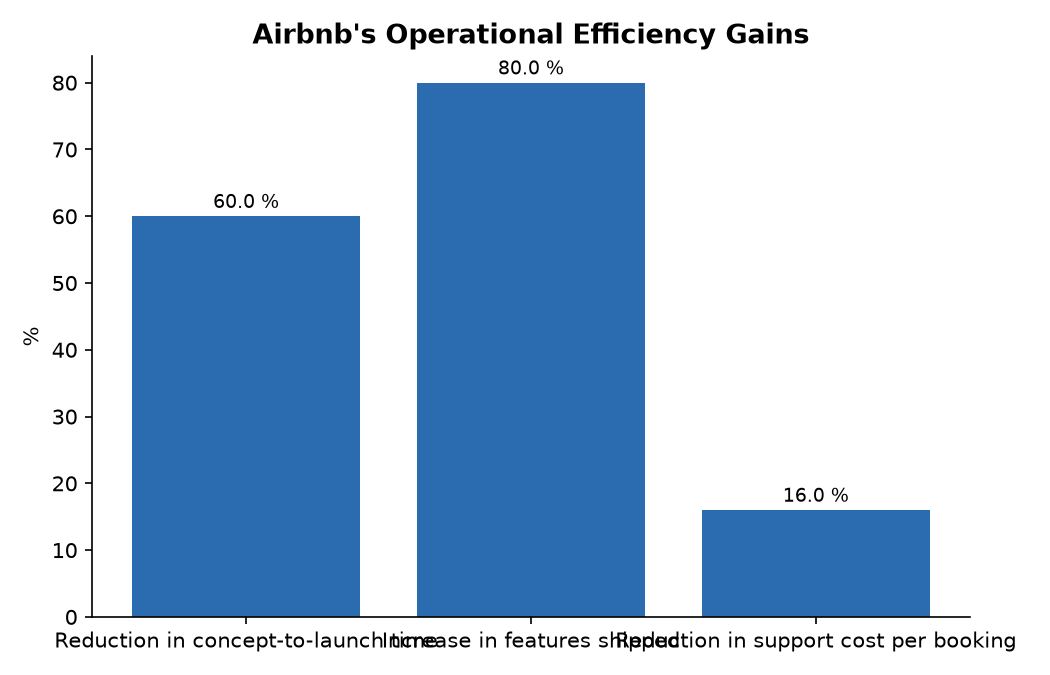
The impact on speed is staggering. According to recent executive statements, the time required to move from a product concept to a live feature has been slashed by as much as 60%. This efficiency boost has allowed the company to increase its output of new features and improvements by nearly 80% compared to the same period last year.
A Targeted Approach to AI Search
While internal productivity has soared, Airbnb has been more cautious with its consumer-facing AI tools. The company’s leadership has argued that a simple chatbot interface is not the ideal solution for travel planning. Instead, the focus has shifted toward enhancing search, discovery, and support through more intuitive, visual, and personalized experiences.
Airbnb is currently testing a new AI-driven search function. To avoid disrupting the existing user experience, they are implementing a toggle that allows travelers to switch between traditional filters and a natural language, conversational search mode. This new interface aims to provide real-time, personalized highlights for listings, making the discovery process more seamless and visual.
Scaling Support through Automation
Beyond the search bar, AI is playing a critical role in managing global operations, particularly in customer support. The company has expanded its AI-powered support agent to cover more than 50 languages, with plans to integrate voice capabilities in the near future.
The results of this automation are already visible in the company’s financial metrics. Nearly 45% of customer issues handled by the AI agent are resolved entirely without human intervention. This automation has directly contributed to a 16% year-over-year reduction in support costs per booking.
Strong Financial Momentum
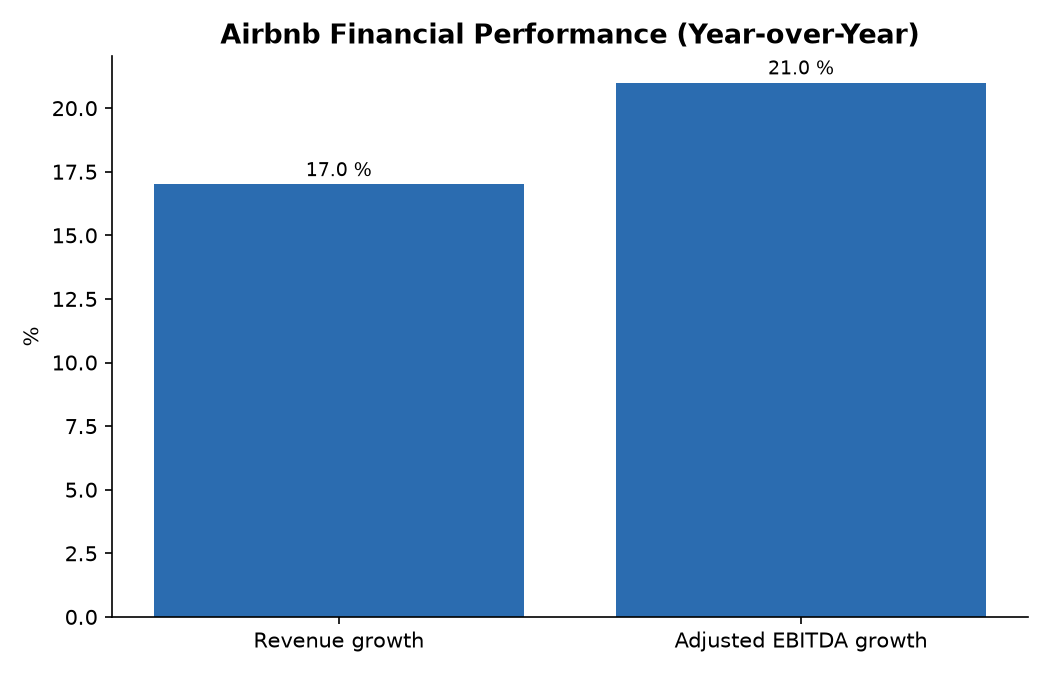
This technological evolution coincides with robust financial growth. For the quarter ending in June, the company reported a 17% year-over-year increase in revenue, reaching $3.6 billion. Additionally, adjusted EBITDA saw a significant jump of 21%, reaching $1.3 billion, signaling that the company’s focus on efficiency and innovation is translating into bottom-line success.