


The Clash of Protocols: BIP-110 and the Network Split
The Bitcoin network recently experienced a significant bifurcation following the introduction of BIP-110. This proposal aimed to temporarily restrict the inclusion of non-financial data—such as images and text—within blockchain transactions. While the initiative sought to streamline data usage, it encountered massive resistance from the mining community, failing to reach the necessary threshold for consensus.
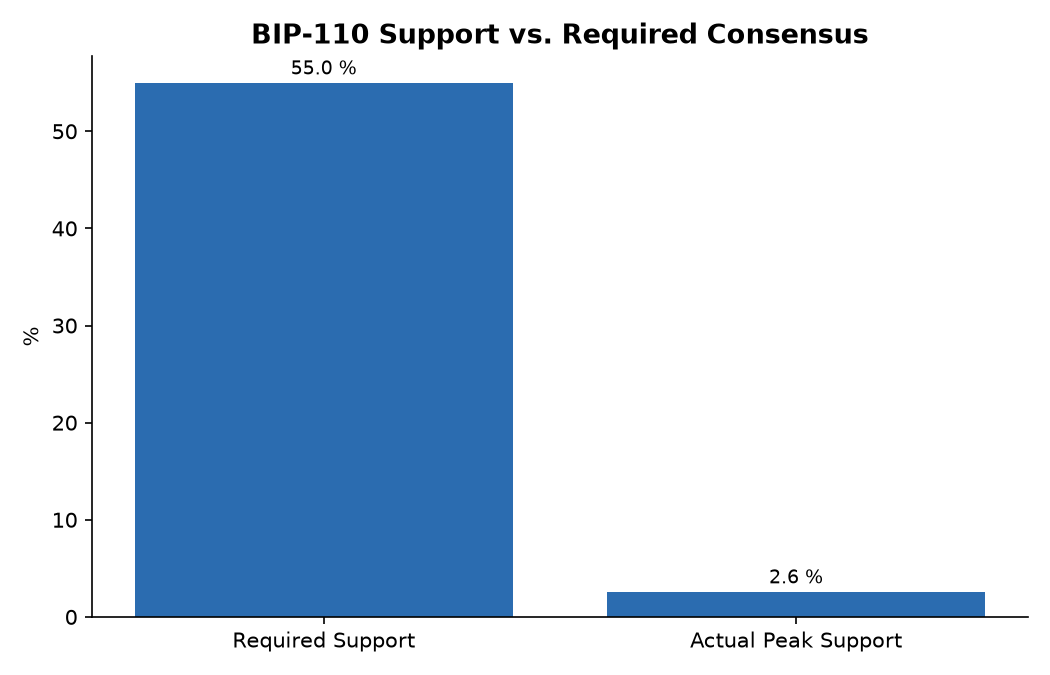
The threshold for adoption was set at 55% of the network’s hash rate, but actual support reached a mere 2.6%. This massive gap between the required consensus and actual mining activity led to a technical split, where computers running the new protocol began rejecting blocks that did not signal support for the change.
Individual Power vs. Pool Defaults
A fascinating aspect of this event was the emergence of individual miner agency. Typically, mining pools act as central coordinators, deciding which transactions are included in a block and which protocol signals are broadcast. This centralization allows for more efficient block discovery and shared rewards but limits the autonomy of individual operators.
However, new technological developments are shifting this balance. By utilizing specialized protocols designed to return control to the individual, certain operators were able to bypass the default settings of their mining pools. This allowed a specific miner to produce a block that explicitly rejected the BIP-110 signal, even while operating within a pool that had largely committed to the new proposal.
The Consequences of the Fork
The decision of individual miners to remain on the original chain had immediate consequences for the network’s stability. While the main blockchain continued its regular production of blocks, the minority branch—consisting of those attempting to enforce the new rules—struggled to maintain momentum.
The results of the split were stark. By the time the dust settled, the minority chain trailed significantly behind the main network, falling more than 200 blocks behind. This event serves as a critical case study for the future of decentralized governance, proving that as long as individual miners retain the technical ability to override pool-level decisions, the ultimate authority remains with the hash rate of the individual participants.