

The Quest to Make Fusion Fuel Faster
Fusion energy has long promised a clean, virtually limitless power source, but the road to a working plant has been paved with technical hurdles. Oneต critical step is the creation of the tiny fuel pellets that sit at the heart of a fusion reaction. Traditionally, building a single pellet takes days to a week, a pace that makes large‑scale production unfeasible.
From Weeks to Minutes: The Production Breakthrough
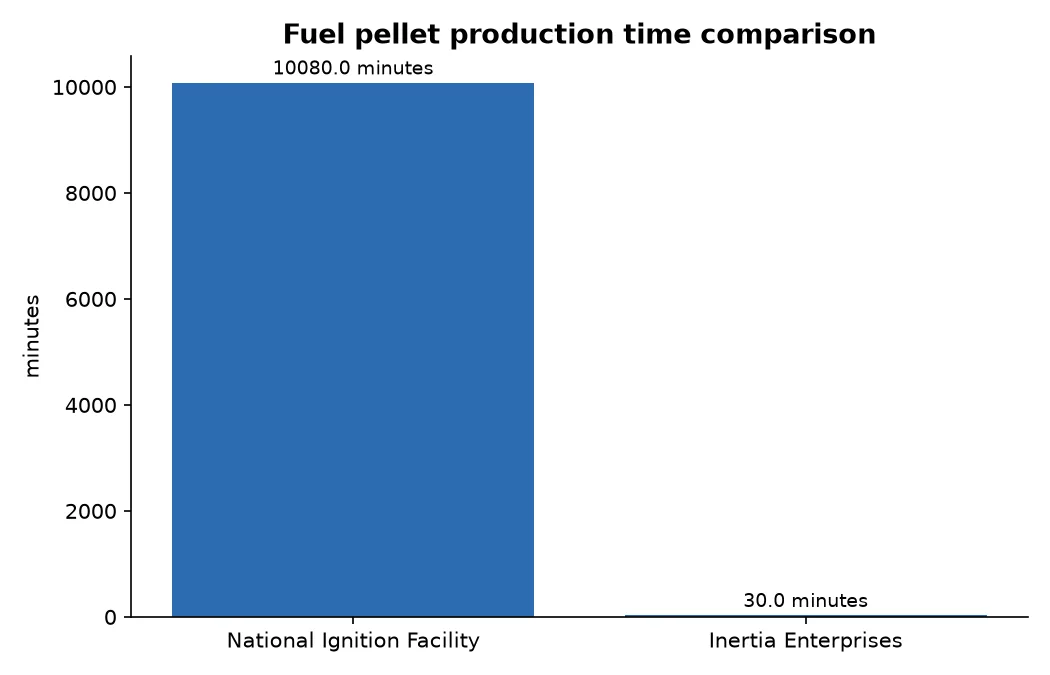
Inertia Enterprises has announced a process that shrinks pellet manufacture from several days to just minutes. By tightening the crystal‑growth stage to roughly 30 minutes—down from up to a week at the national test facility— the company can churn out a complete pellet in about two to three hours. The new method allows the entire production line to be scaled rapidly, a key requirement for a commercial plant that would need to produce thousands of pellets daily.
Why Speed Matters in the Fusion Economy
- Shorter production times reduce the need to store large inventories of radioactive tritium, lowering safety risks and costs.
- Rapid fabrication enables quicker iterations of pellet design, improving the chances of achieving efficient ignition.
- Lower production latency translates into a smaller, more cost‑effective infrastructure footprint.
Scaling Up: From Prototypes to Plant‑Scale Production
The startup’s journey began with prototype experiments that matched the output of the national test complex. To move from a handful of pellets a year to a factory line, Inertia hired engineers from leading consumer‑electronics firms, applying manufacturing efficiency lessons from high‑volume production lines.
Managing Tritium and Cost Efficiency
Tritium, the key isotope in fusion fuel, is both scarce and expensive—about $30,000 per gram—and only around 25 kilograms are held worldwide. By speeding up pellet creation, Inertia lessens the amount of tritium that must be on hand at any moment, cutting both radiation‑handling burdens and capital outlays. The company also plans to recycle tritium from the fusion reactions themselves, a strategy that will become viable only when production is fast enough to keep the reactor operating continuously.
Looking Ahead: Commercial Fusion Power on the Horizon
With the new manufacturing cadence, a full‑scale plant could operate at a rate of 10 fuel pellets per second, a figure that underscores how far the industry has come from the early experimental days. The combination of a powerful laser driver—four times the strength of the national facility’s laser—and a tolerant pellet design suggests that future reactors will be more robust and easier to maintain.
As the industry edges closer to a practical fusion power plant, innovations like Inertia’s rapid pellet production could be the decisive factor that turns a laboratory curiosity into a mainstream energy source.