

The New Legislative Assistant: AI in the Halls of Congress
Artificial intelligence is no longer a futuristic concept in the United States Capitol; it has become a practical tool for day-to-day legislative operations. Recent financial disclosures regarding House spending reveal that congressional staffers are increasingly relying on generative AI to manage the heavy workload inherent in governance.
From drafting social media updates to summarizing complex policy research, AI tools are being integrated into the very fabric of legislative workflow. These tools assist in preparing hearing materials, analyzing lengthy pieces of legislation, and even managing communications with constituents.
OpenAI Leads the Charge in Legislative Tech Spending
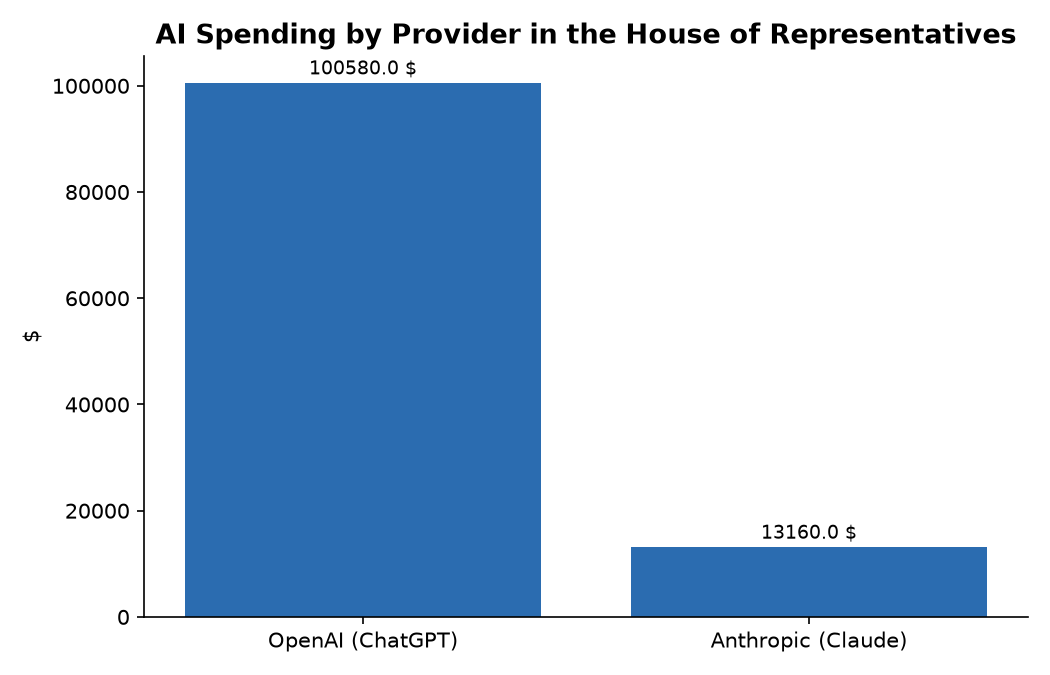
When examining the actual capital allocated to these technologies, one provider stands head and shoulders above the rest. Data from House disbursement records shows that OpenAI, the creator of ChatGPT, has captured the lion’s share of the budget dedicated to artificial intelligence within House offices and committees.
According to recent spending analysis, nearly 90% of all AI-related expenditures by House offices and institutional accounts were directed toward OpenAI. Out of a total AI spend exceeding $113,000, ChatGPT accounted for approximately $100,580 across hundreds of individual transactions. While other players like Anthropic’s Claude have gained a foothold, their current market share in the Capitol remains significantly lower.
The Political Divide in AI Investment
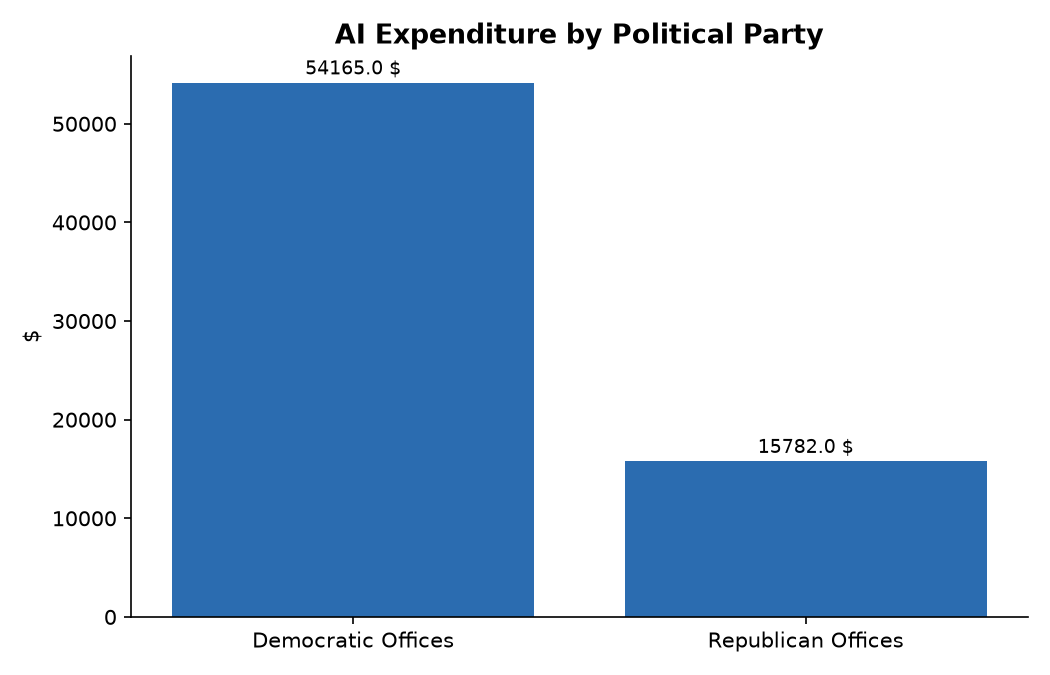
The data also highlights a notable disparity in how different political factions are approaching AI adoption. Democratic offices have shown a much higher level of financial commitment to these tools compared to their Republican counterparts. Records indicate that Democratic spending on AI reached over $54,000, nearly triple the amount invested by Republican offices.
It is important to note that these figures represent only a fraction of the true AI footprint in Washington. The current totals exclude any usage of free versions of these tools, as well as AI capabilities that are bundled into larger, existing software enterprise contracts. As these technologies become more sophisticated, the actual investment in AI-driven governance is likely to grow substantially.