

A Cautious Approach to Monetary Policy
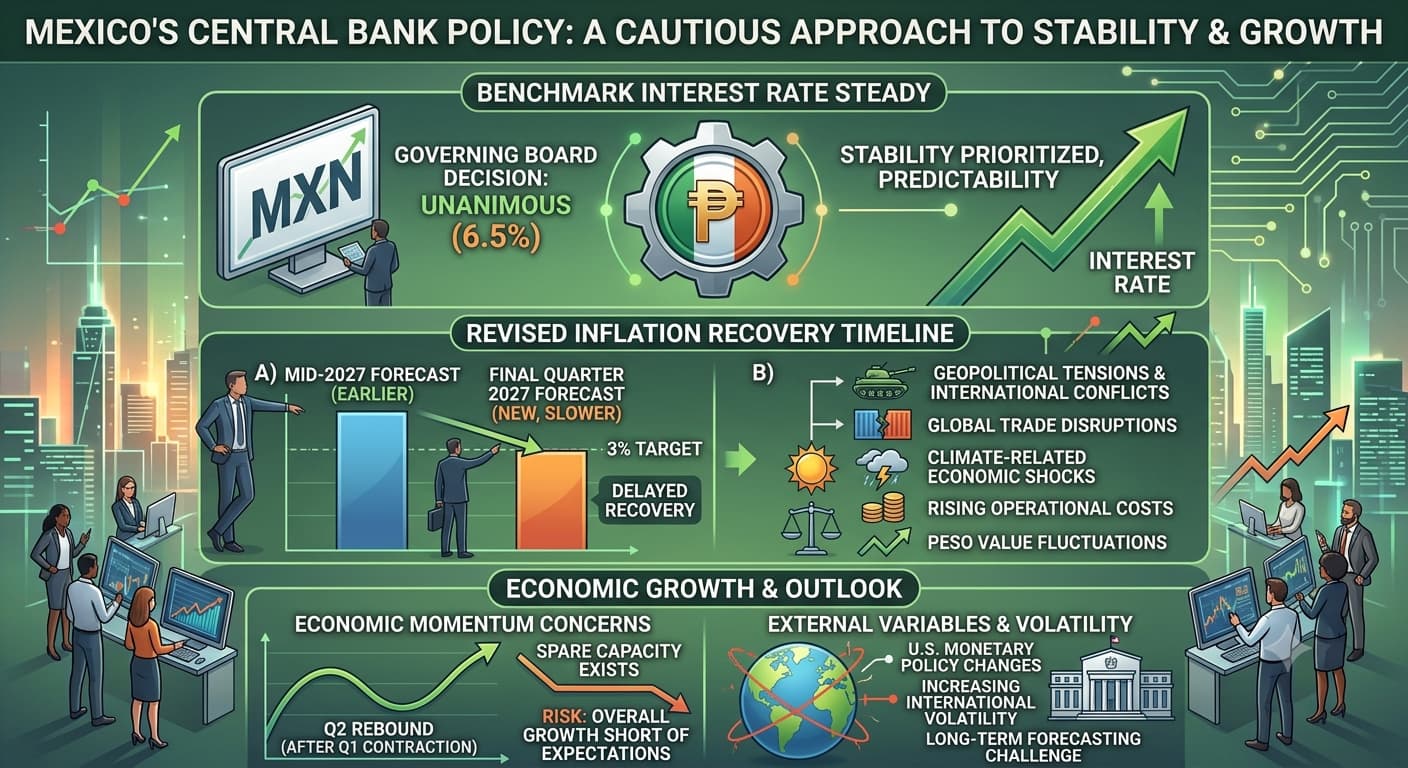
In a unanimous decision, the governing board of Mexico’s central bank has opted to hold its benchmark interest rate steady at 6.5%. This move continues a period of stability in monetary policy that began earlier this summer, as policymakers weigh the complexities of a shifting global economic landscape against local price pressures.
The decision aligns with recent market predictions, suggesting that the central bank is prioritizing stability over aggressive shifts in borrowing costs. While the move provides a sense of predictability, it also highlights the persistent difficulties in bringing inflation back to the official target levels.
Delayed Inflation Recovery
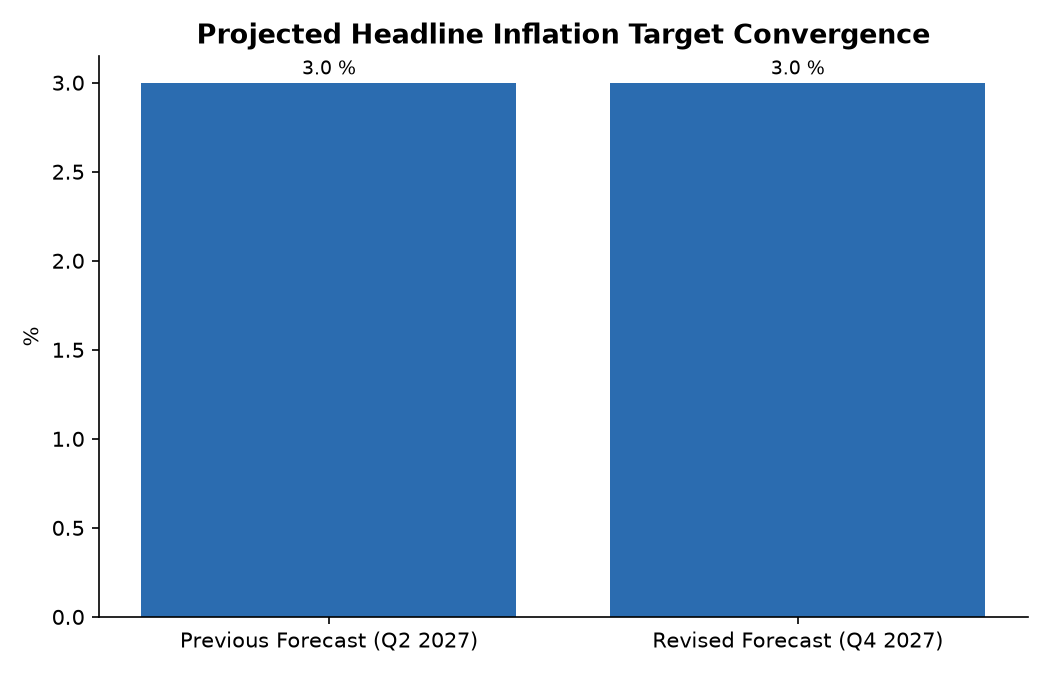
One of the most significant takeaways from the latest policy announcement is the revised timeline for price stability. While the central bank remains confident that inflation will eventually trend downward, the descent appears to be slowing down. Specifically, the projected date for headline inflation to hit the 3% target has been pushed back to the final quarter of 2027, compared to earlier forecasts that suggested a mid-2027 recovery.
Several factors are contributing to this stubbornness in price levels, including:
- Ongoing geopolitical tensions and international conflicts.
- Potential disruptions in global trade patterns.
- Climate-related economic shocks.
- Rising operational costs for businesses.
- Fluctuations in the value of the peso.
Economic Growth and Outlook
Beyond the inflation struggle, the central bank’s assessment of the broader economy remains somewhat subdued. While the nation saw a rebound in the second quarter following a contraction in the first, there are lingering concerns regarding economic momentum. The bank noted that spare capacity in the economy remains a factor, and there is a distinct risk that overall growth could fall short of expectations.
The complexity of the current environment is further amplified by external variables, particularly changes in U.S. monetary policy and increasing international volatility. These factors make long-term forecasting a significant challenge for policymakers attempting to balance price stability with economic expansion.