


A Strategic Liquidity Window
The Monad Foundation recently concluded a specialized program designed to provide flexibility to its most significant backers. By setting aside up to $60 million, the foundation aimed to offer early investors a way to convert their locked tokens into liquid capital at a discounted rate. This mechanism was intended to provide an exit ramp for those whose investment strategies had shifted, without causing a sudden influx of supply on the public market.
However, the initiative met with unexpected resistance. Most investors approached by the foundation opted to keep their holdings rather than taking a haircut on their tokens. While the specific discount offered remains confidential, the decision to decline suggests that many early participants see significant future value in the ecosystem.
Network Activity vs. Token Performance
The refusal to sell comes at a complex time for the Monad ecosystem. While the token price has faced downward pressure recently, the underlying network activity is showing signs of explosive growth. Data indicates a massive surge in decentralized finance (DeFi) engagement on the network.
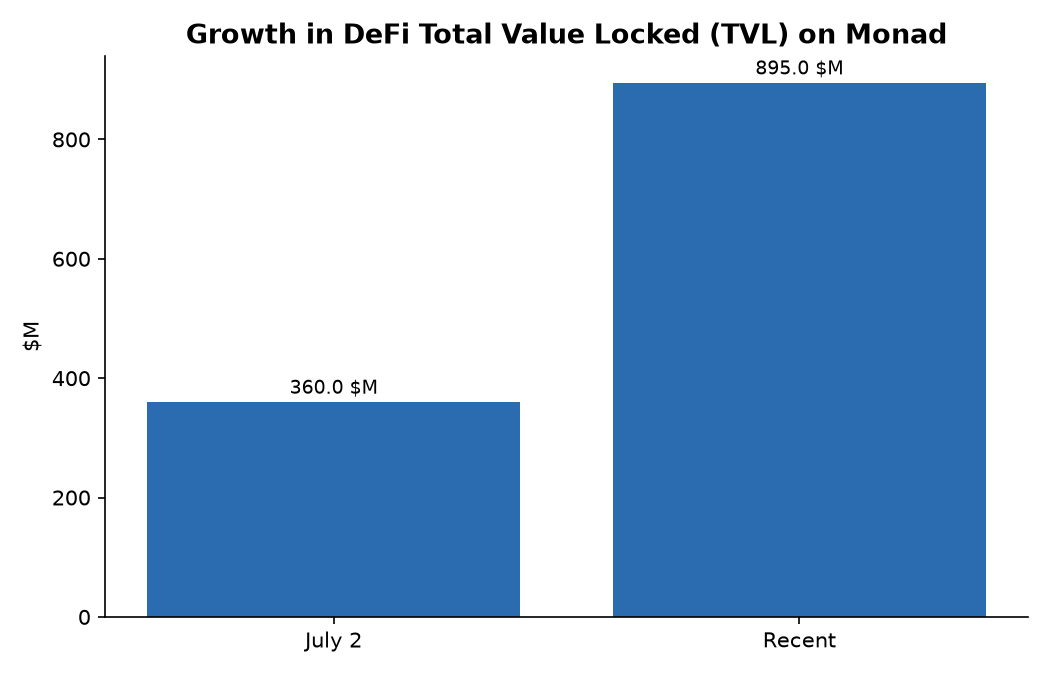
- DeFi TVL Growth: Total value locked in Monad-based applications has jumped from approximately $360 million in early July to around $895 million in just six weeks.
- Stablecoin Dominance: Stablecoins currently account for roughly $707 million of the value within the network.
- Trading Volume: Decentralized exchanges on the platform have processed nearly $79 million in daily trading volume.
The Roadmap for MON Tokens
Understanding why investors might hold on requires a look at the token’s release schedule. The MON token, which powers transaction fees and network security, is subject to a structured vesting period. Following the public network launch last November, a one-year lock-up period was implemented for early investors.
With the first major unlocks scheduled to begin this November, many holders are likely preparing for the transition from locked assets to tradable ones. This upcoming period will be a critical test for the network’s ability to absorb supply while maintaining its rapid expansion in the DeFi sector. For now, the rejection of the $60 million buyout program signals a community that is betting on the long-term scalability of this Ethereum-compatible blockchain.