


The Retirement Gap No One Measures
After decades of structured days built around work, retirement removes the very thing that gave those days weight. A career answers the question « why do my days matter » automatically. Retirement strips that answer away before most people have a chance to replace it.
This is not a spiritual crisis in any doctrinal sense. It is a planning gap with measurable health consequences — and it affects the majority of modern retirees who never saw it coming.
What the Research Says
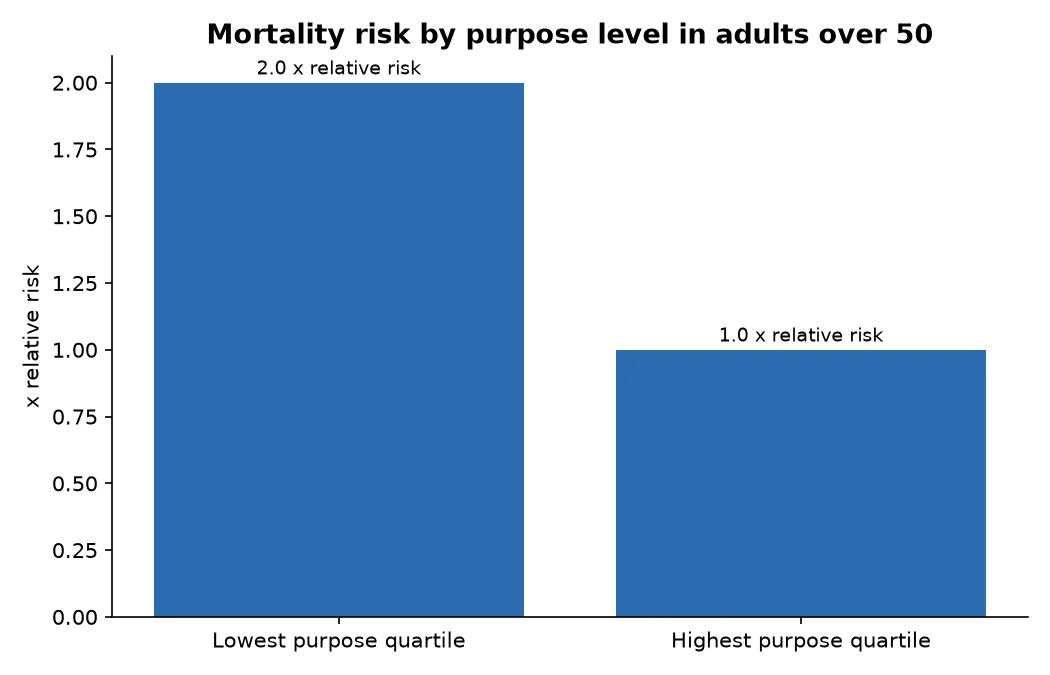
A longitudinal study of over 6,000 adults aged 50 and older found that a stronger sense of purpose was linked to significantly lower all-cause mortality and fewer cardiovascular events. The effect was striking: adults in the lowest purpose quartile faced more than double the mortality risk compared to those in the highest.
Researchers studying the world’s Blue Zones — five regions where people routinely live past 100 — identified purpose as a consistent thread across cultures. In Okinawa it is called ikigai; in Nicoya, plan de vida. The vocabulary changes; the mechanism does not.
Three Conditions That Build Purpose
The research identifies specific conditions under which purpose takes root in later life:
- A commitment that demands your best thinking
- A community that depends on your presence
- An outcome that outlasts you
None require a salary. All require a decision.
Design for It Before You Retire
The retirees who sustain the highest well-being are not those who stumbled into meaning after leaving work. They are those who designed for it beforehand. The uncomfortable question to ask is simple: what would make the next chapter matter to someone other than yourself?
One retiree found his answer by mentoring two young engineers — not for equity or visibility, but for the work itself and for what it produced in the people he was developing. A year later, the emptiness was gone. The portfolio had not changed. The purpose had.
Fund the Years, Then Fund the Why
Financial planning answers how long the money will last. Purpose answers what those years are for. Both require planning, but for too long only one has received any attention. The most resilient retirement plans are the ones that budget not just for spending, but for meaning.