


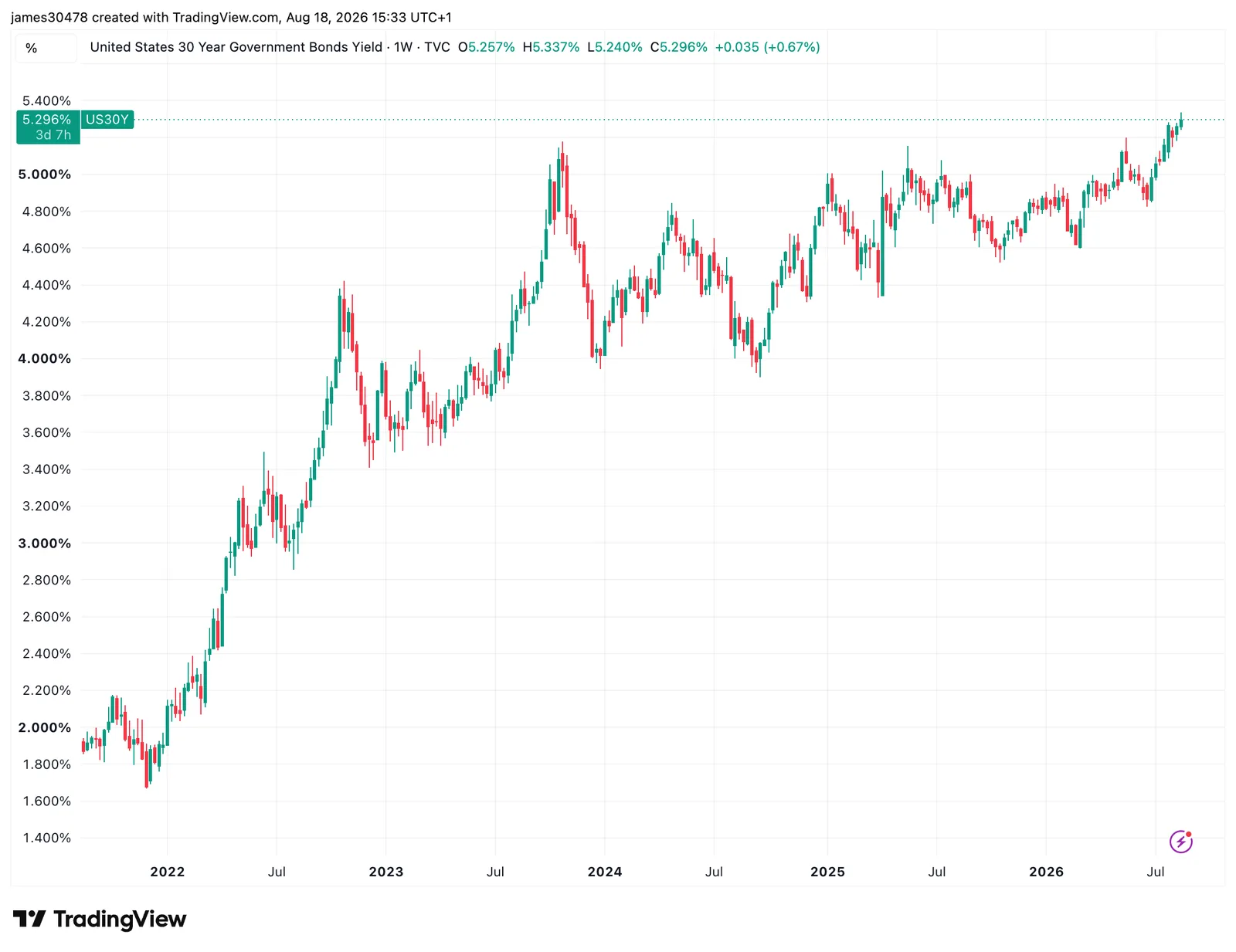
The Tension Between Traditional Debt and Digital Assets
For years, the investment community has debated the utility of Bitcoin as a hedge against traditional financial instability. The core argument suggests that when government debt levels rise and bond yields fluctuate wildly, Bitcoin acts as a non-correlated asset that preserves value. However, recent market movements are complicating this theory.
As global bond yields experience significant upward pressure, the expected ‘flight to safety’ into crypto assets has not been as seamless as many proponents predicted. Instead, the correlation between high-risk assets and traditional debt markets remains a critical factor for institutional investors to monitor.
Why Bond Yields Are Surging
The current volatility in the fixed-income market is primarily driven by growing concerns over sovereign debt sustainability. When investors fear that governments may struggle to service their obligations, they demand higher returns to compensate for the perceived risk. This shift in sentiment has several cascading effects:
- Increased Cost of Capital: Higher yields lead to more expensive borrowing across various sectors.
- Liquidity Shifts: Capital often flows toward safer, higher-yielding government securities, potentially draining liquidity from speculative markets.
- Macroeconomic Uncertainty: Rapidly shifting yields create a volatile environment that makes pricing risk difficult for all asset classes.
The Bitcoin Hedge Narrative: Fact or Fiction?
The central question facing the crypto industry today is whether Bitcoin can maintain its identity as a hedge. Historically, ‘afe haven’ assets like gold tend to perform well when traditional markets face turmoil. For Bitcoin to fulfill this role, it must demonstrate a consistent ability to decouple from broader market volatility during periods of debt-driven instability.
Currently, the market is in a state of transition. While the scarcity of Bitcoin remains a fundamental pillar for its long-term value proposition, its short-term price action is increasingly sensitive to the same macroeconomic pressures that affect global bond markets. For investors, this means that the ‘digital gold’ narrative is no longer a guarantee, but a hypothesis that is being actively tested by real-world economic shifts.