


The Mechanics of the Exploit
A recent security breach within a prominent cross-chain liquidity network has demonstrated how multiple minor software errors can converge to create a catastrophic vulnerability. The incident, which led to a total pool value decline of approximately $11 million, originated from a technical failure in how the network handles transaction errors.
The vulnerability was triggered when the protocol’s automated systems incorrectly flagged a transaction as missing. This error activated a built-in safety mechanism designed to compensate liquidity pools after a theft. However, a flaw in the compensation logic caused the system to mint a massive amount of the network’s native token, CACAO, far exceeding the actual reserves held by the protocol.
Despite the subsequent failure of the actual transfer, a secondary bug allowed the inflated token balance to remain recorded on the ledger. This allowed an attacker to manipulate the pool, eventually gaining control of over 99% of the liquidity in the affected pool and swapping the surplus tokens for Bitcoin, Ether, and other high-value assets.
Cascading Market Consequences
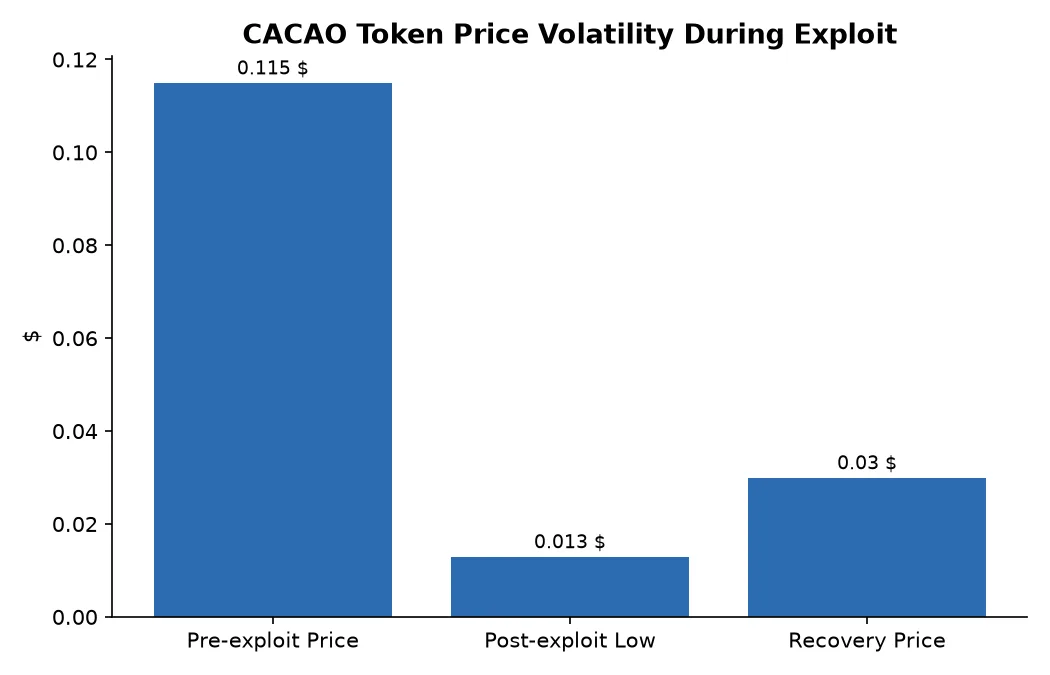
The impact of the exploit extended far beyond the direct theft of assets. As the attacker liquidated large quantities of CACAO to extract value, the token’s market price experienced a violent collapse. This price dislocation triggered a secondary wave of losses through arbitrage activities.
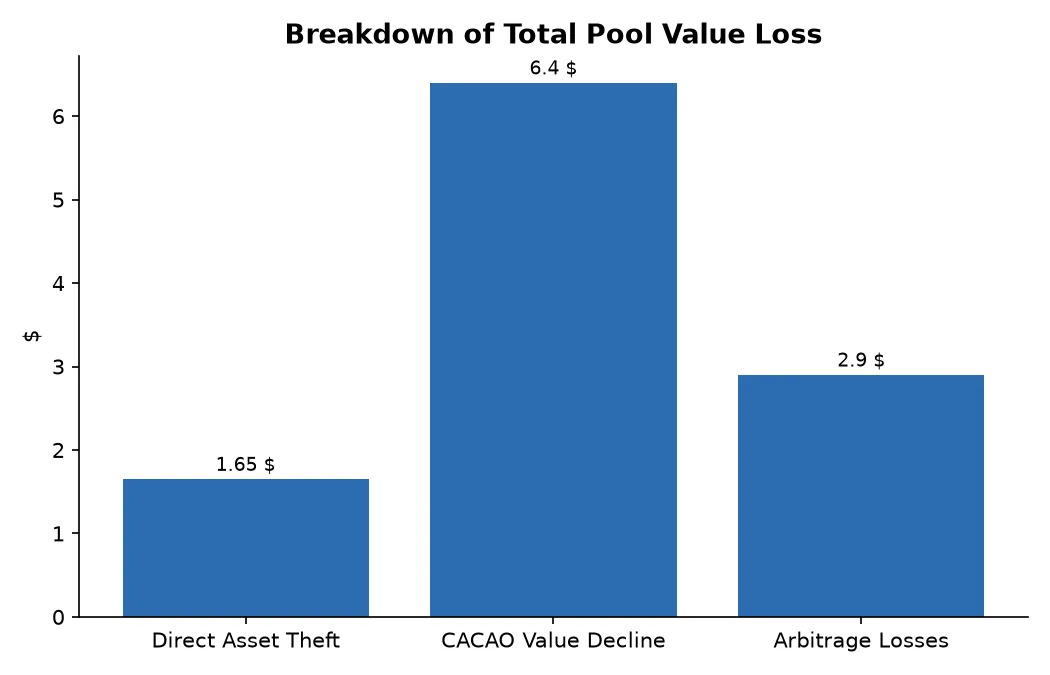
While the direct theft involved roughly $1.65 million in various digital assets, the total impact on the liquidity pools reached nearly $11 million. This discrepancy is explained by two main factors:
- Token Devaluation: A significant portion of the loss was attributed to the plummeting value of the CACAO token itself.
- Arbitrage Extraction: Traders took advantage of the extreme price imbalance, swapping undervalued CACAO for stable assets like Bitcoin and Ether, further draining the protocol’s liquidity.
Recovery Efforts and Future Outlook
In response to the crisis, the protocol developers immediately halted all trading activity to prevent further damage. The team is currently working on a comprehensive software fix to address the six distinct bugs identified during the technical reconstruction of the attack.
The protocol management has expressed hope that the attacker might return the stolen funds in exchange for a bounty. In the event that recovery is not possible, the team is exploring alternative funding routes, including external investments, to replenish the missing Bitcoin and restore the network’s liquidity to its original state.