

A Shift in Legal Strategy
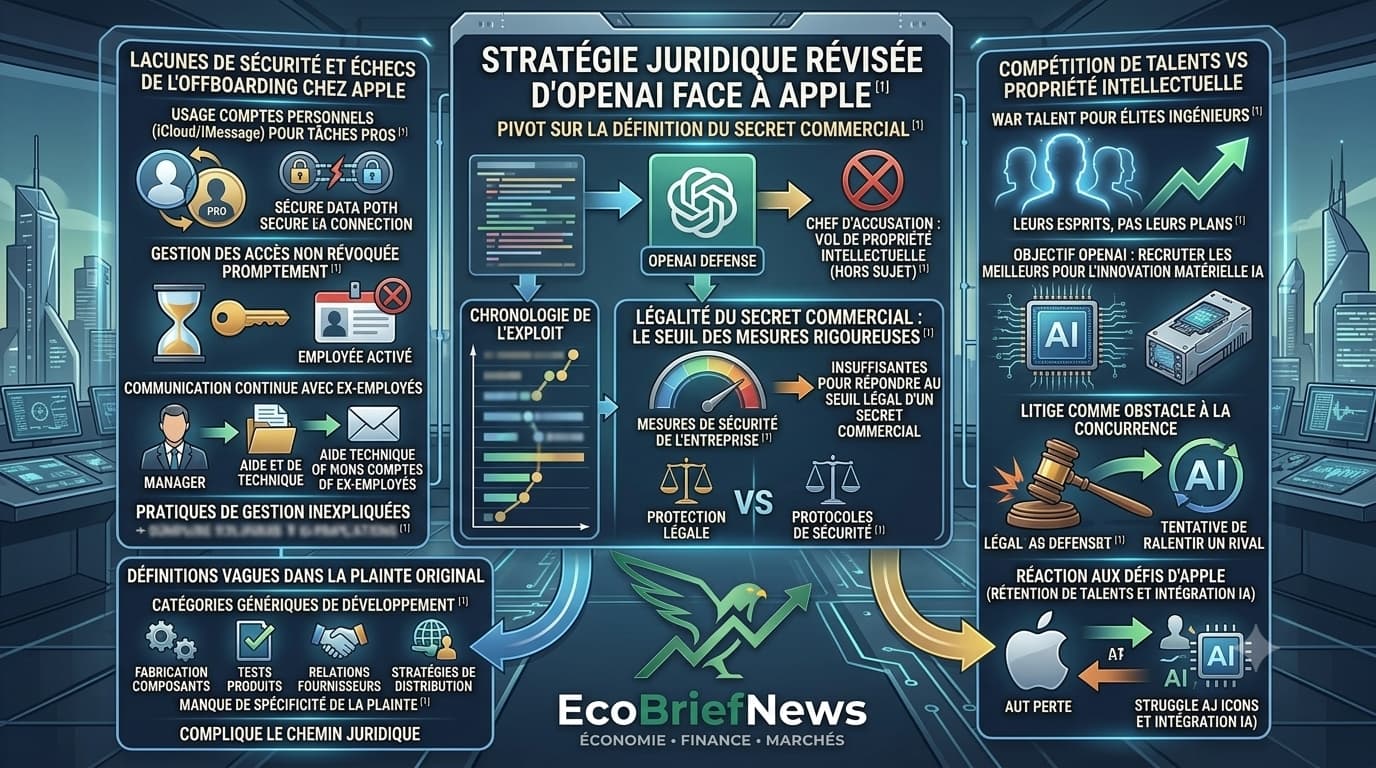
In a recent legal maneuver, OpenAI has mounted a defense that pivots away from the core accusation of intellectual property theft. Instead of debating whether former employees accessed sensitive data, the AI firm is targeting the definition of what constitutes a ‘trade secret’ under current laws.
OpenAI’s legal team argues that for information to receive legal protection as a trade secret, a company must demonstrate that it has taken rigorous steps to secure it. By allegedly failing to implement strict security protocols, OpenAI suggests that the information in question may not meet the legal threshold for protection.
Security Gaps and Offboarding Failures
The defense centers on what OpenAI describes as inconsistent information management at Apple. According to newly filed court documents, the AI company claims that Apple’s security practices were insufficient in several key areas:
- Personal Account Usage: Employees were reportedly permitted to use personal iCloud accounts for professional tasks.
- Access Management: There are allegations that access to sensitive systems was not promptly revoked when employees transitioned out of the company.
- Continued Communication: Evidence submitted suggests that managers continued to use personal accounts of former employees to transfer files and seek technical assistance long after their departure.
OpenAI contends that these ‘inexplicable’ management practices create a situation where information access is blurred, making it difficult to classify specific data as protected secrets.
The Talent War vs. Intellectual Property
Beyond the technicalities of data security, the lawsuit touches on the intensifying competition for elite engineering talent. OpenAI maintains that its interest lies in hiring the industry’s best minds to drive innovation in new AI-powered hardware, rather than acquiring specific proprietary blueprints.
The motion argues that the litigation may be an attempt to stifle competition and slow down a rival’s progress in the AI sector. OpenAI asserts that Apple’s legal action is a reaction to its own challenges in retaining talent and integrating artificial intelligence into its existing product ecosystem, rather than a genuine attempt to protect stolen assets.
Vague Definitions in the Complaint
Another pillar of OpenAI’s defense is the perceived lack of specificity in Apple’s original complaint. Rather than identifying exact components or documents, the lawsuit reportedly refers to broad categories of development, such as:
- Component manufacturing processes
- Product testing protocols
- Vendor and supplier relationships
- Distribution channel strategies
By using these generic descriptions, OpenAI argues that Apple is failing to provide the clarity necessary for a legitimate trade secret claim, further complicating the legal path forward for the hardware giant.