

A New Kind of Digital Ledger
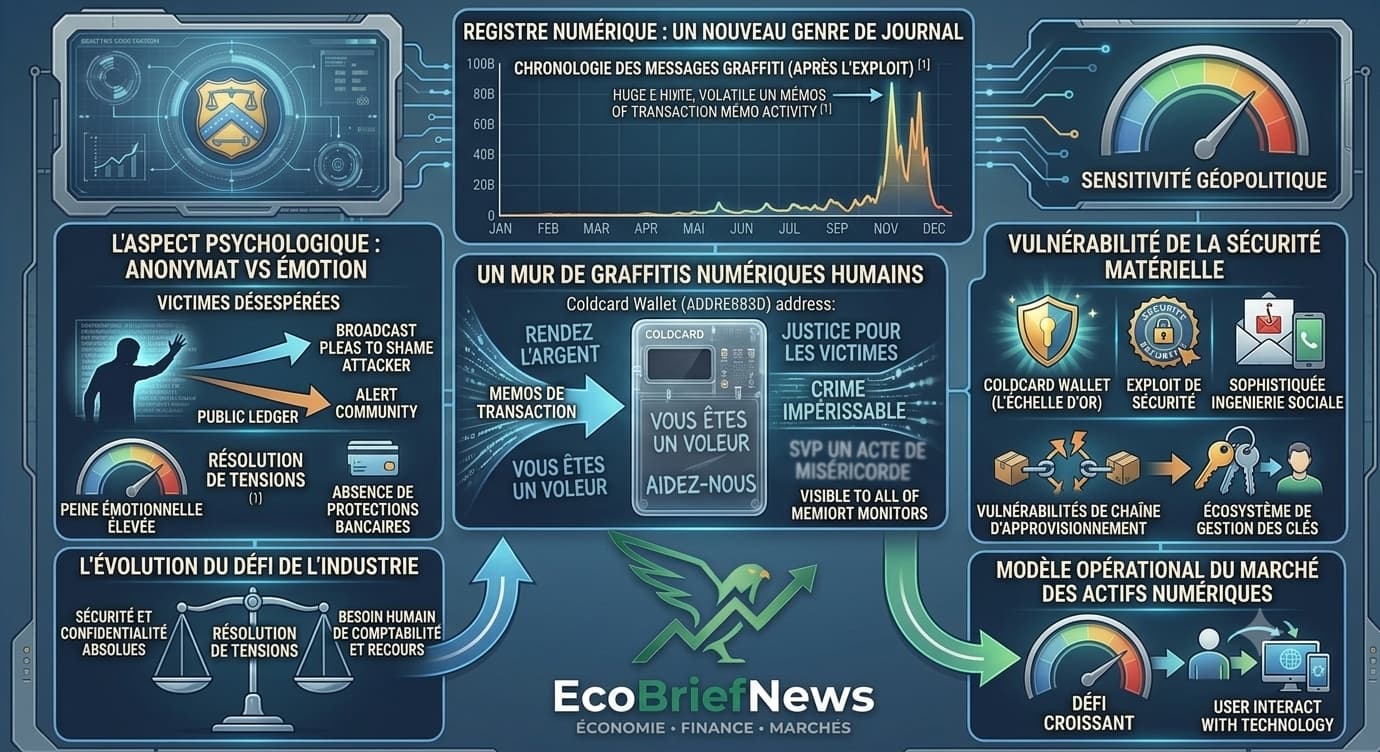
In the world of decentralized finance, the blockchain is often viewed as a sterile, immutable record of transactions. However, a recent security breach involving a Coldcard hardware wallet has turned a single digital address into something far more human: a digital graffiti wall. The wallet, intended to be a secure vault for digital assets, has instead become a public forum for those seeking the return of stolen funds.
Messages Amidst the Chaos
Following a successful exploit, the attacker did not simply move the assets and disappear. Instead, the transaction history of the compromised wallet has been flooded with messages. These entries, etched into the blockchain, range from desperate pleas for mercy to direct accusations against the perpetrator. The messages serve as a permanent, unerasable record of the crime, visible to anyone monitoring the network.
The Psychological Aspect of Crypto Theft
This phenomenon highlights a growing trend in the cryptocurrency space where the anonymity of the blockchain meets the very real emotional toll of financial loss. When traditional banking protections are absent, victims often turn to the only medium available to them: the public ledger. By broadcasting their pleas through transaction memos, victims hope to shame the attacker or alert the broader community to the specific patterns of the hack.
The Vulnerability of Hardware Security
While hardware wallets are widely considered the gold standard for protecting digital assets, no device is entirely immune to sophisticated social engineering or supply chain vulnerabilities. This incident serves as a stark reminder that security is not merely about the physical device, but about the entire ecosystem of how keys are managed and how users interact with their technology.
As the digital asset market continues to evolve, the industry faces a growing challenge: how to balance the absolute privacy and security promised by decentralized technology with the human need for accountability and recourse when things go wrong.