

What Are Bond Ratings?
When you buy a bond, you are essentially lending money to a company, municipality, or government. Bond ratings are the credit‑worthiness scores assigned by independent agencies that assess how likely the issuer is to meet its payment obligations on time. Think of them as a health check for the debt you’re buying.
Top‑Tier vs. Lower‑Tier Bonds
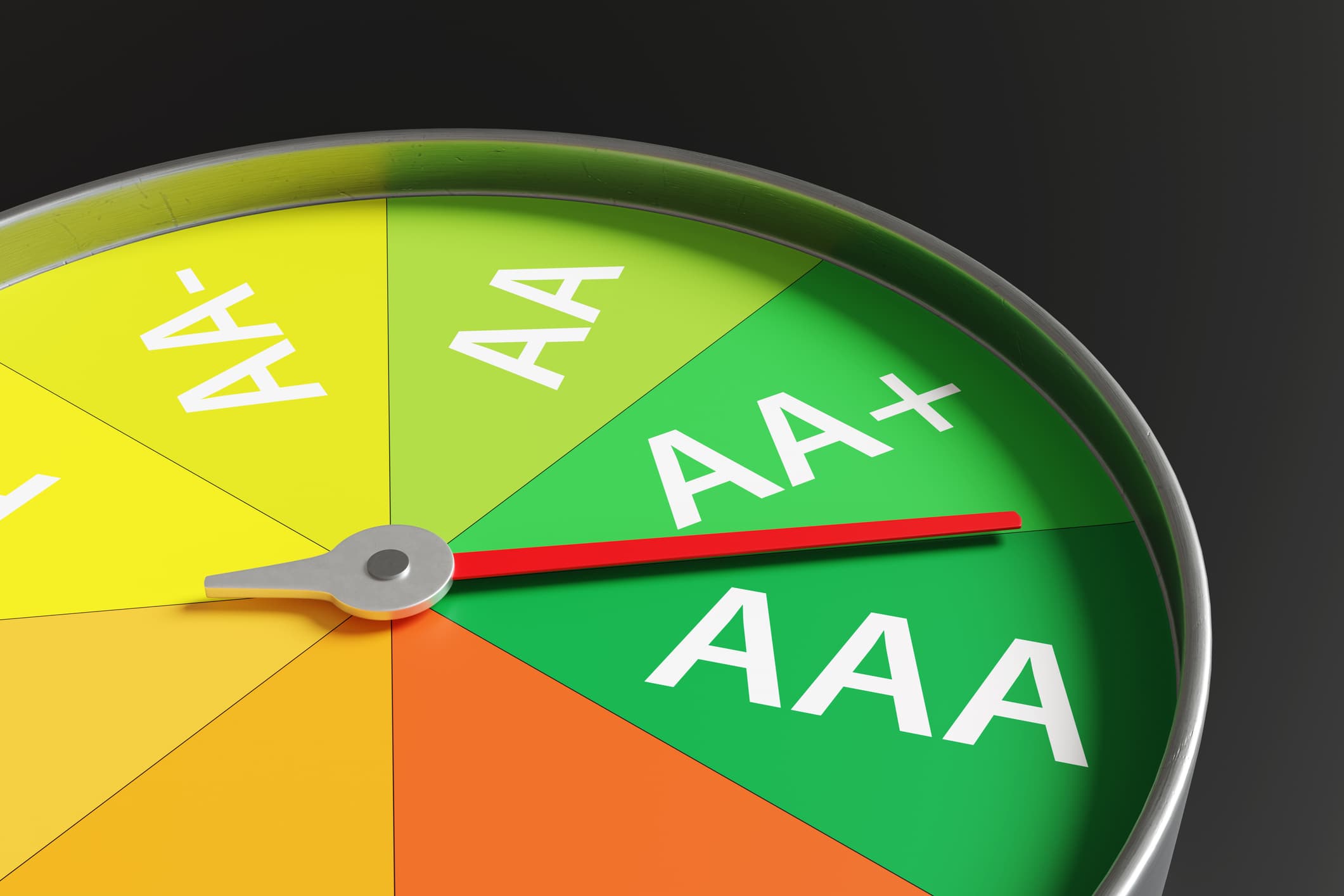
Ratings range from the highest, AAA (or Aaa in a different system बदल), down to D, which signals default. Bonds that fall into the top half of this scale are called investment‑grade
Below the investment‑grade threshold lies the speculative‑grade zone, often referred to colloquially as “junk.” These bonds carry a higher risk of default, so they must offer larger yields to attract investors. The mark‑up in yield can sometimes be misleading; a high yield does not automatically mean a high reward if the issuer defaults. There’s a clear inverse relationship between risk and return: the higher the rating, the lower the yield, and vice versa. For instance, a AAA bond typically offers a yield a few basis points lower than a BB bond, even if both have similar maturities. However, yield differences also depend on market demand, the issuer’s industry, and macroeconomic conditions. oorspronkelijke To capture nuances within a rating class, agencies use modifiers. For example, a rating of AA‑ can indicate a slightly weaker position than AA+ within the same category. Other systems use numeric sub‑levels (1, 2, 3) to show the upper, middle, and lower ends of a rating band. These subtle distinctions help investors fine‑tune their risk tolerance. Government securities backed by the full faith and credit of the sovereign are considered the safest cash flows in the market. Their ratings sit at the very top of the scale, and because the issuer can print currency, the risk of default is essentially nil. Consequently, U.S. Treasury bonds, notes, and bills are the go‑to choice for investors seeking maximum safety. Occasionally, two rating agencies may disagree on the exact level of a bond, with one assigning a rating that is one notch higher or lower. This discrepancy often points to uncertainty about the issuer’s future prospects. In such cases, dig deeper into the company’s financial statements and market conditions before deciding. Bond ratings are a vital tool in the fixed‑income toolkit. They offer investors a shorthand for assessing credit risk, guiding yield expectations, and structuring a portfolio that balances safety with return. By understanding the hierarchy of ratings, the significance of modifiers, and the dynamics that can shift a rating over time, you can make more informed decisions and protect your capital in an ever‑changing market.How Ratings Translate to Yields
Modifiers Within a Rating Category
Why U.S. Government Bonds Are the Benchmark
Practical Tips for Investors
When Ratings and Reality Diverge
Conclusion