


The 40-Credit Threshold: More Than Just Paying Taxes
A common misconception is that Social Security functions like a personal savings account where every dollar contributed guarantees a future payout. However, the system operates on a credit-based eligibility model. To receive retirement benefits based on your own work history, you must accumulate a minimum of 40 credits.
Credits are earned through taxable earnings. While the amount of money you earn determines how many credits you receive in a single year, there is a cap: you can earn a maximum of four credits per calendar year, regardless of how high your income is.
How Credits Are Calculated for 2026
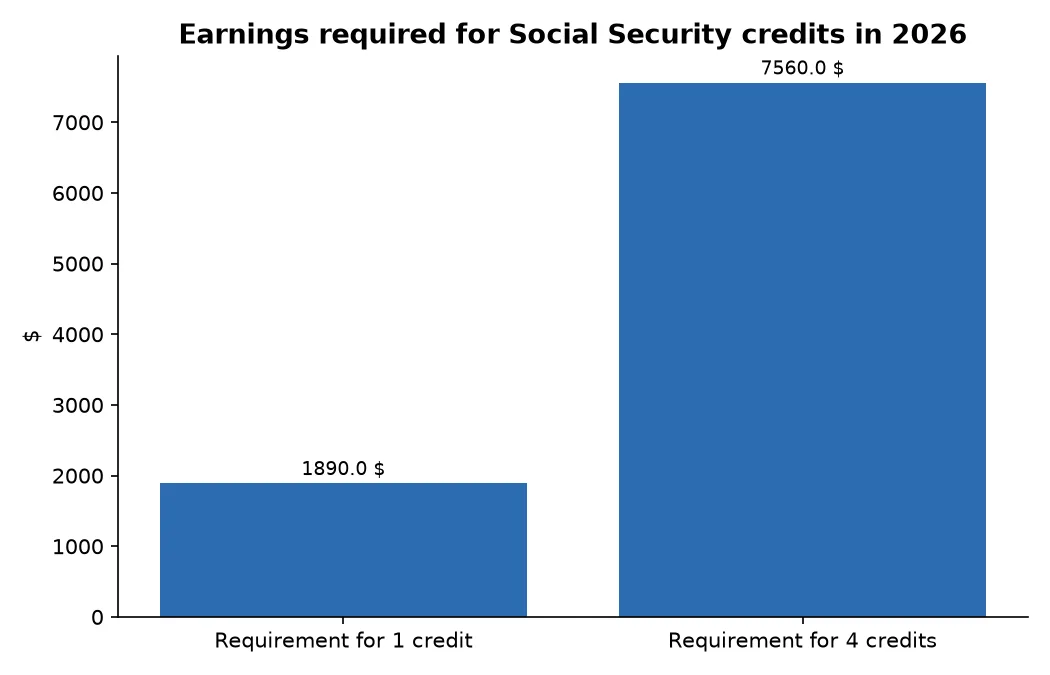
The earnings threshold required to secure a single credit fluctuates annually. For the 2026 calendar year, the math is as follows:
- Cost per credit: $1,890
- Maximum annual credits: 4
- Minimum annual income for full credits: $7,560
It is important to note that credits are not rounded up. If your earnings do not meet the full threshold for a quarter, you only receive the credits for the completed segments. For instance, an individual earning $3,900 in 2026 would earn exactly two credits, as the remaining amount does not reach the $1,890 threshold required for a third credit.
What to Do if You Fall Short of 40 Credits
If you realize you are unlikely to hit the 40-credit mark through your own employment, your options are not necessarily exhausted. There are several secondary pathways to accessing benefits:
1. Spousal and Survivor Benefits
Social Security is designed to protect families, not just individual workers. You may qualify for benefits based on a spouse’s or former spouse’s earnings record. This includes:
- Spousal Benefits: If you are married to someone receiving benefits, you may be eligible for a portion of their amount, potentially up to 50% at full retirement age.
- Divorced Spouse Benefits: If a marriage lasted at least 10 years, a divorced individual may qualify for benefits based on their former partner’s record.
- Survivor Benefits: Widows, widowers, and surviving children may receive protection even if they haven’t personally earned enough credits.
2. International Totalization Agreements
For those who have worked in multiple countries, life is not necessarily complicated by fragmented records. The U.S. maintains bilateral agreements with several nations—including the UK, Canada, France, and Germany—to help workers qualify. These ‘totalization agreements’ allow you to combine credits from different countries to meet the eligibility requirements, though the final benefit amount is typically prorated based on your actual U.S. earnings.
Proactive Steps for Your Financial Future
To avoid surprises in your later years, financial experts recommend two critical actions:
First, regularly audit your earnings history via your official Social Security account. Discrepancies or missing employer reports can significantly impact your credit count. Second, verify your employment status. While most private-sector jobs are covered, some government or specialized roles may follow different rules, potentially leaving you without the credits you assume you are earning.