


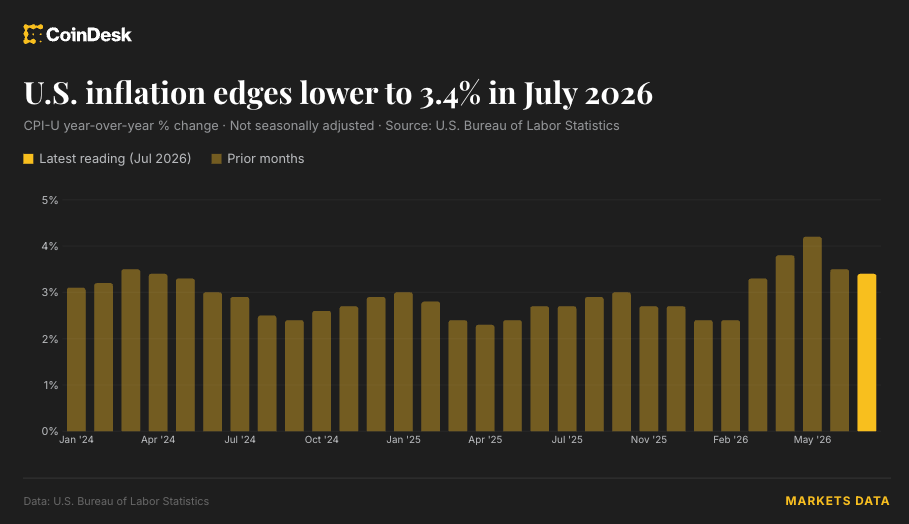
The Cooling Trend: Inflation Hits 3.4%
Recent economic data indicates that the United States is seeing a deceleration in consumer price growth. The latest Consumer Price Index (CPI) figures show inflation has slowed to 3.4%, a figure that aligns closely with what analysts had anticipated. This cooling trend suggests that the aggressive monetary tightening measures implemented over the past year are beginning to take effect, bringing price volatility under more predictable control.
For the average consumer, this signifies a stabilization in the cost of living, though prices remain significantly higher than they were during the pre-pandemic era. For policymakers, this data provides a crucial signal regarding the future trajectory of interest rates.
Market Reaction: Bitcoin and Digital Assets
While traditional markets digest the inflation news, the cryptocurrency sector has shown resilience. Bitcoin has maintained its position near the $64,000 mark, demonstrating a level of stability despite the shifting macroeconomic landscape. The interplay between inflation data and digital asset prices is becoming increasingly apparent, as many investors view Bitcoin as a potential hedge or a high-beta play on liquidity shifts.
The stability of Bitcoin at these levels suggests that market participants are balancing several factors: the potential for future Federal Reserve rate cuts and the growing institutional adoption of digital assets. If inflation continues to trend downward, the likelihood of a pivot in central bank policy increases, which historically provides a favorable environment for risk assets like cryptocurrencies.
Broader Economic Implications
The deceleration of inflation is a double-edged sword for the economy. On one hand, it reduces the pressure on the Federal Reserve to maintain high interest rates, which could eventually lead to lower borrowing costs for mortgages and business loans. On the other hand, the goal is to reach a ‘oft landing’—slowing inflation without triggering a significant rise in unemployment or a recessionary period.
- Monetary Policy: The focus now shifts to when the central bank will transition from a restrictive stance to a neutral or accommodative one.
- Consumer Sentiment: As inflation slows, the rate of increase in daily living expenses may stabilize, potentially boosting consumer confidence.
- Investment Strategy: Investors are increasingly rotating between traditional equities and digital assets based on these macroeconomic indicators.