


The Last-Resort Rule and Its Hidden Danger
When planning for retirement, many advisors follow a widely promoted guideline: prioritize preserving overall wealth diversity by selling non-housing assets first—stocks, bonds, and cash—and only turn to home equity later. On paper, this approach seems sensible. After all, real estate represents the largest single component of household net worth for many families.
How Sequence Creates Concentration Risk
Follow the arithmetic of this recommended order across decades of retirement, and the result becomes counterintuitive. Starting with liquid portfolios ensures broad diversification throughout the working years. As clients transition to retirement, however, the planned exit strategy systematically reduces exposure to other asset classes.
Data Reveals Escalating Vulnerability
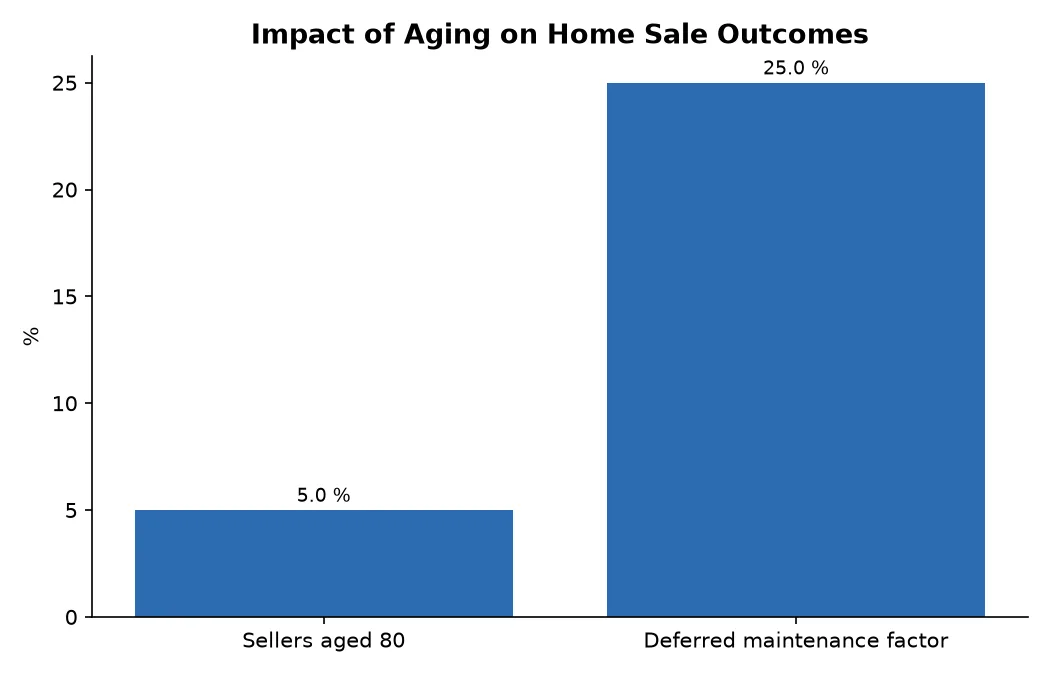
A January 2026 research brief revealed that home sellers beginning the process around age 70 experience significantly lower proceeds. Specifically, an 80-year-old seller nets roughly 5% less than a younger counterpart on a comparable property. This gap widens as clients age further—a phenomenon reinforced by additional studies linking declining maintenance capacity to reduced home values. Meanwhile, another analysis showed that approximately a quarter of the price differential stems from deferred maintenance and upkeep costs accumulated over the decades. Declining homeownership ability means fewer resources for repairs, which erodes value over time.
Beyond Price Discounts, Maintenance Explains Most of the Gap
While the 5% reduction highlights the direct financial pain of waiting, the maintenance factor underscores deeper structural problems. Even if a home sells for slightly less initially, the cumulative cost of deferred upkeep creates compounding losses that reduce overall household wealth far beyond the headline price difference. This dual pressure—increased sale price discounts combined with ongoing maintenance erosion—makes delayed home equity access particularly risky for retirees.
What This Means for Modern Planners
Financial advisers are increasingly advocating for proactive home equity evaluation during middle-age, when the household portfolio remains broadly diversified. Early assessment allows clients to strategically tap home equity for needed expenses—such as long-term care or disability insurance—without condensing the portfolio drawdown into a late-stage crisis. This approach maintains diversification benefits until the final phase of retirement, when the primary goal shifts toward preservation rather than growth.
Bridging the Gap Between Theory and Practice
In practice, this means treating home equity not as a safety net reserved for emergencies, but as a strategic tool integrated from the outset. By mapping out withdrawal timelines alongside asset allocations, clients can avoid the trap of accumulating excessive housing concentration. The research consensus remains clear: a disciplined, early-phase home equity strategy preserves the protective benefits of diversification right through the peak vulnerability years of retirement.