


The AI Revolution in Cybersecurity
For years, cybersecurity experts have predicted an escalating arms race between malicious hackers using AI to find flaws and developers using AI to defend them. Recent data from Google suggests that this theoretical battle has officially entered an industrial-scale phase.
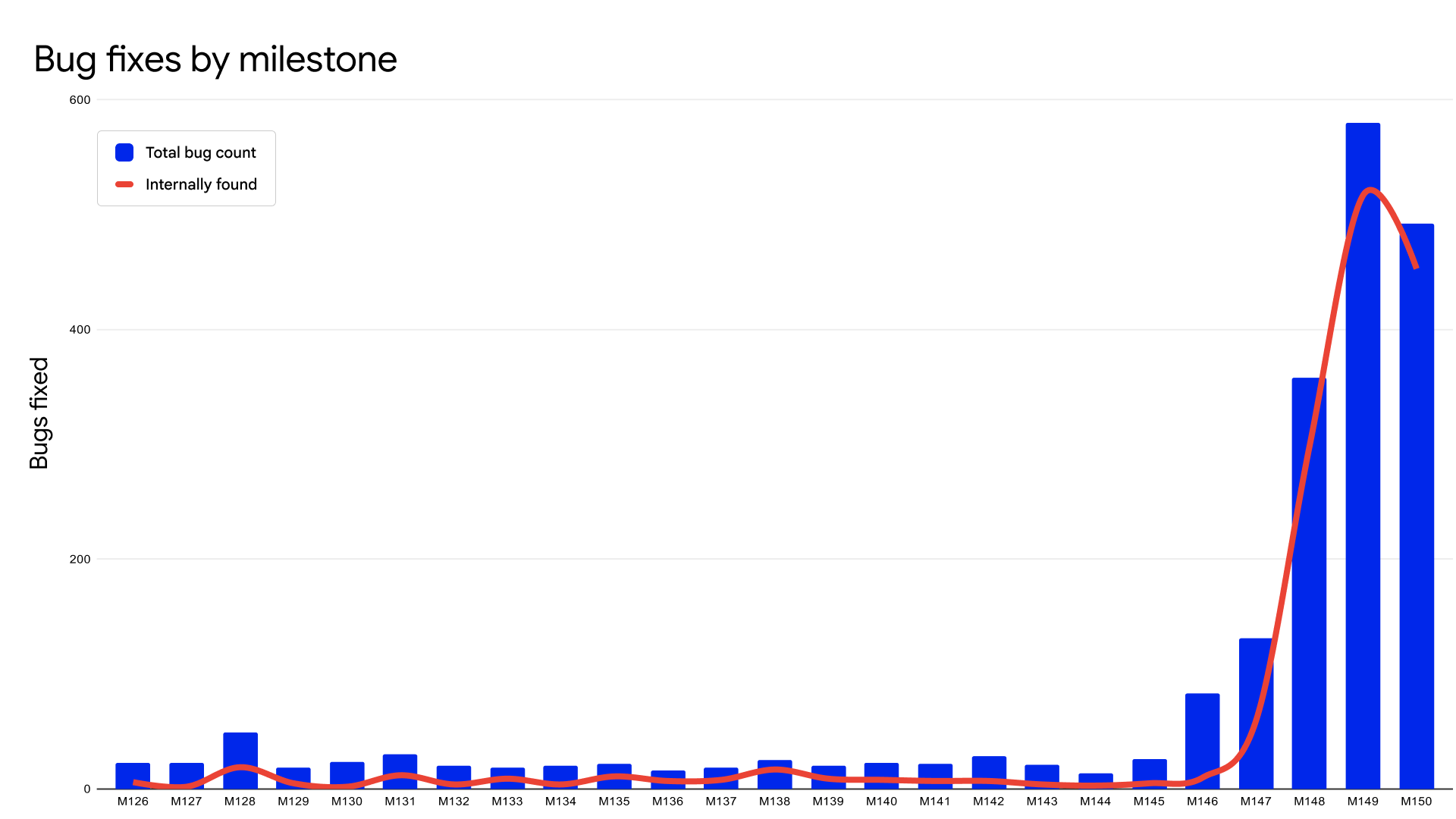
In a striking demonstration of speed and efficiency, Google announced that it resolved a massive number of security vulnerabilities in June alone. By leveraging large language models (LLMs) like Gemini, the company has managed to automate the discovery and remediation process, allowing for a level of responsiveness previously thought impossible.
Breaking Down the Numbers: A New Scale of Defense
The sheer scale of Google’s recent efforts is unprecedented. In the two Chrome versions released during June, the company patched 1,072 security bugs. To put this into perspective, this single month of work exceeded the total number of fixes implemented across the previous 23 versions released over the last two years.
Doug Turner, Chrome’s director of engineering, noted that LLMs have fundamentally altered the economics of the industry. What used to be a manual, labor-intensive process of hunting for vulnerabilities is becoming an automated, high-speed operation that allows developers to stay one step ahead of bad actors.
Industry Trends: Microsoft vs. Apple
Google is not alone in this transition toward AI-integrated security. Microsoft recently reported a record-breaking month, patching 570 security flaws across its various products—a surge they attribute to their own AI-driven security protocols.
However, the industry trend is not uniform across all tech giants. While Google and Microsoft are seeing exponential jumps in their patching capabilities due to AI integration, Apple’s numbers appear to follow a much more traditional, linear progression. Independent counts show Apple patching 482 bugs in 2026, a pace that suggests stability rather than the rapid acceleration seen in its competitors.
The Future of Software Safety
As AI continues to lower the barrier for hackers to find exploits, the ability for companies to use AI for ‘preemptive fixing’ becomes a necessity rather than a luxury. The data suggests that the future of software security will be defined by how effectively companies can integrate these intelligent models into their development lifecycles.