


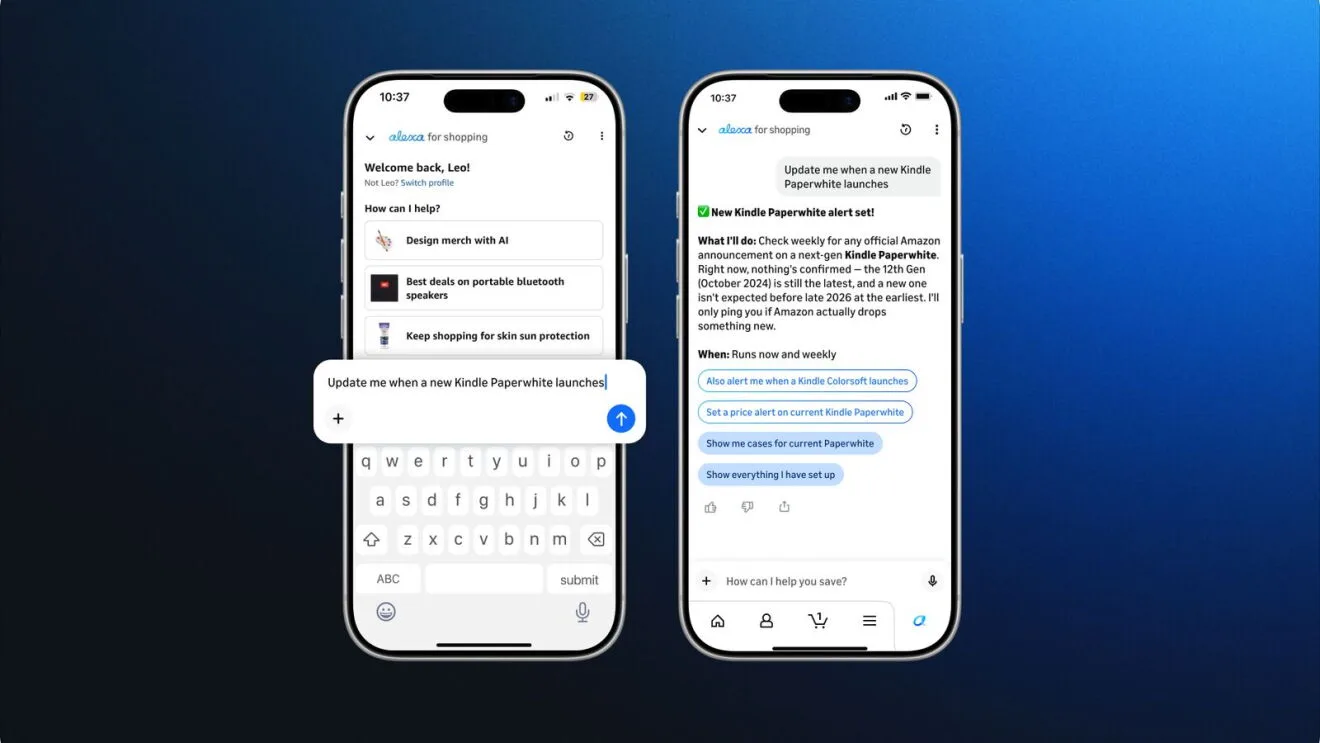
Alexa Gets a New Proactive Shopping Brain
Amazon has rolled out a feature called « Update Me When » inside its Alexa for Shopping assistant, marking a notable evolution in how the company envisions AI-driven commerce. Rather than waiting for a shopper to type or speak a question, this tool actively pushes notifications when something relevant catches its eye — a new product drop, a concert announcement, a book release, or any event that might spark a purchase.
How the Feature Works in Practice
The concept is simple but powerful. Users can pick triggers they care about and let Alexa do the monitoring. Examples Amazon has suggested include tracking when a beloved brand rolls out a new collection, when a new season of a favorite series premieres, when a musician announces a tour, when an author publishes a new title, or when a technology company unveils a gadget. The notifications are personalized, meaning each user’s feed reflects their unique interests rather than a generic promotional blast.
From Reactive Assistant to Anticipatory Shopper
This launch represents a philosophical shift for Alexa. In the past, the assistant largely sat idle until a shopper initiated a conversation — answering product questions, checking availability, or comparing items on demand. Now, Alexa is being positioned as something closer to a personal shopping concierge that anticipates desire before it fully forms. It mirrors a broader industry trend: AI systems are increasingly designed not just to respond, but to predict and prompt.
Existing Tools Still Hold Their Value
Among the arsenal of Alexa for Shopping capabilities, the price-tracking function remains one of the most practical. Shoppers can ask Alexa to notify them the moment a product hits a target price or reaches a specific discount threshold. For those who prefer full automation, the assistant can even complete the purchase on their behalf once those conditions are met.
A Growing Suite of AI-Powered Shopping Tools
Amazon has been layering AI features across the shopping experience at a rapid pace. Beyond the new alert system and price tracking, the platform now uses Alexa to surface personalized deals, curate shopping guides, and auto-fill carts based on previous purchase history. It can also track how a product’s price has changed over time, generate AI-generated summaries on product pages and search results, convert handwritten lists into digital cart entries, and facilitate side-by-side comparisons between items.
What This Means for Consumers
The convergence of these features paints a picture of a shopping ecosystem that is becoming increasingly hands-off. For frequent Amazon shoppers, the convenience is undeniable — less time searching, more time being served. But it also raises subtle questions about how much curation consumers actually want from an algorithm. When your assistant is constantly flagging things it thinks you might want, the line between helpful and pushy can blur quickly.
For now, Amazon seems confident that shoppers will welcome the nudge. With « Update Me When » and its expanding suite of AI tools, the company is betting that anticipation — not just response — is the future of online retail.