

From Mystery to Movement: Atoms Charts Its Course in Autonomous Driving
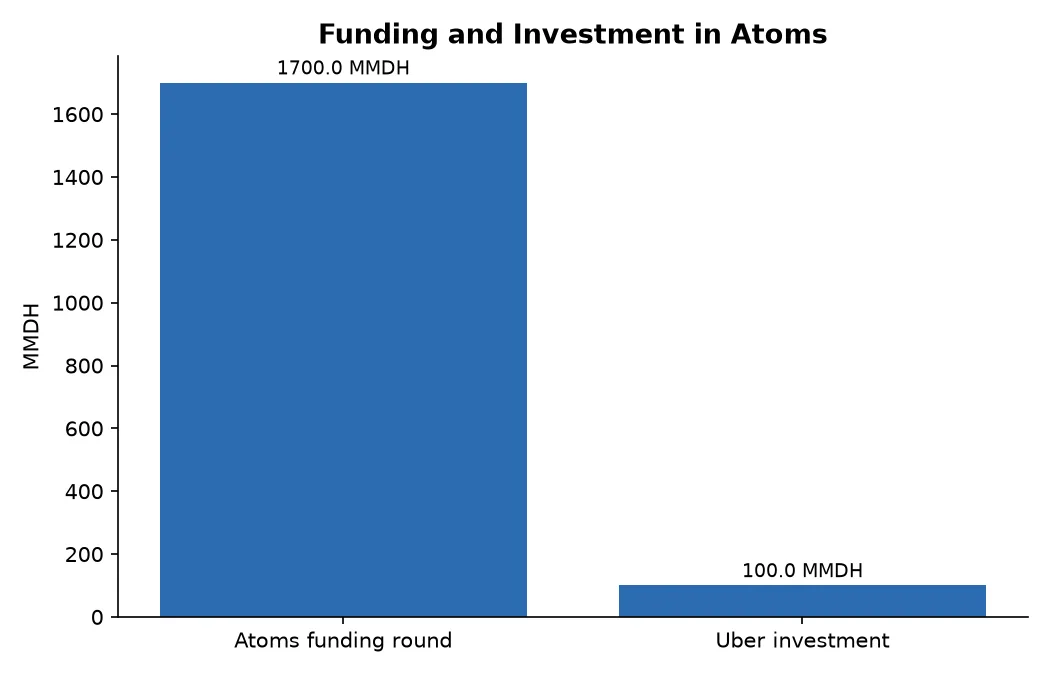
Earlier this summer, Travis Kalanick’s startup Atoms closed a massive $1.7 billion funding round backed by a prominent venture capital firm. But the Uber co-founder stayed tight-lipped about the company’s actual ambitions — until now.
A new report reveals that Atoms is preparing an aggressive expansion: a significant hiring push and a series of acquisitions aimed at making it a major force in the autonomous vehicle industry.
Uber in the Driver’s Seat?
According to the report, Atoms has already held discussions with Uber about integrating the startup’s robotaxi technology into the ride-hailing giant’s platform. Uber, which has already forged partnerships with numerous autonomous vehicle companies, has also poured $100 million into Atoms — a stake first confirmed earlier this year.
While sources stress that robotaxis are not the sole focus of Atoms’ roadmap, the direction aligns with Kalanick’s framing of the funding round as « unfinished business » — a hint that he sees autonomous transportation as the next frontier.
A Controversial Foundation
The strategic direction also echoes Atoms’ earlier acquisition of Pronto, an autonomous mining startup founded by Anthony Levandowski, Uber’s former head of self-driving technology. Levandowski was convicted of stealing trade secrets and served an 18-month prison sentence before receiving a presidential pardon.
What This Means for the Industry
Atoms’ entry into the robotaxi space adds another heavyweight to an already crowded field. With deep pockets, Kalanick’s network, and a clear strategy of talent and technology acquisition, the startup could accelerate the timeline for fully autonomous ride-hailing — but regulatory hurdles and safety concerns remain significant obstacles.
The Bigger Picture
The autonomous vehicle sector has seen billions in investment over the past decade, yet true robotaxi commercialization remains elusive. Companies like Waymo and Cruise have made incremental progress, but scaling beyond limited geographic areas has proven far harder than anticipated. Atoms’ aggressive posture — combining funding, talent acquisition, and existing industry relationships — could shift the dynamics, though skeptics point to the sector’s long history of overpromising and underdelivering.
For Kalanick, this represents a second act in transportation innovation. After disrupting the taxi industry with Uber, the robotaxi thesis offers a chance to tackle an even larger prize: replacing human drivers entirely. Whether Atoms can deliver where others have stumbled remains the billion-dollar question.