


A New Framework for iOS Transactions
Apple has officially submitted a detailed proposal to the U.S. District Court in Northern California, outlining how much it intends to charge for purchases made through external links within iOS applications. This filing follows a period of legal maneuvering where the tech giant sought to delay providing specific details regarding its commission structure.
The proposed model aims to address the complexities of transactions that occur outside the traditional App Store ecosystem but still utilize Apple’s hardware and software infrastructure. The company maintains that these fees are essential to offset the massive investments required to maintain the security, tools, and services that support the iOS platform.
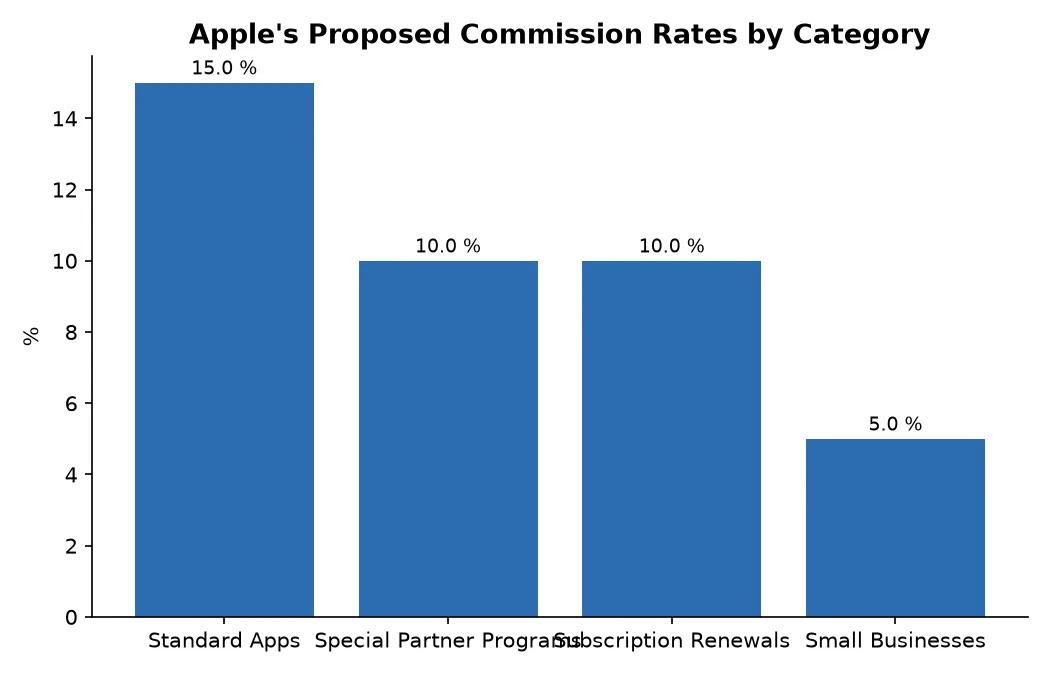
Tiered Commission Rates Explained
The proposed structure is not a one-size-fits-all approach. Instead, it introduces a tiered system designed to differentiate between various types of developers and services:
- Standard Applications: A 15% commission on transactions.
- Special Partner Programs: Developers enrolled in specific initiatives, such as those for video, news, or mini-apps, would see a reduced rate of 10%.
- Small Businesses: A preferential rate of 5% is proposed for smaller-scale developers.
- Subscription Renewals: To encourage long-term user retention, renewal fees would be set at 10%.
The Legal Context and Industry Comparison
This proposal comes in the wake of a long-standing legal dispute regarding anti-competitive practices in digital marketplaces. While Apple argues that these fees are necessary for platform sustainability, critics argue that they exceed the boundaries set by judicial guidance.
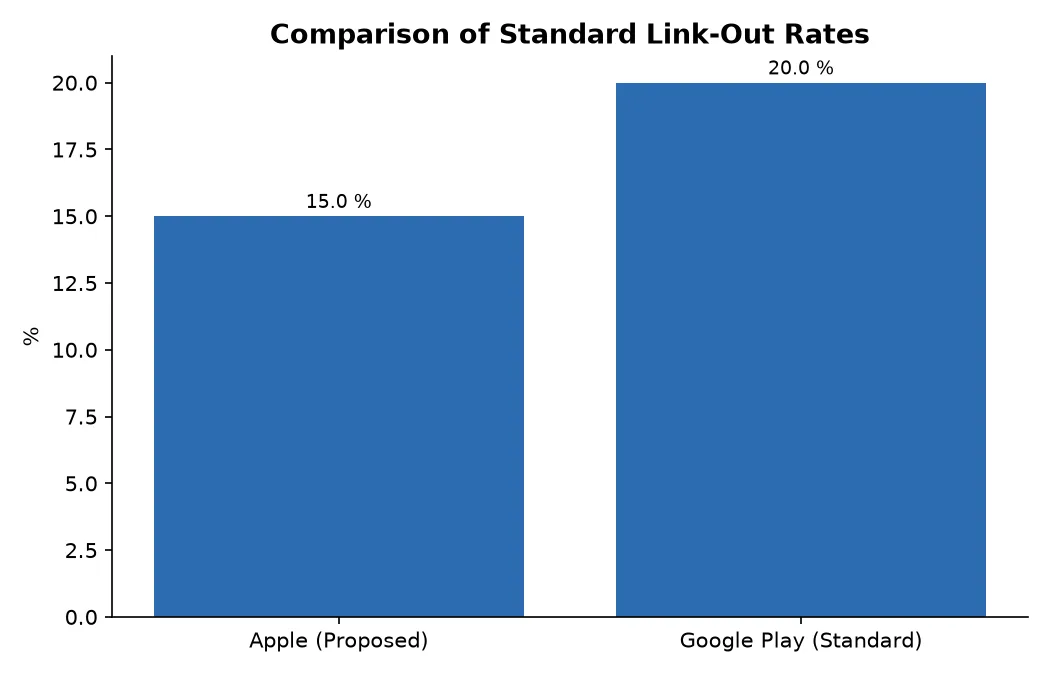
In its filing, Apple also provided context by comparing its proposed rates to those currently found on other major mobile platforms. For instance, the company noted that its competitors’ stores often implement higher rates for standard app transactions, including a 20% fee for certain types of external link-out purchases. This comparison is intended to demonstrate that Apple’s proposed model remains competitive within the broader mobile landscape.
What This Means for the Ecosystem
The outcome of this proposal will have significant implications for both developers and consumers. For developers, the fee structure directly impacts profit margins and business models, particularly for those relying on subscription-based revenue. For users, the way these costs are passed down—or not—could influence the pricing of digital goods and services within their favorite apps.