


The Retirement Tax Paradox
There is a common misconception that retirement means living in a lower tax bracket. While you may have fewer earned income expenses, the way retirement income is structured can lead to a surprising phenomenon: paying more in taxes than you did while working.
This unexpected increase is often driven by the combination of Social Security benefits and Required Minimum Distributions (RMDs) from tax-deferred accounts like 401(k)s and traditional IRAs. When these two income streams interact, they can trigger what experts call the ‘tax torpedo.’
Understanding the ‘Tax Torpedo’
The ‘tax torpedo’ occurs when additional withdrawals from your retirement accounts increase your provisional income enough to make a larger portion of your Social Security benefits taxable. This creates a compounding effect where every extra dollar you withdraw pushes more of your Social Security into the taxable category.
In extreme cases, this stacking of ordinary income and taxable benefits can result in an effective tax rate exceeding 40%. This isn’t because the government has raised the top rate, but because the math of your combined income pushes you into a much higher tax reality than anticipated.
How Social Security is Taxed
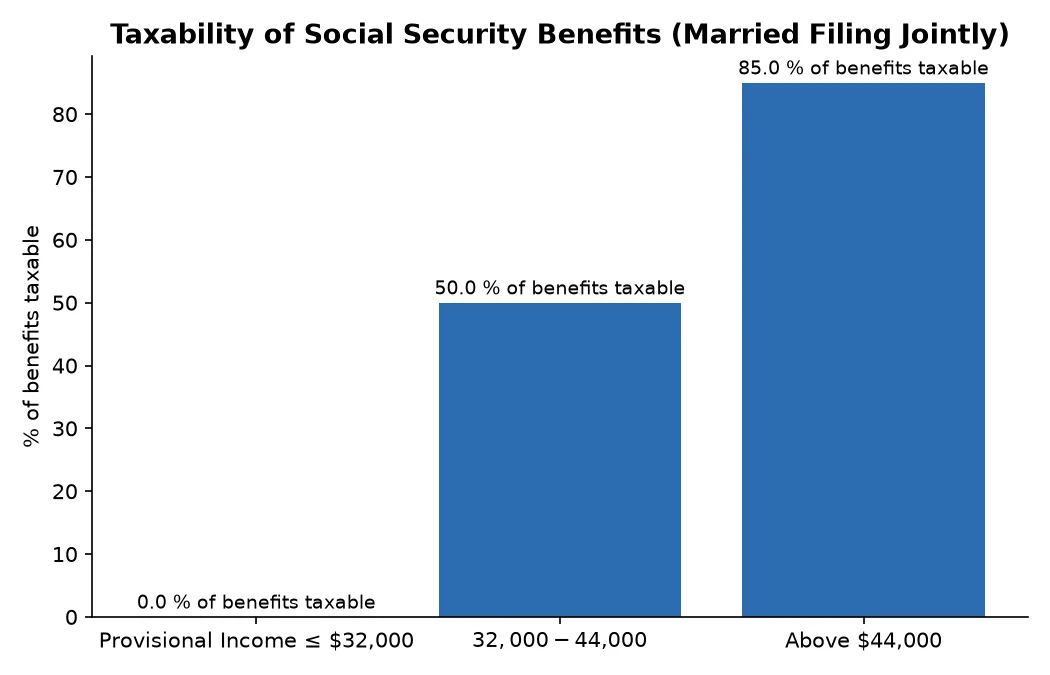
Social Security taxation is determined by your ‘provisional income.’ This is calculated by adding together:
- Your taxable ordinary income
- Capital gains and dividends
- Non-taxable interest
- 50% of your Social Security benefits
Depending on this total, a portion of your benefits—anywhere from 0% up to 85%—may be subject to ordinary income tax rates. Because these thresholds have not been adjusted for inflation in decades, more people are finding themselves in higher tax brackets than previous generations.
Strategic Solutions for a Tax-Efficient Retirement
The good news is that this scenario is not inevitable. With proactive planning, you can design a retirement strategy that minimizes your tax burden and keeps you out of the ‘torpedo’ zone.
1. Diversify with Tax-Free Vehicles
One of the most effective ways to control your taxable income is to utilize tax-free growth vehicles. By contributing to Roth IRAs, Health Savings Accounts (HSAs), or certain life insurance products, you create a source of income that does not count toward your provisional income. This allows you to take necessary funds without triggering higher Social Security taxes.
2. Optimize Withdrawal Strategies
Strategic planning involves calculating the ‘weet spots’ of your income. By managing the timing and amount of your distributions, you can keep your provisional income below the thresholds that trigger high Social Security taxation.
3. Professional Guidance
Navigating the complexities of RMDs, provisional income formulas, and changing tax laws is difficult to do alone. Utilizing sophisticated software or working with a financial professional can help you model different scenarios to ensure your wealth lasts through your golden years without being eroded by preventable taxes.