


The Dilemma of Modern Investing
Navigating today’s financial landscape is a complex balancing act. While U.S. equity markets have shown remarkable resilience—frequently hitting new all-time highs despite inflation and geopolitical tensions—the volatility remains high. This creates a psychological hurdle for many: how to participate in the upside without being devastated by sudden downturns.
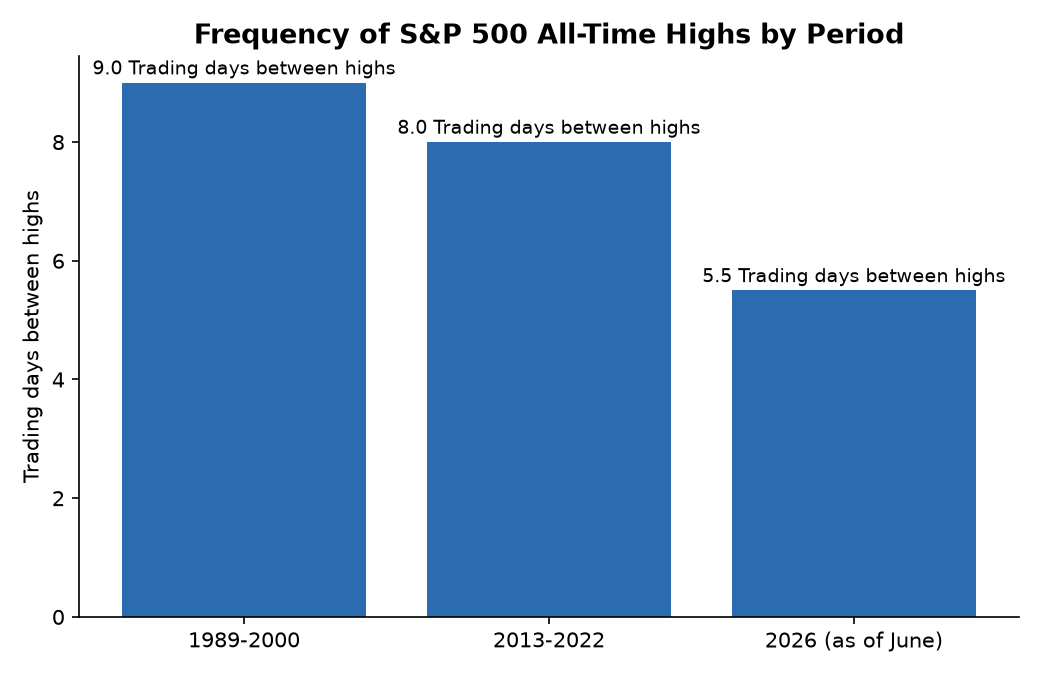
Historically, market peaks tend to cluster during bullish cycles. For instance, the frequency of new highs has accelerated significantly over the decades, moving from roughly every nine trading days in the late 90s to much more frequent occurrences in recent years. This rapid movement can be intimidating for those with a low tolerance for risk.
The Cost of Sitting on the Sidelines
Many investors respond to market turbulence by moving into the safety of cash. Recent data shows that assets in money market funds have reached staggering levels, totaling trillions of dollars. While this provides a sense of security, it comes with a hidden cost: the opportunity cost of missing out on significant market growth.
However, staying fully invested also carries risks. Significant market corrections can have long-lasting effects. Some major indices have taken over a decade to fully recover from historic tech-driven crashes. For investors approaching retirement or those saving for major life milestones, such a recovery period might be unacceptable.
A New Approach: Defined Outcome ETFs
To bridge this gap, a new category of investment vehicles known as defined outcome ETFs has gained popularity. These funds aim to provide a more predictable experience by setting clearer parameters for both potential gains and potential losses.
Buffer ETFs: Capped Gains for Protected Floors
Buffer ETFs are designed for investors who want to stay in the market but need a safety net against initial losses. These funds typically track a major index and offer protection up to a specific percentage (such as 10%, 20%, or 30%).
- How they work: If the market falls within the buffer range, the ETF absorbs the loss. If the fall exceeds the buffer, the investor is exposed to the remaining decline.
- The Trade-off: In exchange for this protection, the fund usually caps the maximum profit an investor can achieve. If the market surges beyond the cap, the investor’s gains are limited to that predetermined level.
Managed Floor ETFs: Hedging Against Severe Crashes
For those seeking more aggressive growth potential but fearing catastrophic drops, managed floor ETFs offer an alternative. Rather than absorbing small losses, these funds use active options strategies to protect against deep market crashes.
- How they work: These funds use a systematic approach to hedge against significant downside, aiming to provide a safety floor even during severe volatility.
- The Trade-off: Because they rely on active management and options, the level of protection can fluctuate, and they often carry higher management fees than more static buffer strategies.
Finding the Right Fit
Neither strategy eliminates risk entirely, nor should they replace a comprehensive financial plan. They are tools designed to provide clarity. Buffer ETFs may suit those with shorter-term needs, while managed floor ETFs might appeal to long-term investors seeking a cushion against extreme market events. By choosing a strategy that aligns with their specific risk tolerance, investors can find a way to stay engaged with the market without the fear of total exposure.