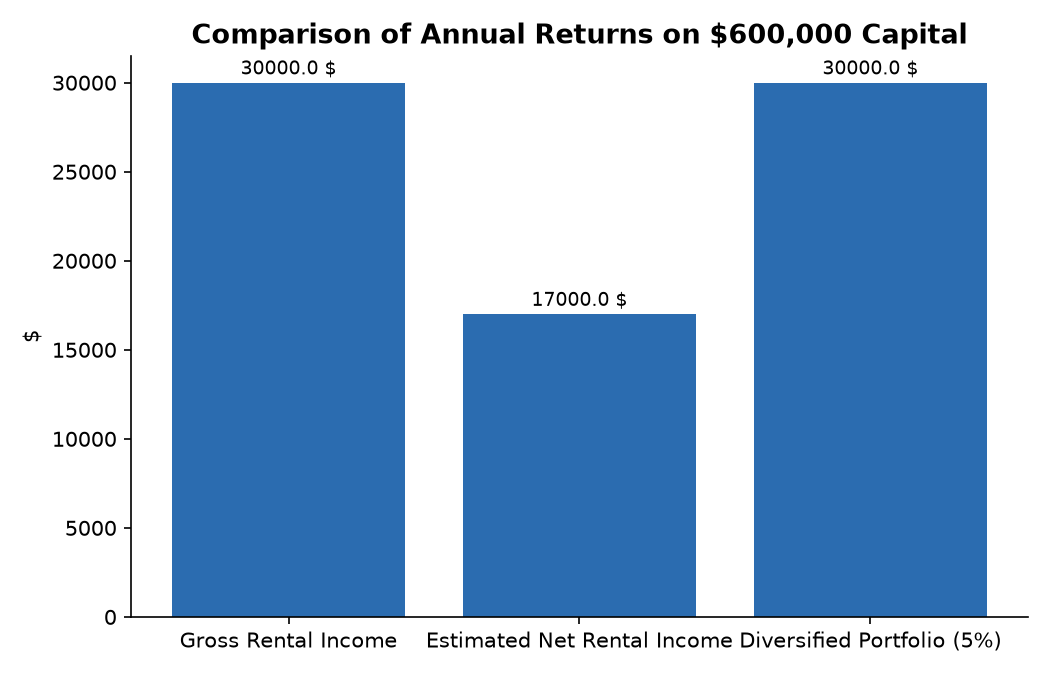



Beyond Gross Income: Calculating Real Returns
When homeowners consider turning their former residence into an investment property, they often focus on the gross monthly rent. However, a common mistake is failing to account for the true cost of ownership. To understand if a property is a viable investment, one must calculate the net rental yield.
A profitable rental must absorb several recurring expenses, including:
- Property taxes and insurance
- Maintenance and unexpected repairs
- Management fees for third-party agencies
- Periods of vacancy between tenants
Once these costs are deducted from the annual income, the actual return on capital may be significantly lower than expected, sometimes even trailing behind what could be earned through diversified market investments.
The Tax Implications: Exclusions and Depreciation
The decision to sell is often driven by tax efficiency. In the United States, homeowners can benefit from significant tax exclusions on capital gains if the property has been their primary residence for a specific period. This allows individuals to protect a substantial portion of their profit from taxation, provided they meet the ownership and residency requirements.
However, converting a home into a rental introduces a new layer of complexity: depreciation. While you can deduct the building’s value over several decades to reduce taxable income, this comes with a catch. When you eventually sell the property, the tax authorities may require you to ‘ecapture’ those deductions, potentially leading to a significant tax bill that could offset your profits.
Liquidity and Risk Management
Beyond the math, there is the question of asset concentration. Owning multiple properties means a large portion of your net worth is tied to a single geographic market and a single asset class (real estate). This lack of liquidity means that if you need cash quickly, you cannot easily tap into your home’s value.
Selling converts an illiquid asset into cash that can be easily reinvested into a diversified portfolio, reducing risk. Conversely, keeping the property maintains exposure to real estate, which can act as a hedge against inflation but requires a higher level of active management.
A Framework for Your Decision
Before making a final move, consider these three pillars:
- Financial Return: Does the net yield exceed what you could earn in a diversified stock portfolio?
- Tax Strategy: Will selling now allow you to use primary residence exclusions, or will renting create complex depreciation recapture issues later?
- Lifestyle Fit: Are you prepared to act as a landlord, managing repairs and tenant issues, or do you prefer a passive investment approach?
Ultimately, neither path is objectively better; the right choice depends entirely on your long-term financial objectives and your tolerance for hands-on property management.