


The Bottleneck of Undersea Infrastructure
In the current digital landscape, the movement of massive datasets relies heavily on a complex and often fragile network of undersea fiber-optic cables. While these cables form the backbone of global connectivity, they present significant logistical challenges, including high installation costs and the difficulty of repairing damage caused by environmental factors or maritime activity.
As hyperscale cloud providers and artificial intelligence laboratories expand their operations, the need for more resilient and high-capacity data routes has become critical. Traditional wireless and radio-based satellite communications lack the necessary bandwidth to match the speeds required by modern data centers, creating a gap that current technology struggles to fill.
The Rise of Orbital Laser Networks
A new player in the aerospace and telecommunications sector is aiming to bridge this gap by moving the ‘data superhighway’ from the ocean floor to Earth’s orbit. By utilizing advanced optical technology, this new approach seeks to transmit data via lasers between spacecraft and ground stations.
The primary technical hurdle for space-to-ground laser communication has historically been atmospheric interference. Clouds and weather patterns can distort signals, making a consistent, high-speed link difficult to maintain. However, new engineering solutions are being developed to mitigate these effects, potentially allowing for unprecedented throughput.
Scaling for the AI Era
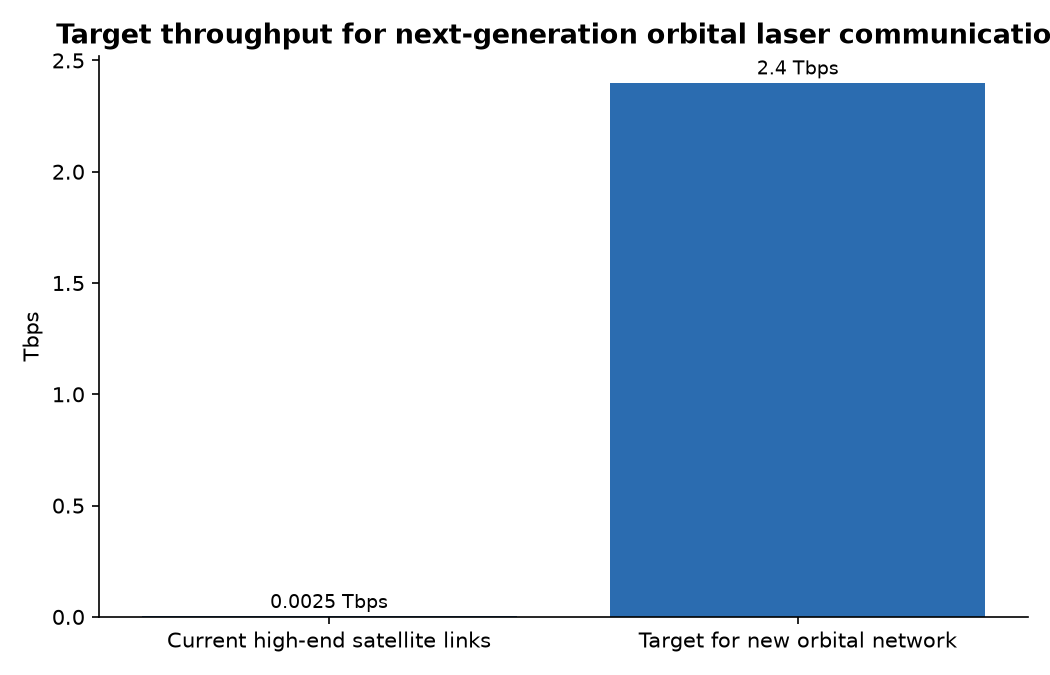
The ultimate goal for this emerging technology is to achieve speeds comparable to undersea fiber, with targets reaching into the terabits per second. This level of performance is essential for serving the most demanding customers, such as:
- AI Research Labs: Requiring massive data synchronization across continents.
- Hyperscale Cloud Providers: Managing global data center synchronization.
- Content Delivery Networks (CDNs): Ensuring low-latency access to data in underserved regions.
By targeting routes that are currently expensive or lack robust infrastructure—such as connections between Africa and South America or long-distance paths between Europe and Australia—orbital laser networks could provide a more flexible alternative to traditional cabling.
Future Outlook and Competitive Landscape
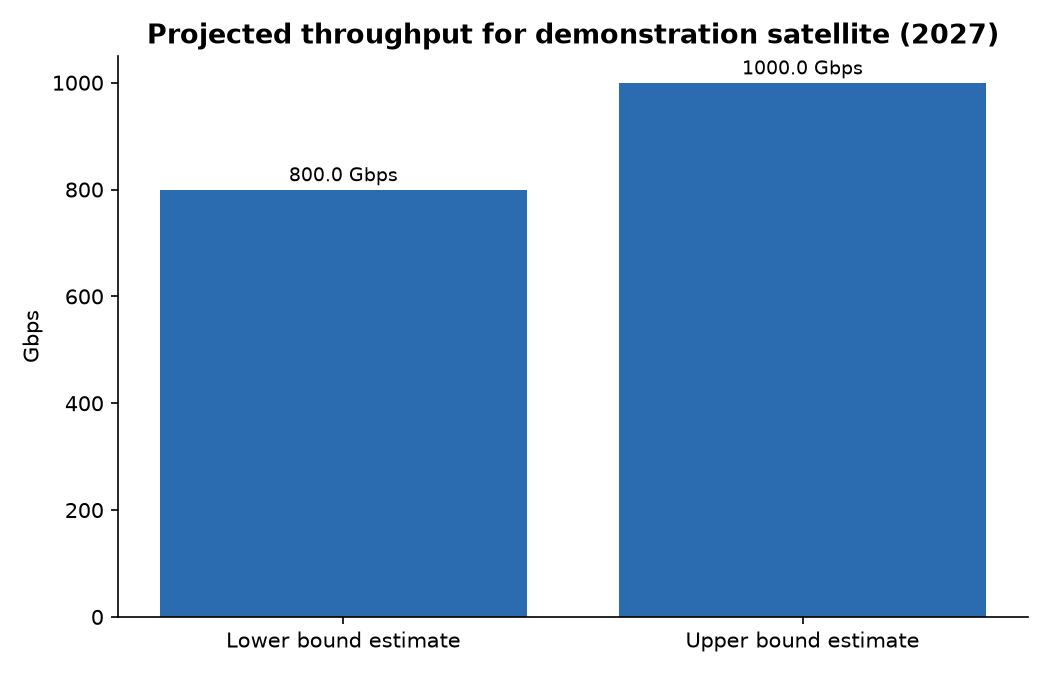
While the ambition is high, the path to a fully operational orbital network is paved with engineering challenges. The roadmap involves building specialized optical terminals and testing these systems via demonstration satellites. Industry experts suggest that while satellite technology is evolving from a ‘last resort’ to a dependable infrastructure, the transition to high-bandwidth, data-center-grade connectivity will require precision engineering and significant investment.
The sector is seeing increased interest from both specialized startups and major aerospace players, all racing to solve the problem of global data transit. As the world’s data consumption continues its exponential climb, the winner of this race will likely be the one who successfully masters the physics of high-speed optical communication in orbit.