


The Great Retirement Misconception
For decades, the primary objective for most investors is simple: accumulate a specific amount of capital. You track your progress, monitor market fluctuations, and wait for that magical number to appear on your statement. But hitting your target number is merely a milestone of accumulation, not a comprehensive blueprint for your future lifestyle.
The critical shift occurs the moment you stop contributing to your accounts and start drawing from them. The question shouldn’t be « Do I have enough saved? » but rather « How will I efficiently transform these assets into a sustainable monthly paycheck for the next three decades? »
The Shift from Accumulation to Distribution
During your working years, financial management is relatively straightforward. You earn, you spend, and you invest the surplus. If the market dips, you have the luxury of time and a steady paycheck to offset the volatility. Once you retire, the rules of the game change entirely. Your portfolio becomes your primary source of income, and every withdrawal decision has long-term consequences.
Strategic income planning involves several complex variables that a standard savings calculator cannot address, including:
- Safe Withdrawal Rates: Determining how much you can spend without exhausting your principal.
- Tax Optimization: Coordinating withdrawals between different account types to minimize the tax bite.
- Social Security Timing: Deciding exactly when to claim benefits to maximize lifetime payouts.
- Sequence of Returns Risk: Managing how market downturns early in retirement can impact your long-term solvency.
The Hidden Cost of Poor Withdrawal Strategies
A striking reality of retirement is that two individuals with identical investment returns can experience vastly different financial outcomes based solely on how they manage their distributions. Efficient tax planning, such as strategic Roth conversions, can result in significantly higher after-tax wealth over a lifetime.
One major risk often overlooked is the impact of changing tax statuses. For example, when a couple transitions to single-filer status due to the death of a spouse, they often face higher tax brackets and different standard deductions. Without proactive planning during the years when the couple shared joint tax filings, a surviving spouse might face a much heavier tax burden than necessary.
The Psychological Toll of Uncertainty
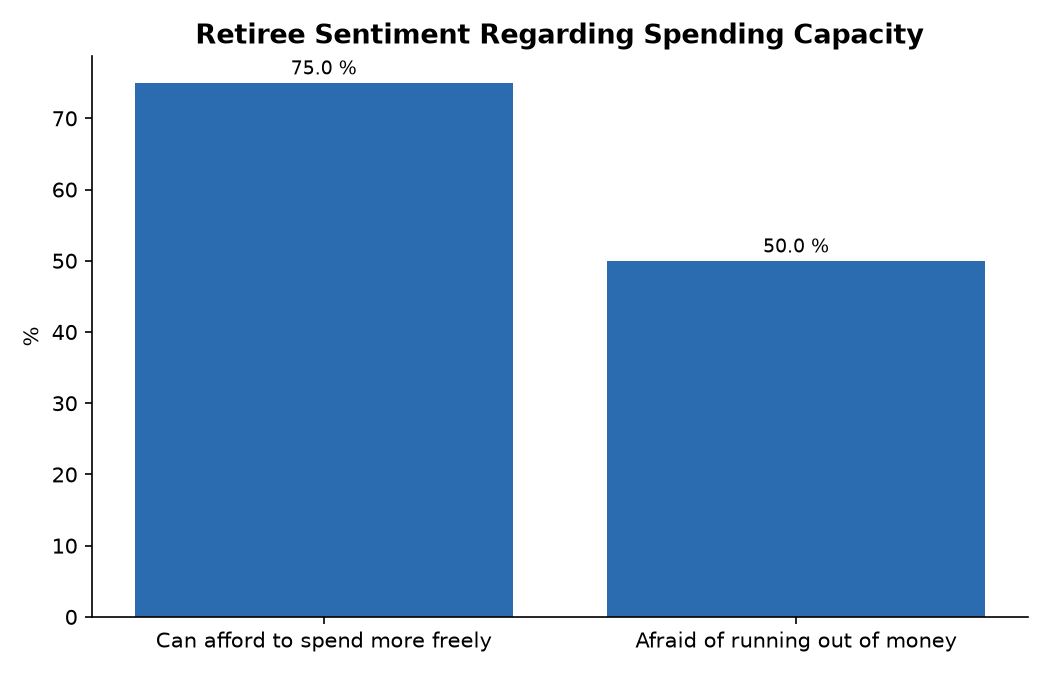
Beyond the mathematical implications, there is a profound emotional component to retirement planning. Recent data suggests a significant gap between what retirees can afford and what they actually spend. A substantial portion of retirees report that they could afford to live more comfortably, yet they continue to restrict their spending out of a deep-seated fear of outliving their money.
This hesitation often stems from a lack of clarity. Without a structured plan that outlines exactly where your monthly income will originate, you are left to navigate your golden years based on guesswork rather than confidence. Reaching your financial goal is a reason to celebrate, but ensuring that goal supports a stress-free lifestyle requires a shift from a growth mindset to a distribution strategy.