


Geopolitical Shockwaves Rattle Crypto Markets
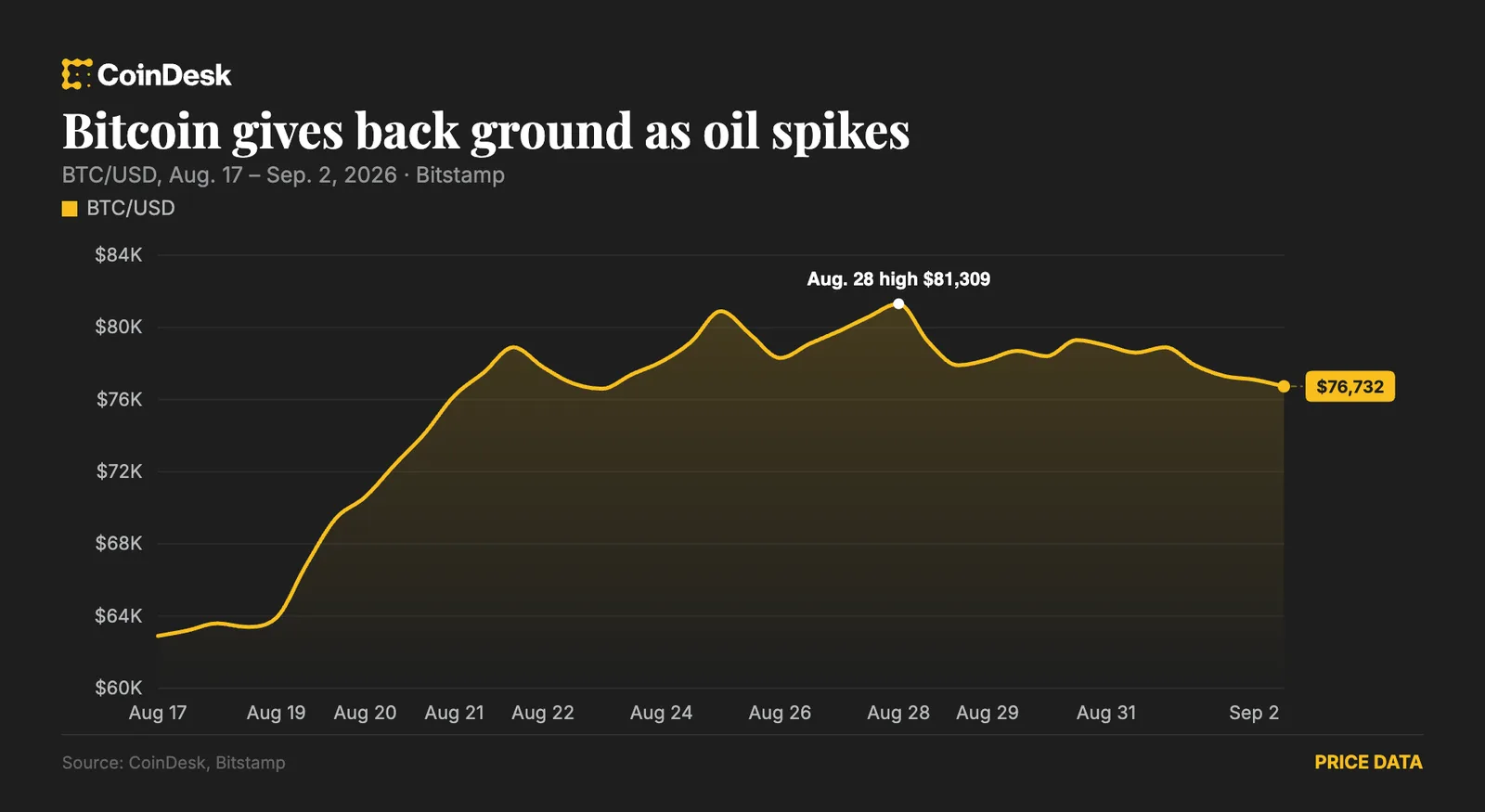
Digital asset markets faced renewed pressure as escalating military action in the Middle East injected fresh uncertainty into global trading. Bitcoin, the world’s largest cryptocurrency by market capitalization, fell below $76,500 — a level that underscored the growing sensitivity of crypto valuations to macroeconomic and geopolitical developments. The sell-off mirrored declines across equities and commodities markets, signaling that digital assets are increasingly moving in tandem with broader risk sentiment.
Oil Prices Surge Past $93 on Supply Fears
Crude oil prices rocketed above $93 per barrel, driven by fears of supply disruptions in one of the world’s most energy-rich regions. The spike reflected trader anxiety over potential retaliation, shipping lane closures in the Strait of Hormuz, and broader instability across the Gulf. Energy markets have historically been among the first to price in geopolitical risk, and this episode was no exception. The rapid ascent in oil costs also reignited concerns about inflationary pressures building globally, which could complicate monetary policy outlooks in major economies.
Why Bitcoin Is Vulnerable to Geopolitical Turmoil
Although Bitcoin was originally positioned as a hedge against traditional financial systems, its behavior during geopolitical crises has complicated that narrative. Rather than serving as a safe haven, the asset has frequently declined alongside equities during periods of acute market stress. Analysts point to several factors behind this pattern: leveraged positions that get liquidated during sharp sell-offs, institutional investors treating crypto as a risk-on asset, and the general tendency of traders to flee to cash or gold during uncertainty. The current drawdown below $76,500 fits squarely within that established dynamic.
Broader Crypto Market Reactions
The downturn was not limited to Bitcoin alone. Major altcoins also posted losses, with Ethereum and several layer-1 tokens declining in tandem. Trading volumes spiked across exchanges as both retail and institutional participants adjusted their positions. Derivatives markets saw a wave of forced liquidations, amplifying the downward move. The total cryptocurrency market capitalization contracted meaningfully, erasing gains accumulated during the preceding weeks of relative stability.
What This Means for Investors
For investors, the current environment serves as a reminder that cryptocurrency markets remain deeply interconnected with global macro trends. Geopolitical events — particularly those involving energy supply disruptions — can cascade through oil prices, inflation expectations, central bank policy, and ultimately into digital asset valuations. Portfolio diversification and risk management remain essential, especially during periods when traditional and crypto markets are moving in the same direction rather than offsetting one another.
Looking Ahead
The path forward for Bitcoin and the broader crypto market will likely hinge on two variables: the trajectory of Middle East tensions and the resulting impact on global energy prices. A de-escalation could provide relief for risk assets across the board, while further escalation may deepen the current correction. Traders will also be watching central bank responses closely, as any shift in monetary policy driven by energy-driven inflation could add another layer of complexity to an already volatile landscape.