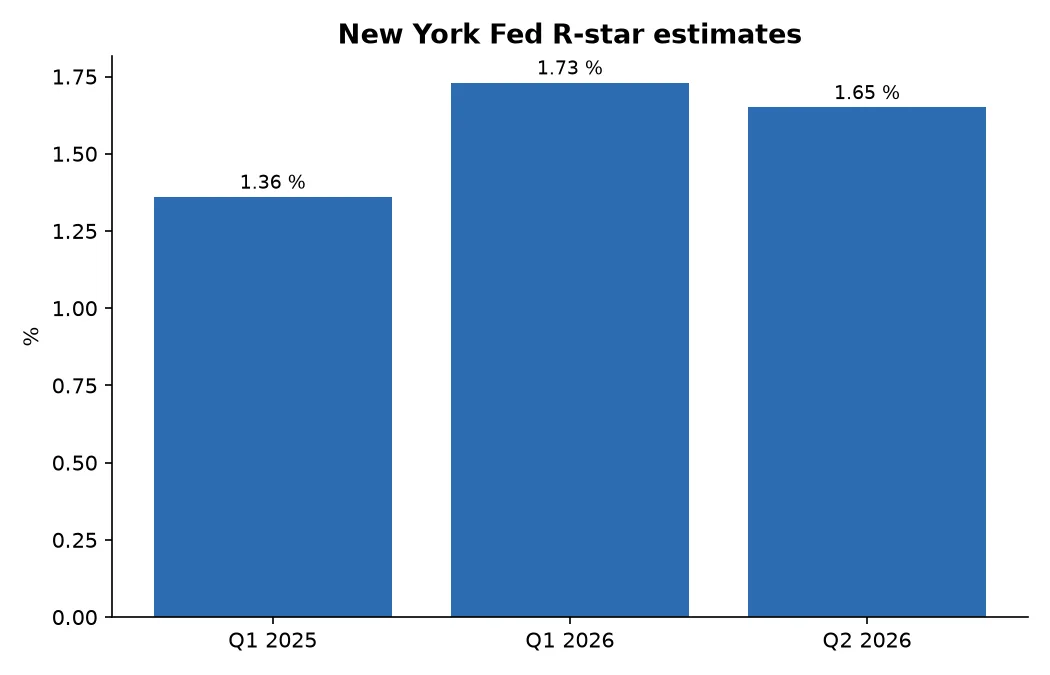


What Is R-Star and Why It Matters Now
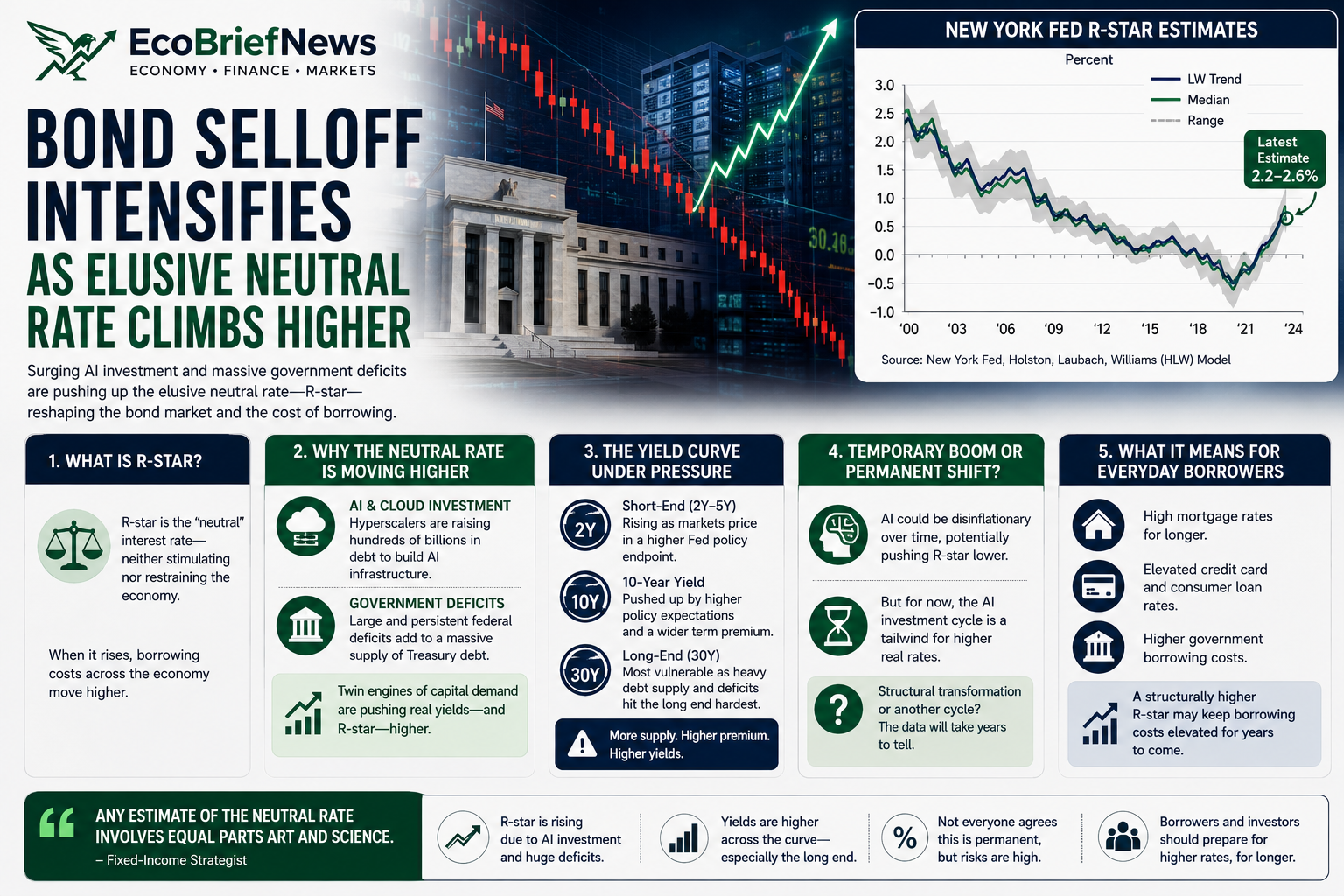
The concept of R-star has long lived in the shadows of academic economics, but it is now commanding attention on Wall Street trading floors. Often described as the « neutral » rate, R-star represents the theoretical level at which monetary policy neither stimulates nor constrains economic growth. When this invisible benchmark shifts, the ripple effects spread across every corner of the fixed-income market — from mortgage rates to the cost of government borrowing.
Why the Neutral Rate Is Moving Higher
A growing chorus of market strategists believes R-star is climbing, driven by two powerful forces reshaping the demand for capital. On one side, hyperscalers — the giants of cloud computing — are pouring enormous sums into artificial intelligence infrastructure, issuing waves of corporate bonds to fund the build-out. On the other, the federal government continues to run large deficits, adding to an already substantial pool of Treasury supply. Together, these twin engines of capital demand are pushing real yields upward and challenging long-held assumptions about where interest rates should settle.
« Any estimate of the neutral rate involves equal parts art and science, » one fixed-income strategist noted, highlighting the inherent difficulty of pinning down a figure that depends on the model and time horizon used.
The Yield Curve Under Pressure
The consequences are visible across the Treasury curve. Shorter-dated maturities, particularly the two-year and five-year segments, are rising because markets are pricing in a higher eventual destination for Fed policy. The ten-year yield is being pushed up from both directions: expectations of a higher policy endpoint and a widening term premium — the additional compensation investors demand for holding longer-duration debt.
The thirty-year segment appears especially vulnerable. Analysts point to a historically asymmetric effect, where elevated public debt and persistent deficits bite hardest at the longest end of the curve. The sheer volume of new long-dated issuance, from both the government and AI-linked corporate borrowers, is absorbing investor capital and lifting yields in ways that complicate any simple narrative about rate cuts.
Temporary Boom or Permanent Shift?
Not everyone is convinced the rise in R-star is here to stay. Some economists argue that artificial intelligence could ultimately prove disinflationary, potentially reversing the current upward pressure on the neutral rate over time. In the near term, however, the AI investment cycle is clearly acting as a tailwind for higher real rates — before any longer-term disinflationary effects might materialize.
The open question is whether the current surge in capital spending represents a structural transformation of the economy or simply another cycle that will eventually fade. Answering that will require years of data, and for now, policymakers are navigating in uncertain territory.
What It Means for Everyday Borrowers
If the neutral rate has indeed shifted to a structurally higher plateau, the implications extend well beyond bond markets. Mortgage costs, credit card rates, and government borrowing expenses could all remain elevated for longer than many households expect. The Federal Reserve‘s ability to return rates to the near-zero levels seen in the previous decade appears increasingly constrained when structural demand for capital remains this robust.
For now, the bond selloff continues — driven not just by cyclical policy moves, but by a deeper, more philosophical debate about the true cost of capital in an era of AI and ballooning public debt.