

A Potential First for Cross-Border Instant Payments
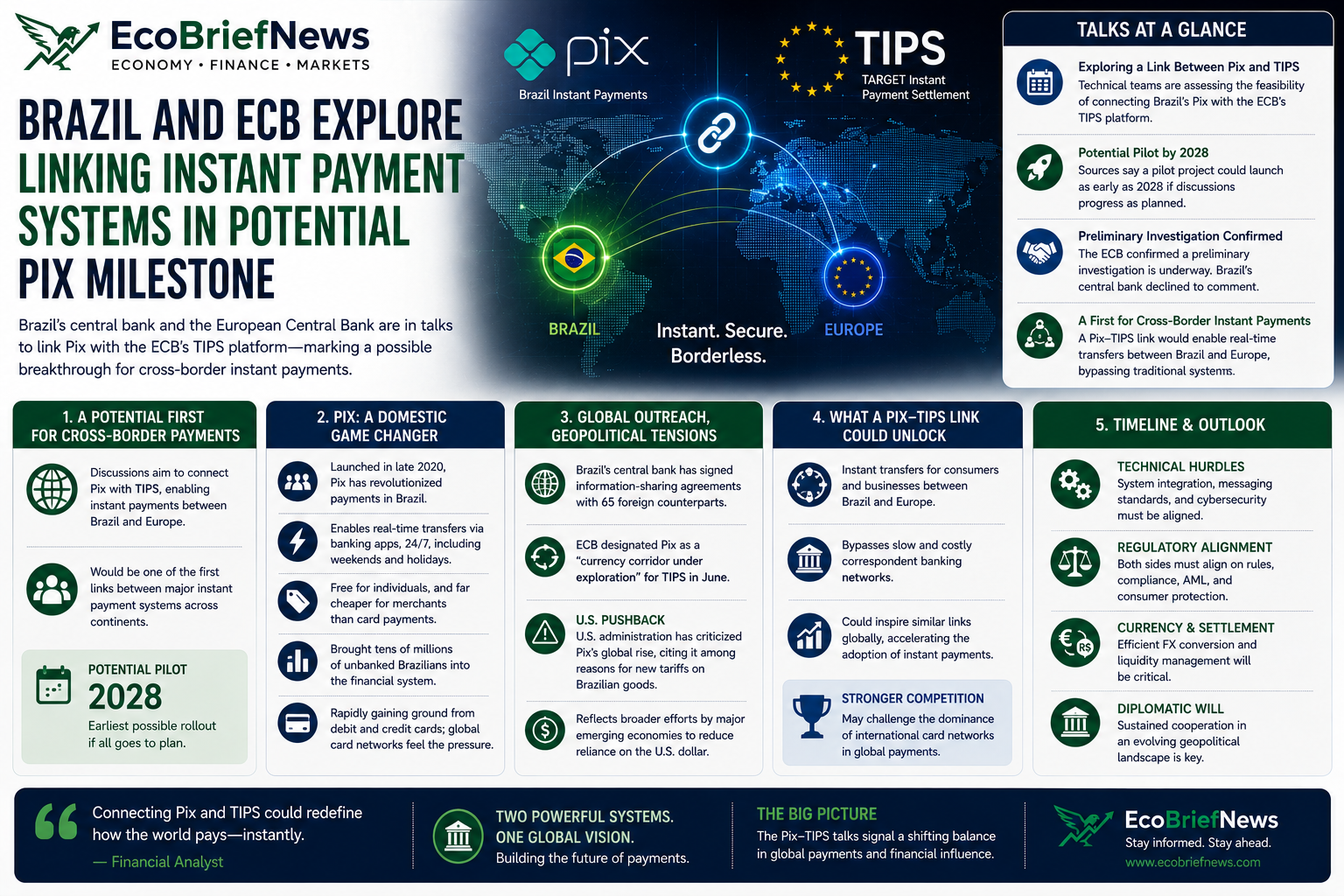
The discussions between Brazil’s central bank and the European Central Bank represent a significant step toward making Pix a globally connected payment network. Two sources with direct knowledge of the matter confirmed that technical teams on both sides are actively assessing the feasibility of linking Pix with the ECB’s TARGET Instant Payment Settlement (TIPS) platform. According to one source, a pilot project could be rolled out as early as 2028 if the initiative progresses according to plan. The ECB confirmed that a preliminary investigation is underway, while Brazil’s central bank declined to comment on the ongoing negotiations.
How Pix Transformed Brazil’s Domestic Payment Landscape
Since launching in late 2020, Pix has fundamentally altered how Brazilians handle everyday financial transactions. The platform enables real-time transfers through banking apps, offers free person-to-person payments, and dramatically reduces merchant costs by bypassing much of the traditional card-payment infrastructure. It has brought tens of millions of previously unbanked citizens into the formal financial system while steadily eroding the market share of debit and credit cards. Global card networks have felt the competitive pressure as Pix becomes the dominant payment method across Latin America’s largest economy.
Growing International Reach and Rising Geopolitical Friction
Brazil’s central bank has signed information-sharing agreements with 65 foreign counterparts as part of a broader strategy to connect Pix with payment systems around the world. The ECB designated Pix as a « currency corridor under exploration » for TIPS back in June, signaling growing institutional interest in the potential interconnection.
However, this expansion has drawn sharp scrutiny from Washington. The U.S. administration has raised concerns about Pix’s rapidly growing global influence, citing the platform among the practices used to justify the imposition of new tariffs on Brazilian goods. The debate unfolds against a wider backdrop of major emerging economies actively exploring ways to reduce dependence on the U.S. dollar in international trade, adding another layer of complexity to the diplomatic equation.
What a Pix-TIPS Link Could Mean for Global Payments
If realized, a connection between Pix and TIPS would represent a landmark achievement in cross-border payment infrastructure. It would enable consumers and businesses in Brazil and Europe to transfer funds instantly across borders, bypassing the slower and costlier correspondent banking system. Such a development could also inspire similar cross-border instant payment initiatives in other regions, potentially challenging the long-standing dominance of international card networks in global settlements.
Timeline and Outlook
A potential pilot in 2028 would mark a historic milestone, but significant technical, regulatory, and diplomatic hurdles remain. The success of the initiative will depend on alignment between European and Brazilian regulatory frameworks, currency conversion mechanisms, and the willingness of both jurisdictions to cooperate on oversight. As global payment ecosystems evolve rapidly, the Pix-TIPS talks highlight a shifting balance of power in international finance.