
The Monetary Challenge in Latin America’s Largest Economy
Brazil is currently navigating a delicate economic period. Despite a recent trend toward easing monetary policy, the nation’s benchmark interest rates remain among the most elevated globally. This high-cost environment poses a significant hurdle for domestic growth and investment.
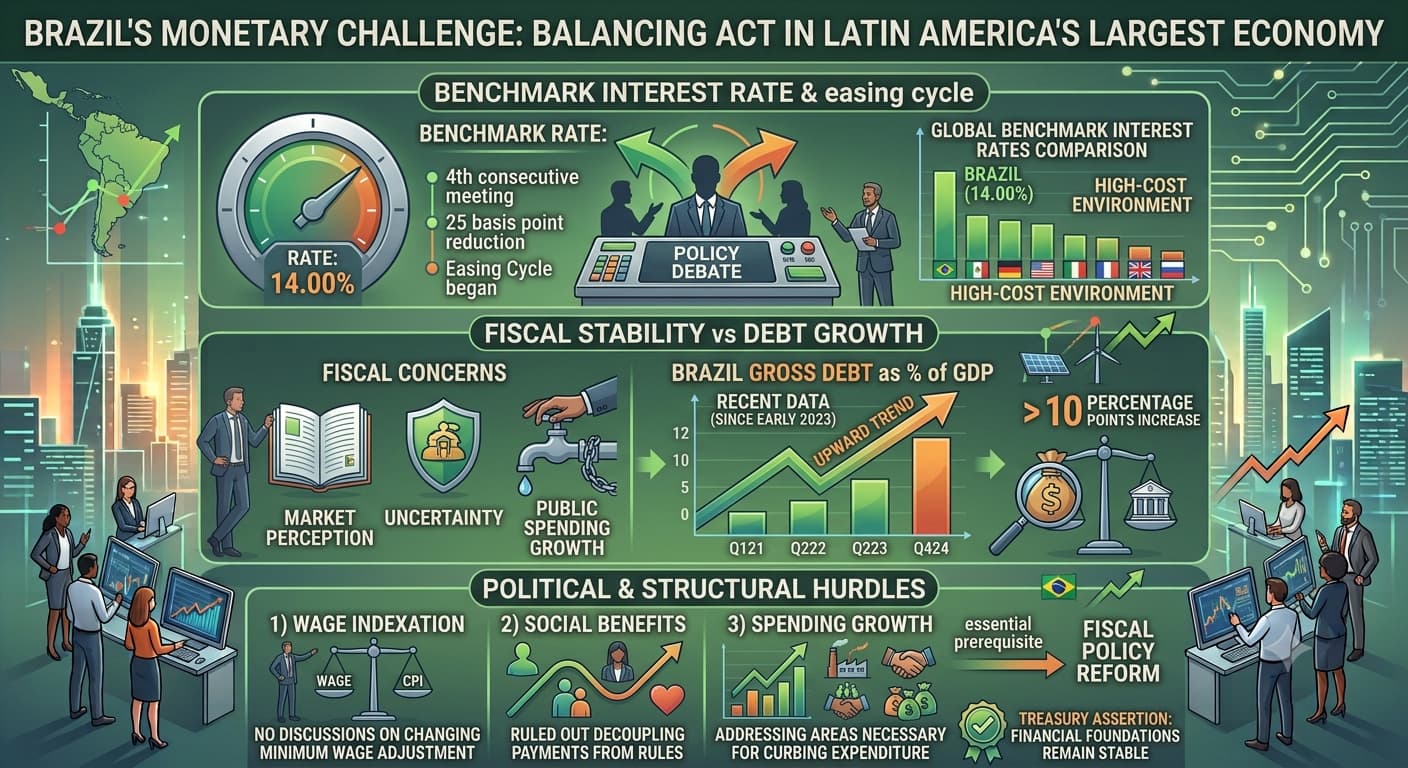
The central bank recently implemented a 25 basis point reduction, marking the fourth consecutive meeting where rates were lowered. However, this brings the benchmark rate to 14.00%, a level that continues to weigh heavily on the economy. While the cycle of easing began earlier this year, the speed of the descent remains a subject of intense debate among policymakers and market participants.
Fiscal Stability vs. Debt Growth
A primary driver of these high borrowing costs is the market’s perception of the country’s fiscal health. There are ongoing concerns regarding the government’s ability to control the growth of public spending. This uncertainty has directly impacted the cost of financing national debt.
Recent data highlights the growing pressure on public finances. Since the beginning of 2023, Brazil’s gross debt as a percentage of its Gross Domestic Product (GDP) has seen a notable increase, rising by more than 10 percentage points. This upward trend in debt-to-GDP ratio complicates the central bank’s efforts to lower interest rates without risking inflationary pressures or fiscal instability.
Political and Structural Hurdles
The government has expressed a strong desire to lower interest rates, but officials acknowledge that fiscal policy reform is the essential prerequisite. To successfully reduce borrowing costs, the administration must demonstrate a long-term commitment to curbing mandatory spending growth.
However, several structural challenges remain:
- Wage Indexation: There are currently no discussions regarding changing how the minimum wage is adjusted.
- Social Benefits: The government has ruled out decoupling social welfare payments from current adjustment rules.
- Spending Growth: Economists suggest that without addressing these specific areas, managing the pace of public expenditure will remain difficult.
Despite these fiscal tensions, the Treasury has maintained that there is no risk of default on its debt obligations, asserting that the nation’s financial foundations remain stable even as it tackles these systemic challenges.