


The Rapid Expansion of Credit Access
Under the administration of President Luiz Inácio Lula da Silva, Brazil has witnessed a massive transformation in how private-sector workers access credit. By expanding payroll-deductible lending rules to include domestic and rural employees, the government aimed to provide cheaper alternatives to high-interest debt. However, recent data from the central bank suggests this ‘evolution’ is moving much faster than anticipated.
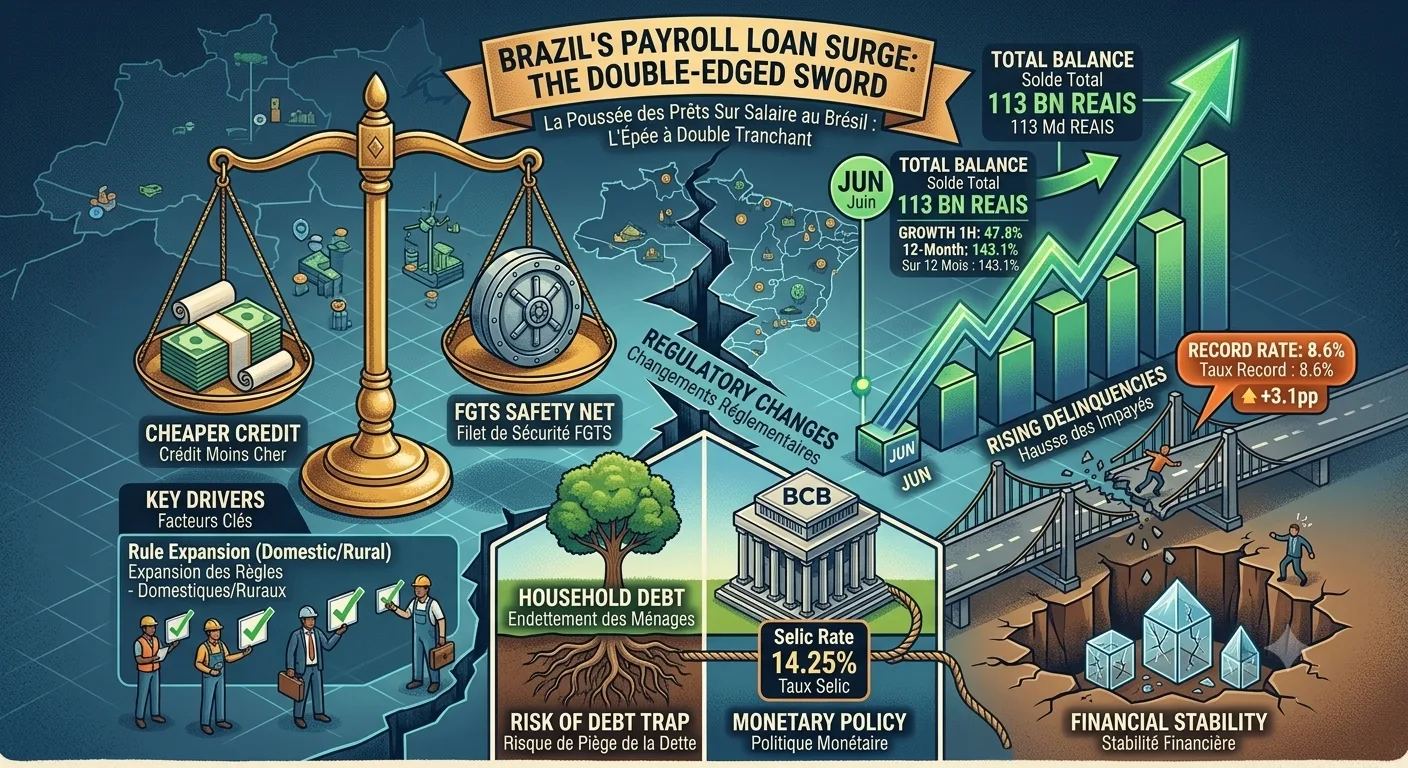
The results have been explosive. The outstanding balance of these specific loans skyrocketed by 47.8% in the first half of the year alone. Looking at a 12-month horizon, the growth reaches a staggering 143.1%, making it the fastest-growing credit category in the country. By June, the total stock of these loans hit 113 billion reais, nearly triple the amount seen before the regulatory changes.
Rising Delinquencies and the Debt Trap
While increased access to credit is often seen as a win for consumer empowerment, the rapid growth is being shadowed by a deterioration in credit quality. For the first time on record, delinquency rates in the payroll loan segment reached 8.6% in June. This represents a 3.1 percentage point increase in defaults within this specific program this year.
The speed of this credit expansion is raising red flags among economists. There is growing concern that this isn’t just a process of consumers refinancing expensive debt into cheaper options, but rather a surge in entirely new borrowing. This trend risks driving household indebtedness to dangerous levels, especially as credit growth potentially outpaces income growth.
The Impact on Monetary Policy
This credit boom complicates the Central Bank of Brazil’s mission to stabilize the economy. With the benchmark Selic rate remaining at a high 14.25%, the bank faces a difficult balancing act: managing high interest rates while dealing with a surge in consumer spending fueled by easy credit. If the surge in borrowing contributes to inflation, the central bank may find it harder to lower rates in the near future.
To mitigate these risks, new government measures are being introduced. One such measure allows lenders to use balances from the FGTS (severance fund) to repay overdue loans, providing a safety net for banks. However, central bank officials warn that it is still unclear if delinquency rates have reached their peak.
Key Indicators of the Credit Boom
The data highlights a clear tension between credit availability and financial stability. While the volume of lending has reached record highs, the proportion of income dedicated to servicing debt has also hit a record 28.5%, signaling increased pressure on Brazilian households.