

The New Frontier of Data Center Expansion
The landscape of digital infrastructure is facing a significant turning point. With global investment in data center development projected to reach staggering heights by the end of the decade, developers are hitting a wall. It isn’t just about capital; it is about physical reality. Constraints regarding power grid capacity and local political regulations are making it increasingly difficult to build massive facilities in traditional hubs.
To overcome these spatial limitations, the industry is looking toward a new era of connectivity. The goal is to link separate data center campuses together so they can function as a single, synchronized computational unit. However, doing this requires overcoming the fundamental enemy of high-performance computing: latency.
Hollow-Core Fiber: Moving at the Speed of Light
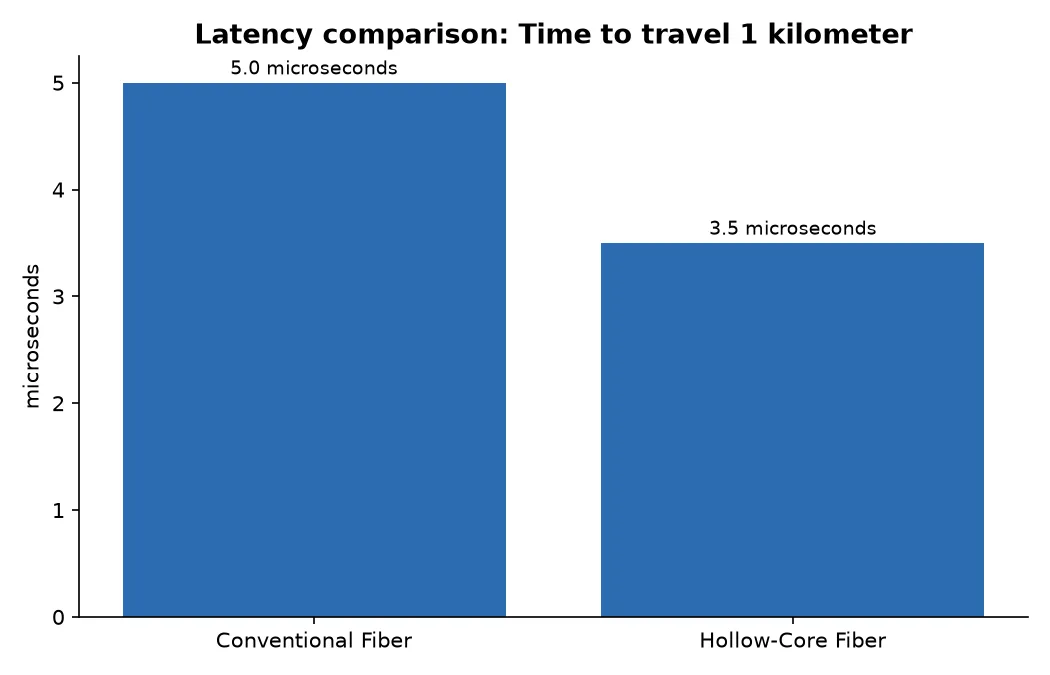
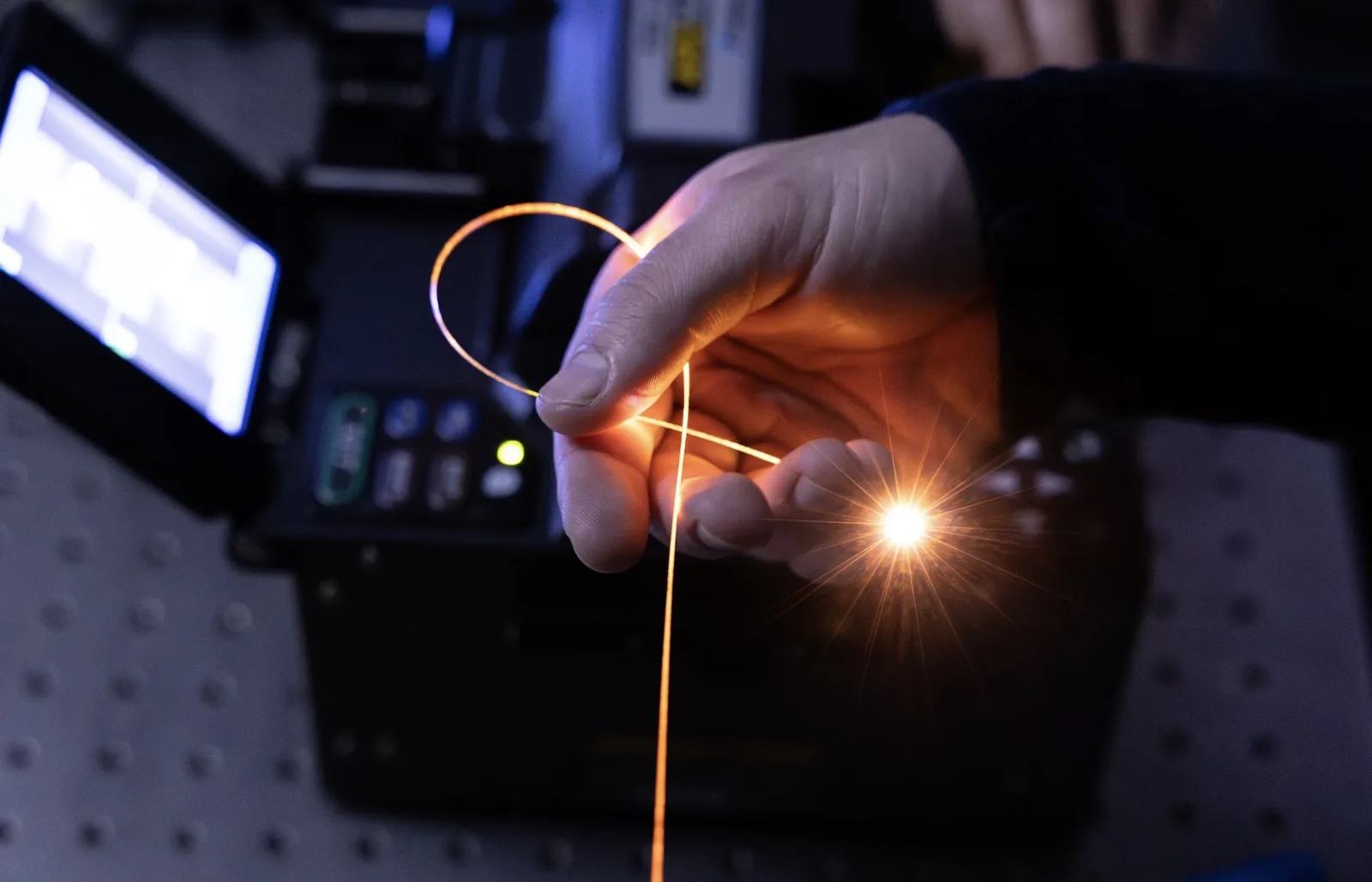
Most modern networking relies on traditional fiber-optic cables, which transmit light through solid glass. While highly efficient, the physical properties of glass slow down the signal. Enter hollow-core fiber, a specialized technology that transmits light through a vacuum chamber at the center of the cable.
This shift from glass to a vacuum allows data to travel significantly faster, approaching the theoretical limits of light speed. The practical implications are transformative for large-scale deployments:
- Reduced Latency: Signals travel approximately 30% faster than in conventional glass fibers.
- Increased Distance: Reducing latency by 30% effectively allows developers to spread hardware across 30% larger distances before performance degrades.
- Synchronized Clusters: This speed enables multiple campuses to operate as one cohesive machine, essential for the next generation of AI.
The Evolution of AI Optimization
The development of this technology marks a strategic shift in how the industry approaches artificial intelligence. Experts suggest we are moving through distinct phases of optimization:
- Phase 1: Compute Optimization. The focus was purely on the power and speed of individual GPUs.
- Phase 2: Network Optimization. The focus shifted to the internal networking within a single data center to maximize compute efficiency.
- Phase 3: Geographic Optimization. The emerging frontier, where the goal is to optimize the physical distance between massive compute clusters to bypass local resource limitations.
Recent funding rounds have already begun to validate this direction. A recent $22 million seed investment, supplemented by a massive follow-on order from a major hyperscaler, underscores the urgent demand for solutions that can bridge the gap between distributed power availability and the need for low-latency synchronization.