


Expanding Beyond Scheduling: The New Productivity Frontier
For years, Calendly has been a staple in the professional toolkit, primarily focused on the logistics of booking meetings. However, the company is now pivoting toward a more comprehensive productivity ecosystem. By entering the highly competitive artificial intelligence note-taking market, Calendly aims to transform how professionals manage the aftermath of a conversation.
The new functionality allows the platform to join virtual meetings, record both audio and video, and provide highly accurate transcriptions. But the real value lies in what happens next: the software can automatically generate summaries, extract actionable items, and even draft follow-up emails, effectively bridging the gap between a conversation and a completed task.
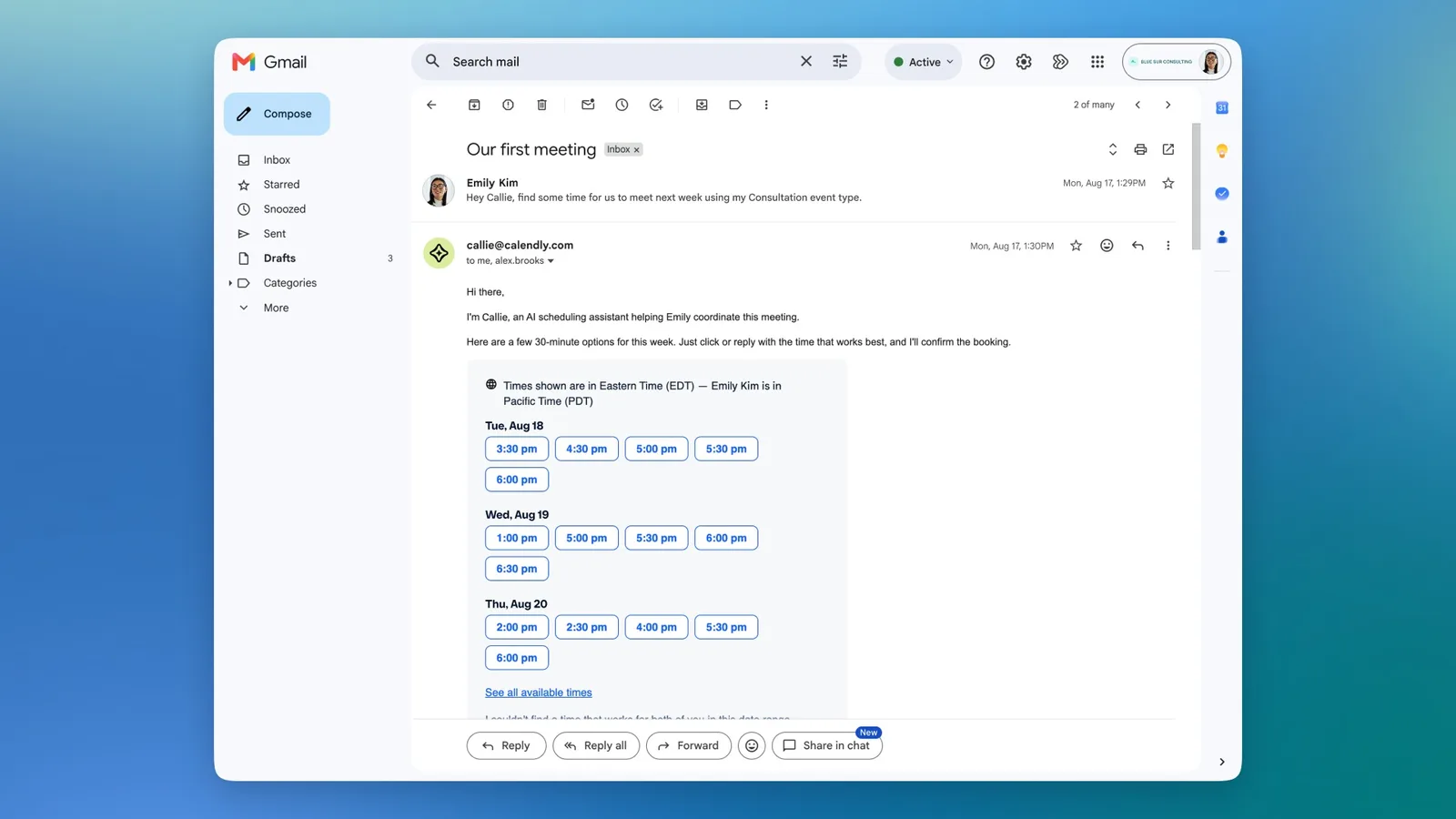
The Rise of the AI Assistant: Meet Callie
Looking further into its roadmap, the company is developing an intelligent AI assistant named Callie. Unlike standard transcription tools, Callie is designed to leverage the existing scheduling data within the Calendly ecosystem. This allows the assistant to:
- Check participant availability seamlessly.
- Coordinate complex meeting setups.
- Provide historical context by surfacing insights from previous discussions.
This move targets high-intensity users—specifically those in sales and marketing roles—who spend a significant portion of their workday in back-to-back meetings and need to automate repetitive administrative workflows.
Privacy and Competition in the AI Era
The market for meeting intelligence is becoming increasingly crowded. Calendly faces competition from specialized transcription startups as well as broad productivity suites that have recently integrated similar AI features. To differentiate itself, the company is placing a heavy emphasis on transparency and user control.
In response to growing concerns regarding digital privacy in virtual spaces, the new tool includes proactive safeguards. The assistant will notify all participants of its presence via chat and can even provide a heads-up before a meeting begins through integration with the scheduling system. Furthermore, any participant retains the power to request that the assistant leaves the meeting at any time.
By focusing on the ‘post-meeting’ workflow—the period where data is converted into actual work—Calendly hopes to move from being a mere scheduling tool to an indispensable engine for professional efficiency.