

Export Decline Driven by Energy and Metals
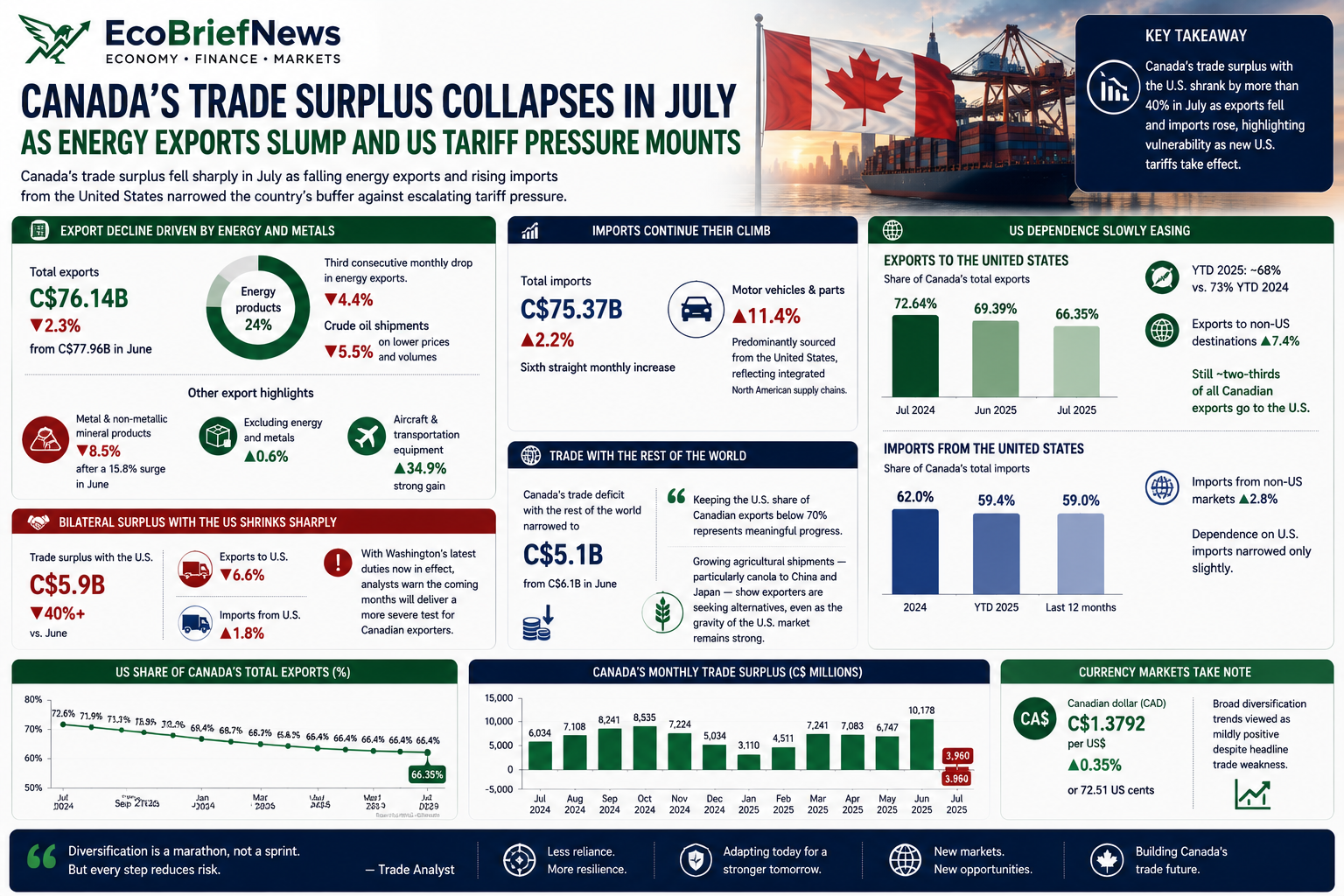
Total exports fell 2.3% to C$76.14 billion, retreating from C$77.96 billion in June. The drop was led by energy products, which represent nearly a quarter of Canada’s total export basket and typically flow overwhelmingly to the United States. Energy export values declined 4.4%, marking the third consecutive monthly drop, as crude oil shipments fell 5.5% on the back of simultaneous declines in both prices and volumes.
Metal and non-metallic mineral products also reversed course, contracting 8.5% after a 15.8% surge the previous month. However, there were bright spots: excluding energy and metals, exports grew 0.6%, and shipments of aircraft and transportation equipment exploded 34.9%, partially cushioning the overall decline.
Imports Continue Their Climb
Meanwhile, imports climbed 2.2% to C$75.37 billion, marking the sixth straight monthly increase. The rise was powered by an 11.4% jump in motor vehicle and parts imports, predominantly sourced from the United States, reflecting the deep integration of North American automotive supply chains.
US Dependence Slowly Easing
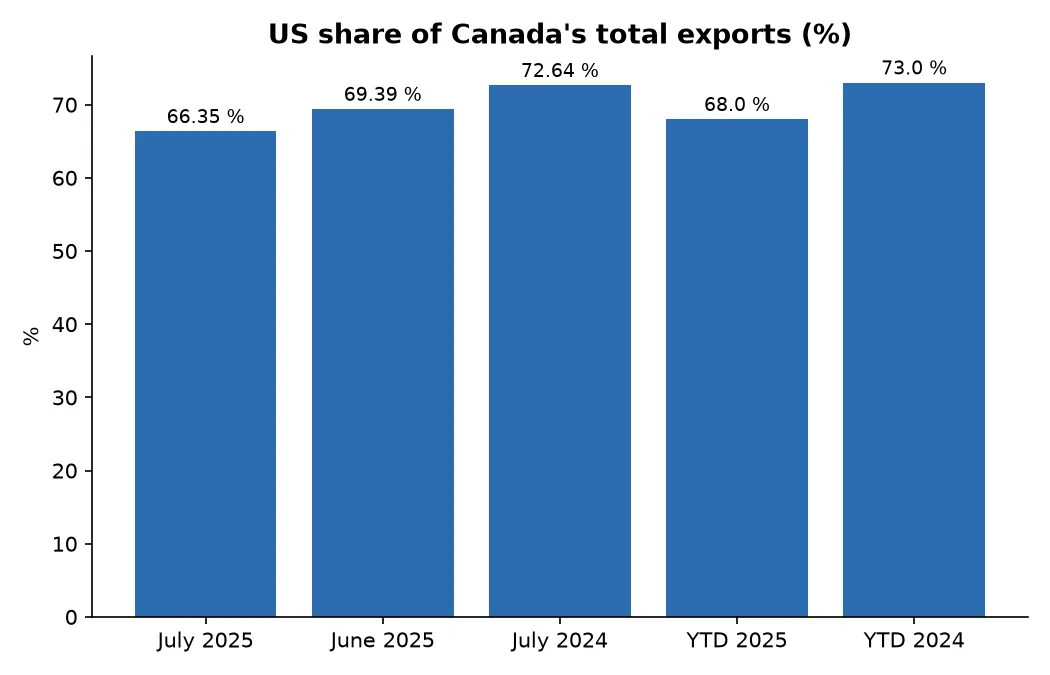
The United States accounted for 66.35% of Canada’s total exports in July, down from 69.39% in June and 72.64% a year earlier. On a year-to-date basis, the US share sits around 68%, compared with 73% during the same period a year ago. While the trend is encouraging, the pace of diversification remains gradual — the US still absorbs roughly two-thirds of all Canadian exports.
On the import side, reliance on the US has barely budged, narrowing only to 59% over the past 12 months from 62% in 2024. Exports to non-US destinations rose 7.4%, while imports from those markets increased 2.8%, narrowing Canada’s trade deficit with the rest of the world to C$5.1 billion from C$6.1 billion.
Bilateral Surplus with the US Shrinks Sharply
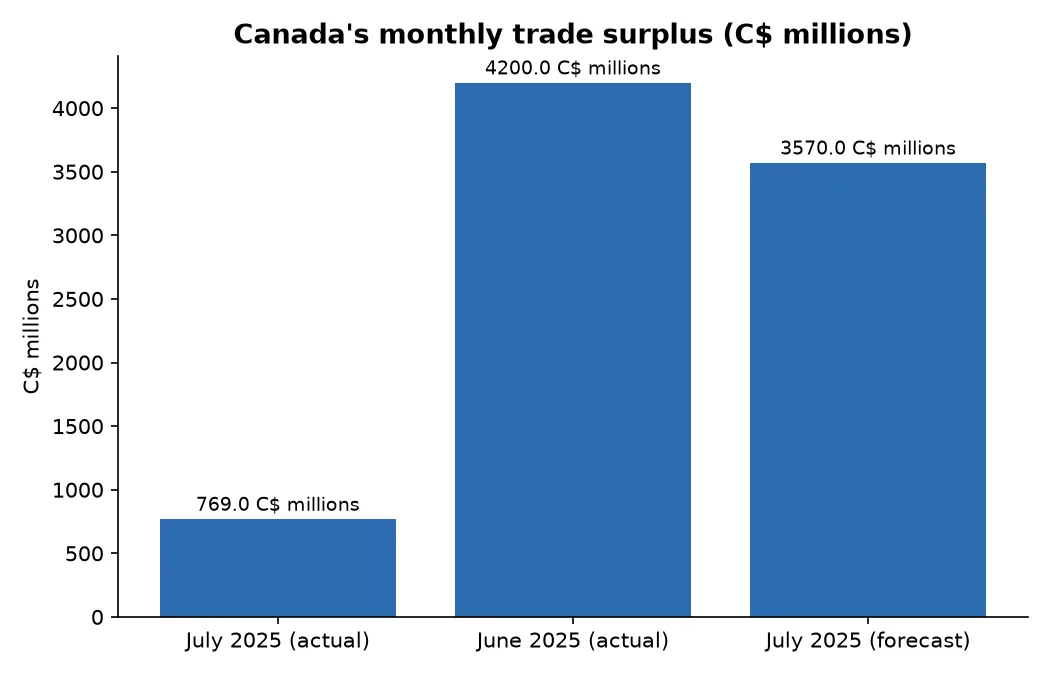
Canada’s trade surplus with the United States contracted by more than 40% to C$5.9 billion, as exports to the US fell 6.6% while imports from the US rose 1.8%. With Washington’s latest duties now in effect, analysts warn the coming months will deliver a more severe test for Canadian exporters than anything seen so far.
The country’s official export credit agency noted that keeping the US share of Canadian exports below 70% represents meaningful progress, pointing to growing agricultural shipments — particularly canola to China and Japan — as evidence that exporters are actively seeking alternatives to the American market, even though gravitational pull toward the US remains powerful.
Currency Markets Take Note
The Canadian dollar strengthened modestly, gaining 0.35% to trade at C$1.3792 per US dollar, or 72.51 US cents, suggesting that currency markets viewed the broader trade diversification trends as mildly positive despite the headline weakness.