

Beyond Text: The Evolution of an AI Confidant
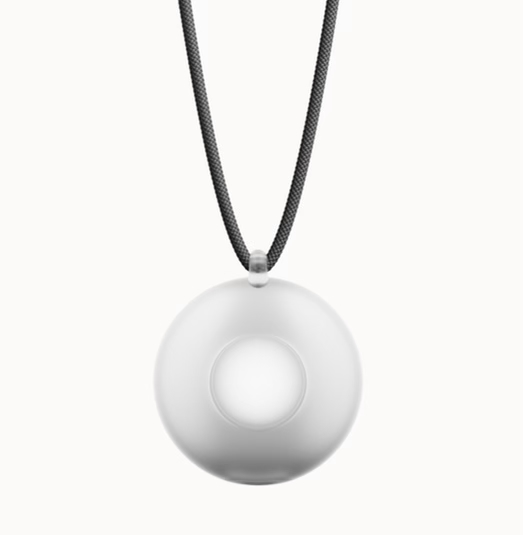
The landscape of wearable artificial intelligence is shifting. Two years ago, Avi Schiffmann introduced ‘Friend,’ a device designed to act as a digital companion by sending users text messages throughout the day. While the concept aimed to mitigate loneliness through AI, the original version lacked the depth of a real conversation.
That changes now with the announcement of Friend 2.0. The latest iteration introduces a built-in speaker, allowing the device to move beyond simple notifications and engage in spoken dialogue. This upgrade aims to provide a consistent, unique personality that can react to the user’s life in real-time, transforming the necklace from a passive notification tool into an active listener.
A Bold Marketing Vision: Neither Assistant nor Lover
The positioning of Friend is unconventional in a market dominated by productivity-focused tools. Unlike Siri or Google Assistant, which function as digital helpers, or specialized AI chatbots designed for romance, Schiffmann describes the product as something more abstract. He has suggested that the device aims to act as a ‘confidant’ or even a ‘deity,’ rather than a traditional assistant or lover.
This philosophical approach to hardware has not been without controversy. Previous marketing efforts, including a billboard campaign in the New York City subway, faced backlash from commuters who viewed the idea of replacing human connection with a digital amulet with skepticism. Despite this, the company is doubling down on its mission to provide a sense of presence through AI.
Rising Costs in a Volatile Hardware Market
While the technological capabilities are expanding, so is the barrier to entry. The new Friend 2.0 comes with a retail price of $249, a significant jump from the $99 price point of the original version. This price hike reflects the added complexity of integrated audio hardware and more advanced conversational processing.
The stakes are high for Schiffmann. The AI wearable sector has proven to be a graveyard for ambitious hardware startups. For instance, Humane Inc. attempted to disrupt the smartphone market with its AI Pin but failed to achieve mainstream traction and ceased operations within a year. As Friend 2.0 enters the market, it must prove that users are willing to pay a premium for the emotional utility of an AI companion.