


A Strategic Pivot in the AI Landscape
The artificial intelligence sector is witnessing a significant structural shift as companies move from specialized hardware development toward integrated cloud services. A prominent player in this space, Groq, has announced a $350 million funding round to accelerate this exact transition. This capital injection marks a decisive move from being a pure AI chip manufacturer to becoming a ‘neocloud’ provider, focusing on high-performance AI infrastructure services.
By shifting its focus, the company aims to provide massive computational power specifically optimized for AI workloads, moving beyond the manufacturing of its proprietary Language Processing Units (LPUs) to managing large-scale data center operations.
Navigating Valuation and Strategic Partnerships
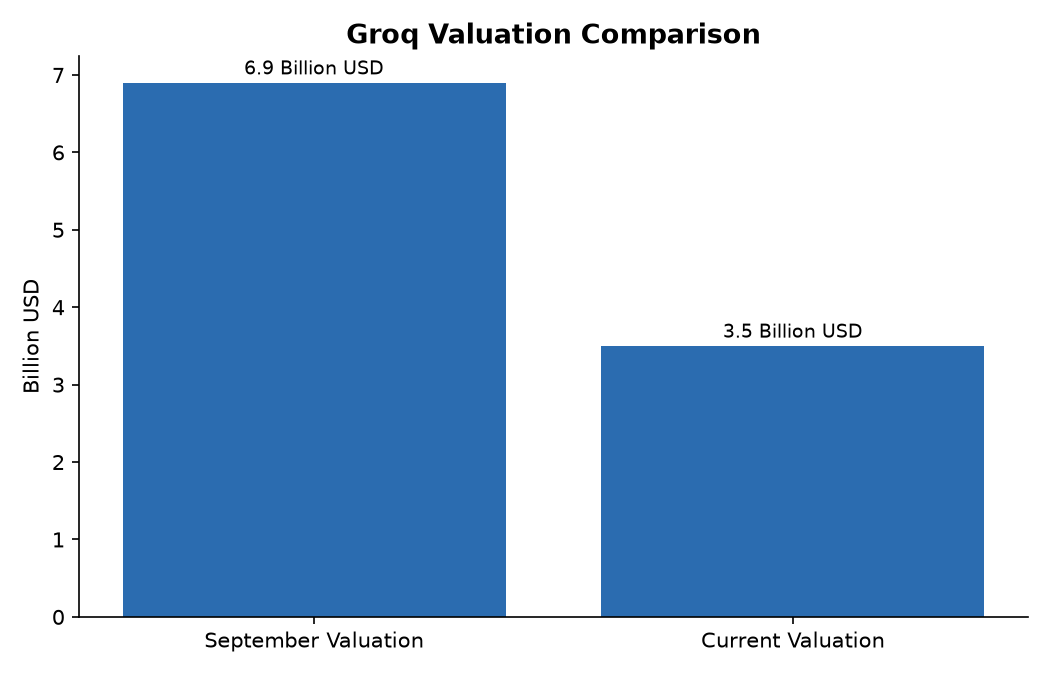
The recent funding round, led by a major investment firm with expected participation from industry leaders, places the company’s valuation at approximately $3.5 billion. While this figure is lower than the $6.9 billion valuation recorded last September, company leadership views this not as a setback, but as a necessary recalibration. This new valuation reflects the company’s restructured identity following recent talent acquisitions and licensing agreements with major industry players.
This shift has created a unique ecosystem: the company has transitioned from being a direct competitor in the hardware space to becoming a strategic partner and customer within the very ecosystem it once sought to disrupt. This positioning places the firm directly inside the hardware infrastructure loop, utilizing advanced accelerated computing to meet the surging demand for AI services.
The Rise of the ‘Neocloud’ Model
The move toward ‘neoclouds’—specialized cloud providers focused on AI—is gaining momentum. Unlike traditional cloud giants, these providers are built specifically to handle the intense computational requirements of AI training and inference. Groq’s expansion plans are ambitious, aiming to increase its power capacity from 54 megawatts to over 200 megawatts by 2027.
- Global Reach: Currently operating 13 data centers across North America, Europe, the Middle East, and Asia Pacific.
- User Base: Serving more than 6 million developers and enterprises.
- Core Focus: Scaling clusters for both training and real-time inference workloads.
Market Risks and Long-Term Viability
While the demand for AI inference is skyrocketing, the neocloud business model presents significant financial challenges. Investors are closely watching the sector’s ability to convert rapid revenue growth into sustainable free cash flow. The industry faces high capital expenditures due to the constant need for cutting-edge hardware, which depreciates rapidly. As companies race to build capacity, the ability to manage debt and hardware lifecycles will determine which players achieve long-term profitability in the AI infrastructure race.