

A New Era in AI-Powered Weather Prediction
Google DeepMind and Google Research have introduced WeatherNext 3, the latest advancement in a wave of deep learning techniques transforming meteorology. Unlike conventional forecasting systems that rely on government supercomputers solving complex physics equations — powerful but slow and costly — AI-driven models learn patterns from vast datasets to produce predictions far more rapidly. WeatherNext 3 claims the top spot among competing AI weather models on Operational WeatherBench, a benchmarking tool developed by the startup Brightband.
What Makes WeatherNext 3 Different
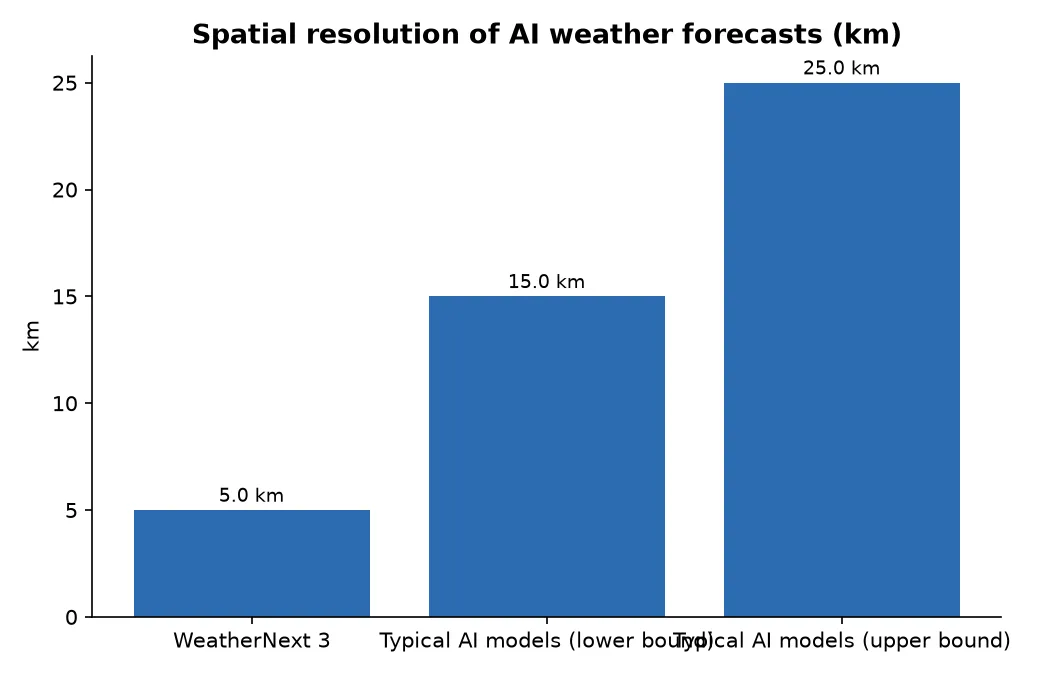
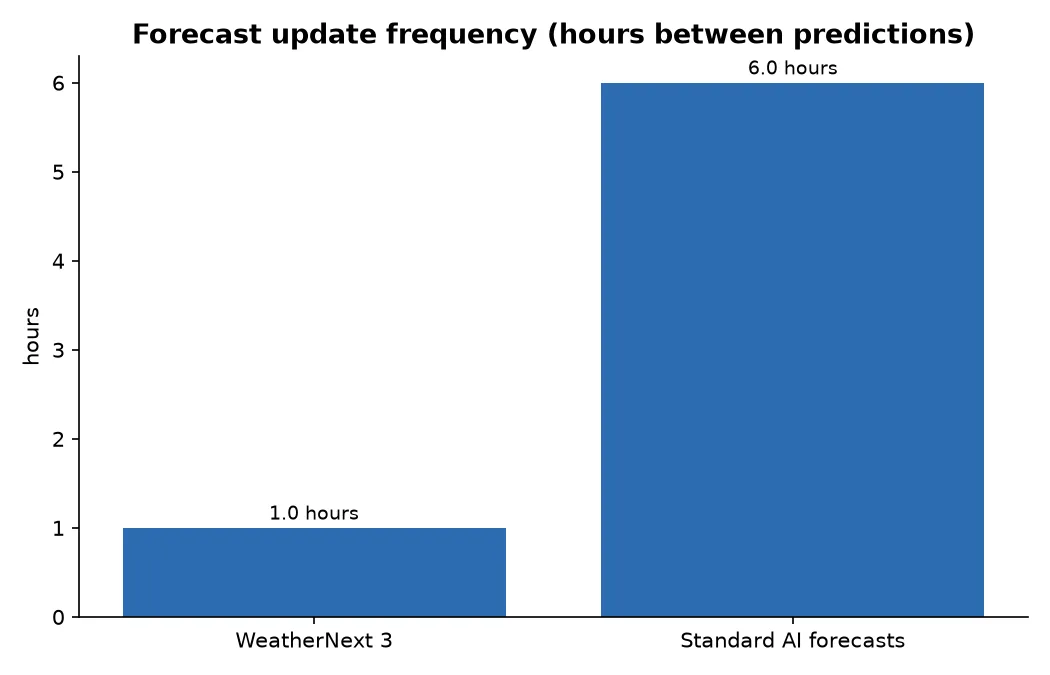
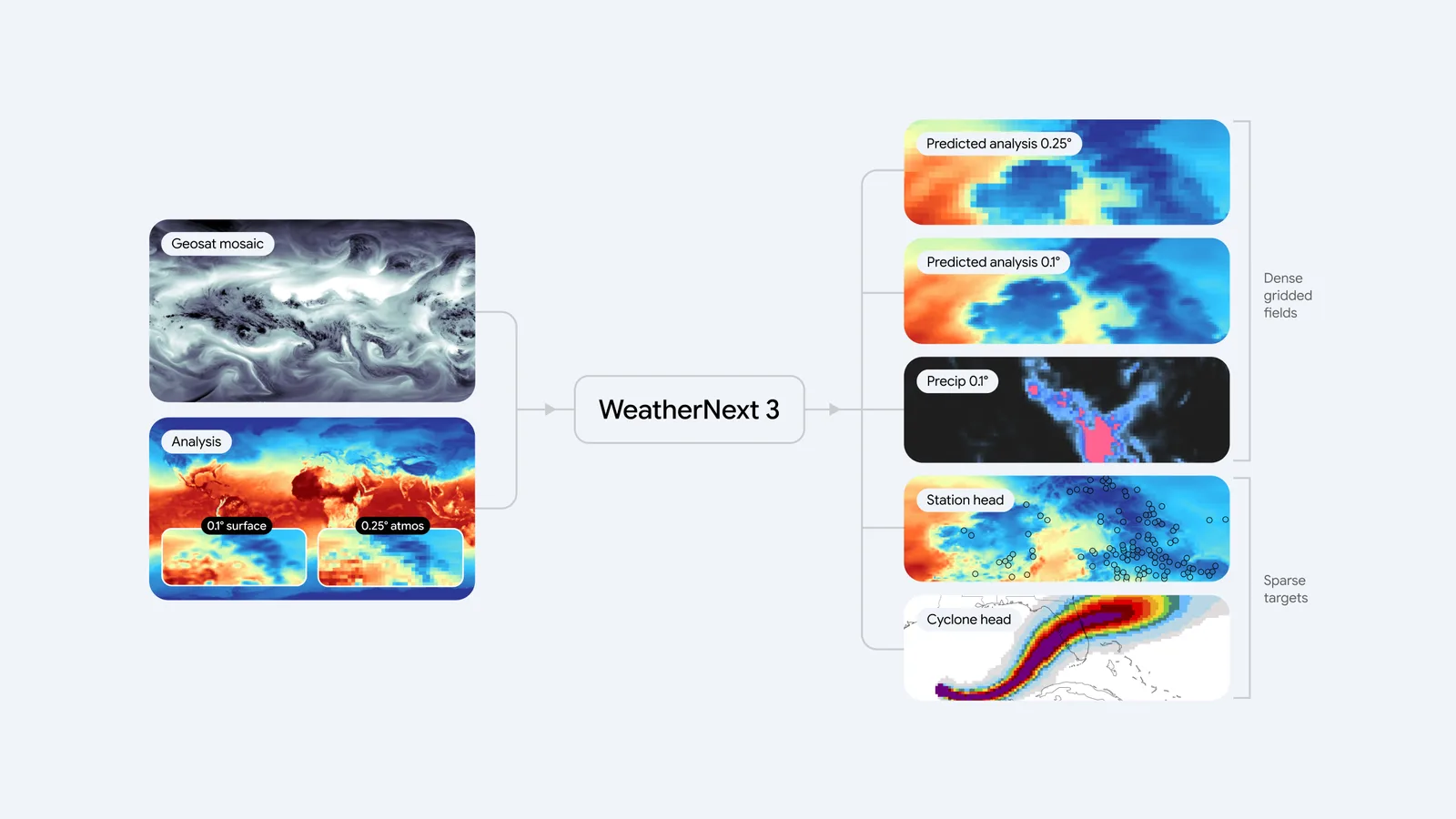
The model addresses three long-standing weaknesses of AI forecasting. First, it achieves a spatial resolution of 5 kilometers, a dramatic improvement over the 15-to-25-kilometer range typical of most AI weather models. Second, its rain-prediction evaluations are 60 percent more accurate than its predecessor, WeatherNext 2. Third, it generates forecasts every hour rather than the standard six-hour intervals, thanks to its ability to ingest real-time satellite observations.
These gains stem from deliberate architectural choices. WeatherNext 3 carries 2.4 times the parameters of the previous version, and its designers tuned the decoder heads to produce more actionable outputs. Uniquely, the model is also trained to target specific weather station locations — such as Denver International Airport — enabling both finer granularity and more meaningful validation against ground-truth measurements.
Raw Data and the Competitive Landscape
Google asserts that WeatherNext 3 is the first AI model to directly incorporate raw, real-time observational data for high-resolution global forecasting. However, the AI weather startup WindBorne maintains that its WeatherMesh 6 model has been using raw data from its fleet of weather balloons since late 2025. Google counters that its forecasts offer higher resolution on a global scale. Both approaches still depend on national weather datasets to some degree, meaning true end-to-end data assimilation remains an open challenge.
Broader Implications for Society and Industry
The transformer revolution in meteorology is already being adopted by European and American weather agencies, and its speed and low cost could bring reliable forecasts to developing regions where supercomputers and high-quality sensor networks have historically been out of reach. Bill Gates has highlighted AI-powered weather forecasting as a key benefit of the technology, particularly for improving agricultural yields in poorer nations. Meanwhile, researchers point to applications in renewable energy, where higher-resolution predictions of wind, rain, and cloud cover could make solar and wind projects more dependable.
« At the end of the day, Google is about providing useful information to the user, and a lot of what users are looking for has to do with the weather in some way or another, » said Ferran Alet, a staff research scientist manager at DeepMind. With WeatherNext 3 feeding into products billions of people already use daily, that vision is edging closer to reality.