

What Is Changing on Instagram
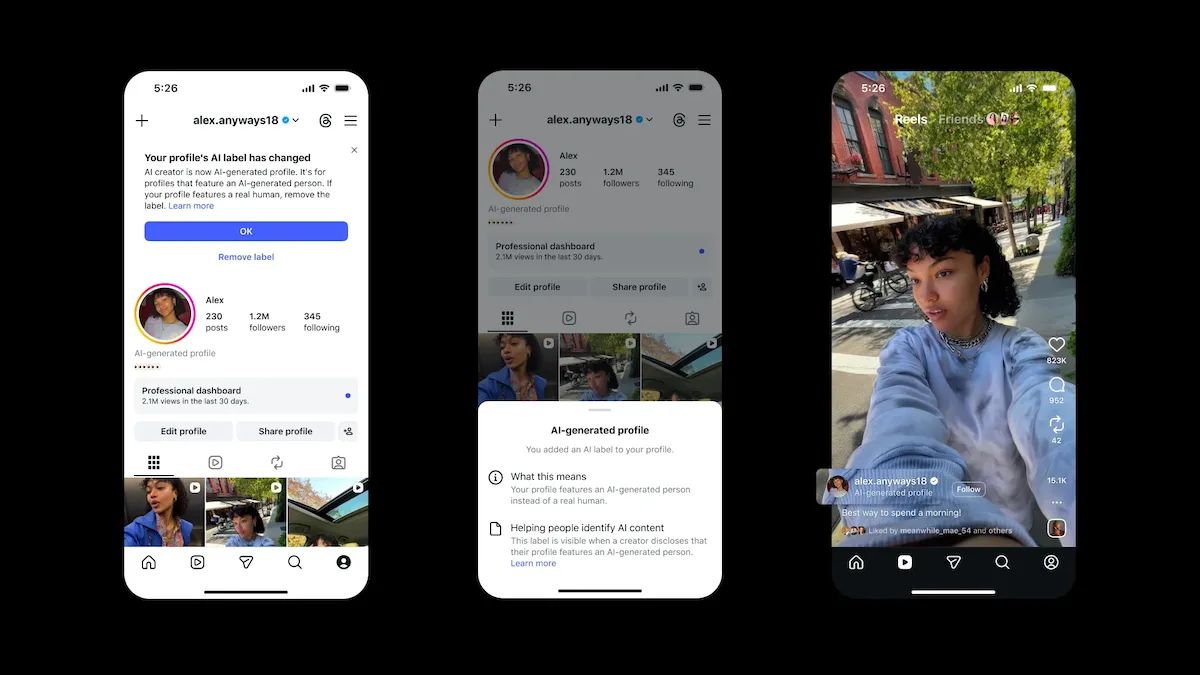
The platform is renaming its existing « AI creator » designation to « AI-generated profile, » a rebrand intended to make the purpose of the label immediately clear to anyone browsing a feed. The label signals that the person depicted on an account was created or substantially altered using artificial intelligence rather than being a real individual.
Creators who apply the updated label will not face any penalty for featuring an AI-generated person as their profile subject. However, accounts that use synthetic personas without proper disclosure could see their content reach significantly curtailed under the new enforcement policy.
Where the Line Is Drawn
Instagram clarified that the disclosure requirement does not extend to every creative use of AI. Users who rely on artificial intelligence tools to edit photographs, refine captions, design graphics, or apply other minor creative enhancements are not expected to apply the AI-generated profile label. The policy specifically targets accounts where the entire persona — not just an element of the content — is machine-generated.
Why the Timing Matters
The policy shift comes as user frustration with undetected synthetic profiles continues to mount. Instagram acknowledged that many people have encountered accounts that appeared entirely human, only to discover later that the person behind them did not exist. The company stated that audiences want immediate clarity when a profile features an AI-generated individual rather than a real person.
The broader landscape has grown more complicated as AI-driven influencers gain traction across social media. Investigative reporting this year uncovered a coordinated network of apparently synthetic male accounts promoting a dating application on Instagram, with some of those accounts reportedly sending direct messages to potential users to drive sign-ups. Separately, researchers identified hundreds of AI-generated health professionals and wellness personalities across social platforms promoting supplements and making medical claims to unsuspecting audiences.
Broader Regulatory Pressure on Social Media Platforms
The announcement lands amid intensifying scrutiny of how major social media companies handle synthetic content and its impact on users. Instagram previously faced significant backlash over a feature that let users generate images using likenesses from other people’s public content without explicit consent — a tool the parent company ultimately removed. In a separate development, the same corporation recently agreed to an $18 billion settlement with U.S. states over allegations related to the effects of its platforms on minors, which includes provisions for default daily usage limits for teenagers, a nighttime blocking mode, and muted notifications during school hours.
These converging pressures suggest that platforms will face increasingly strict expectations around transparency, user protection, and the ethical deployment of generative AI in the months ahead.