

A Sharp Reversal in Fed Rate Expectations
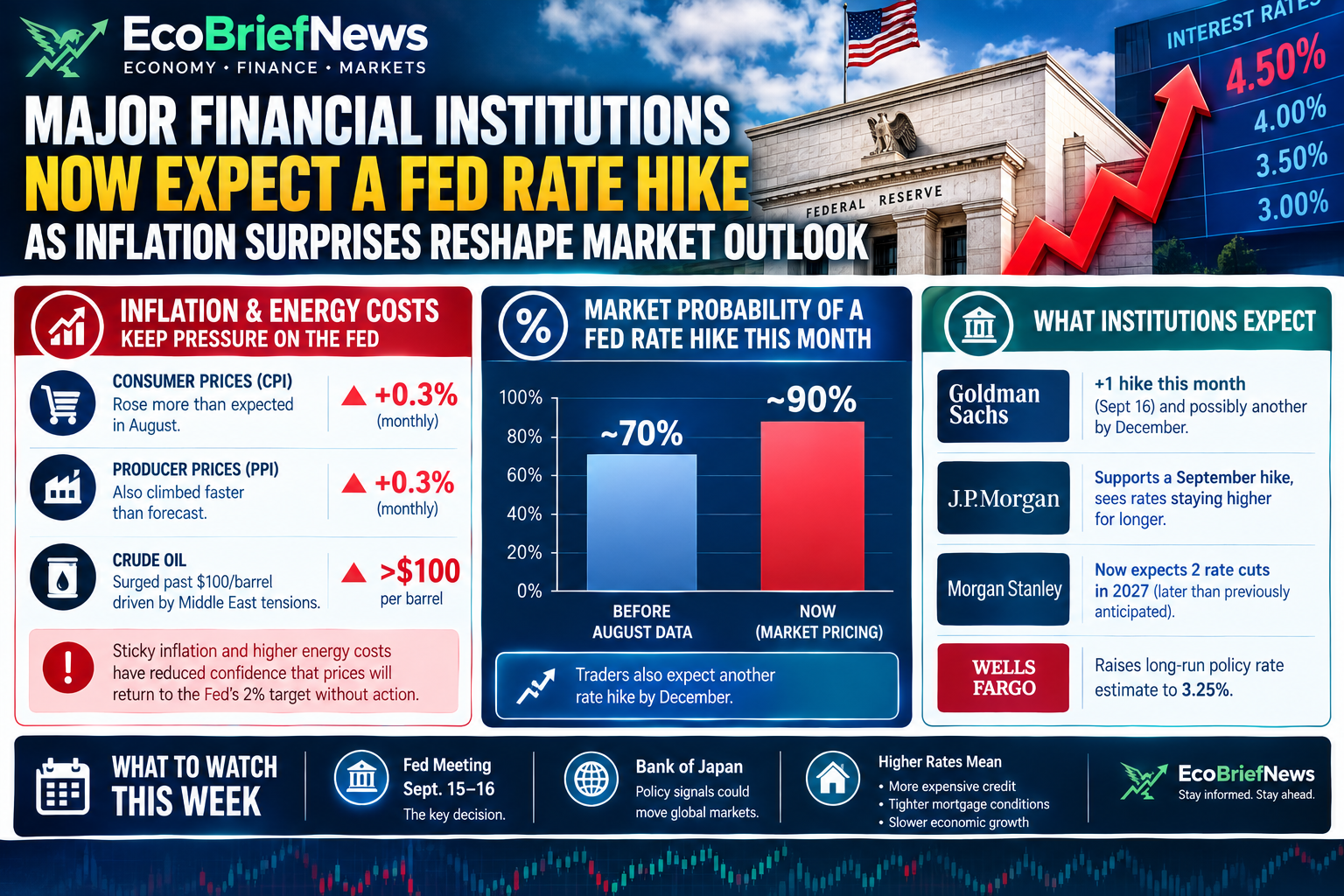
Just a few months ago, the dominant view among economists was that the Federal Reserve would keep interest rates unchanged throughout 2026, following a quarter-point rate cut back in December 2025. That outlook has now been upended by August’s inflation data, which showed both consumer and producer prices climbing faster than forecasters had projected.
Several prominent financial institutions have revised their forecasts accordingly, now calling for a quarter-point rate increase at the upcoming FOMC meeting scheduled for September 15-16. This marks a clear hawkish turn, with many analysts warning that inflation may not ease without further monetary tightening.
Why Inflation and Energy Costs Are Fueling the Shift
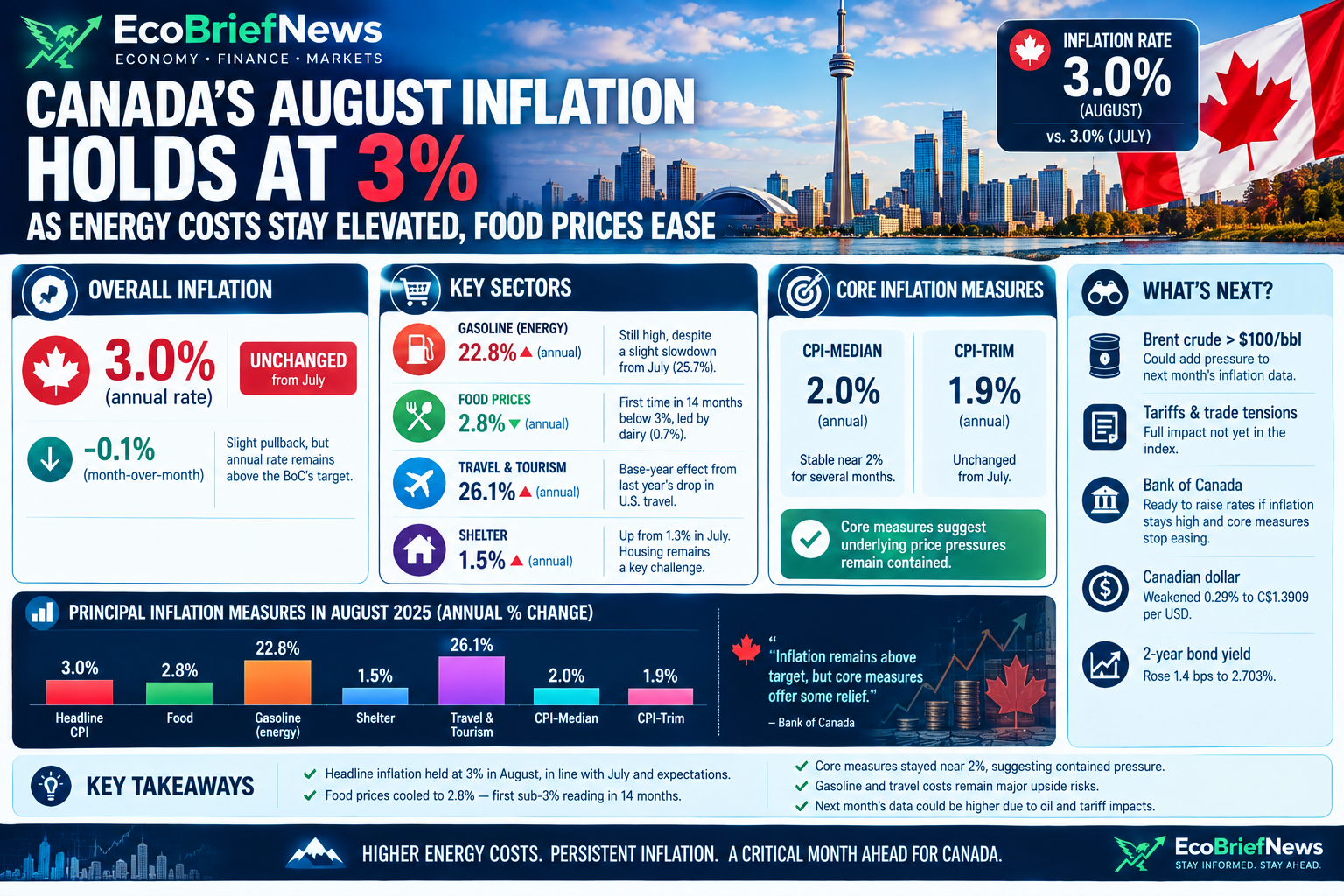
The August readings painted a troubling picture for policymakers. U.S. consumer prices rose beyond expectations, and producer prices followed a similar upward trajectory. Compounding the pressure, crude oil prices surged past the $100-a-barrel threshold, driven by renewed hostilities in the Middle East.
Analysts say the combination of sticky price pressures and elevated energy costs has eroded confidence that inflation will naturally return to the Fed’s 2% target without intervention. As one economist put it, the lack of progress on inflation has tipped the balance in favor of action, with waiting too long risking the entrenchment of higher price levels across the economy.
Markets Are Increasingly Betting on a Hike
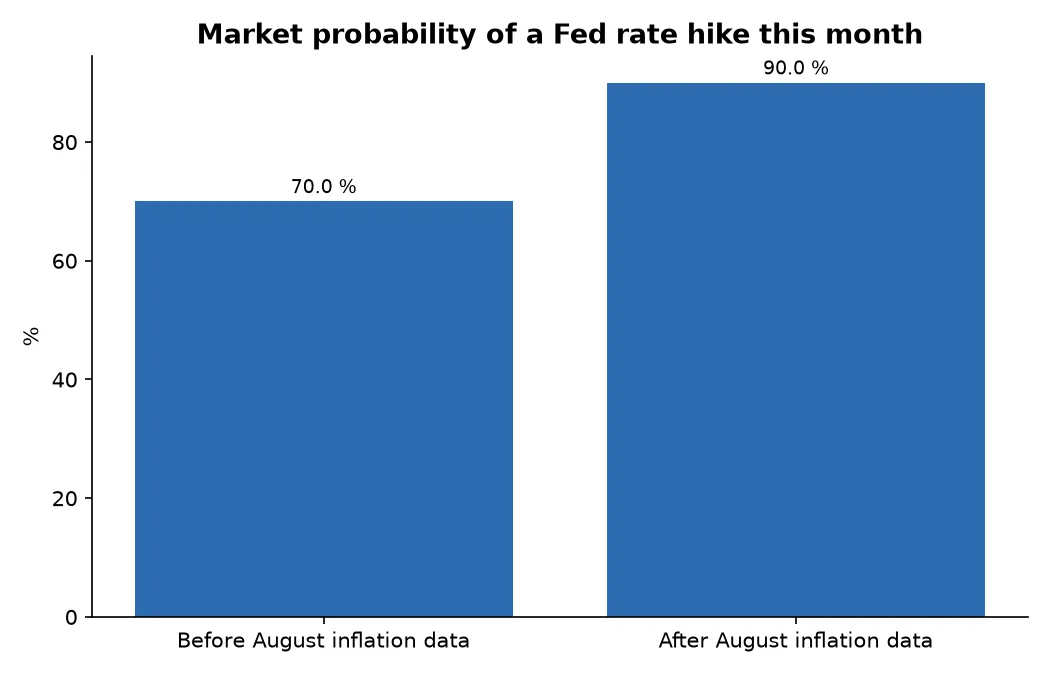
The trading world is reacting decisively. Data from CME’s FedWatch Tool shows that markets are now pricing in roughly a 90% probability of a quarter-point rate hike this month — a significant climb from around 70% before the latest inflation figures were released.
Beyond the immediate meeting, traders are already anticipating another potential increase by December. This suggests that policymakers and investors alike believe a single hike may not be sufficient to rein in persistent inflationary pressures, especially if energy markets remain volatile.
Diverging Views on the Long-Term Path
Not all institutions see eye to eye on what comes next. While some expect this week’s hike to be followed by additional tightening before year-end, others are taking a more measured stance. One major institution revised its outlook, now projecting two rate cuts in 2027 — though later than previously anticipated — treating the upcoming hike as driven more by market pricing than by core inflation fundamentals.
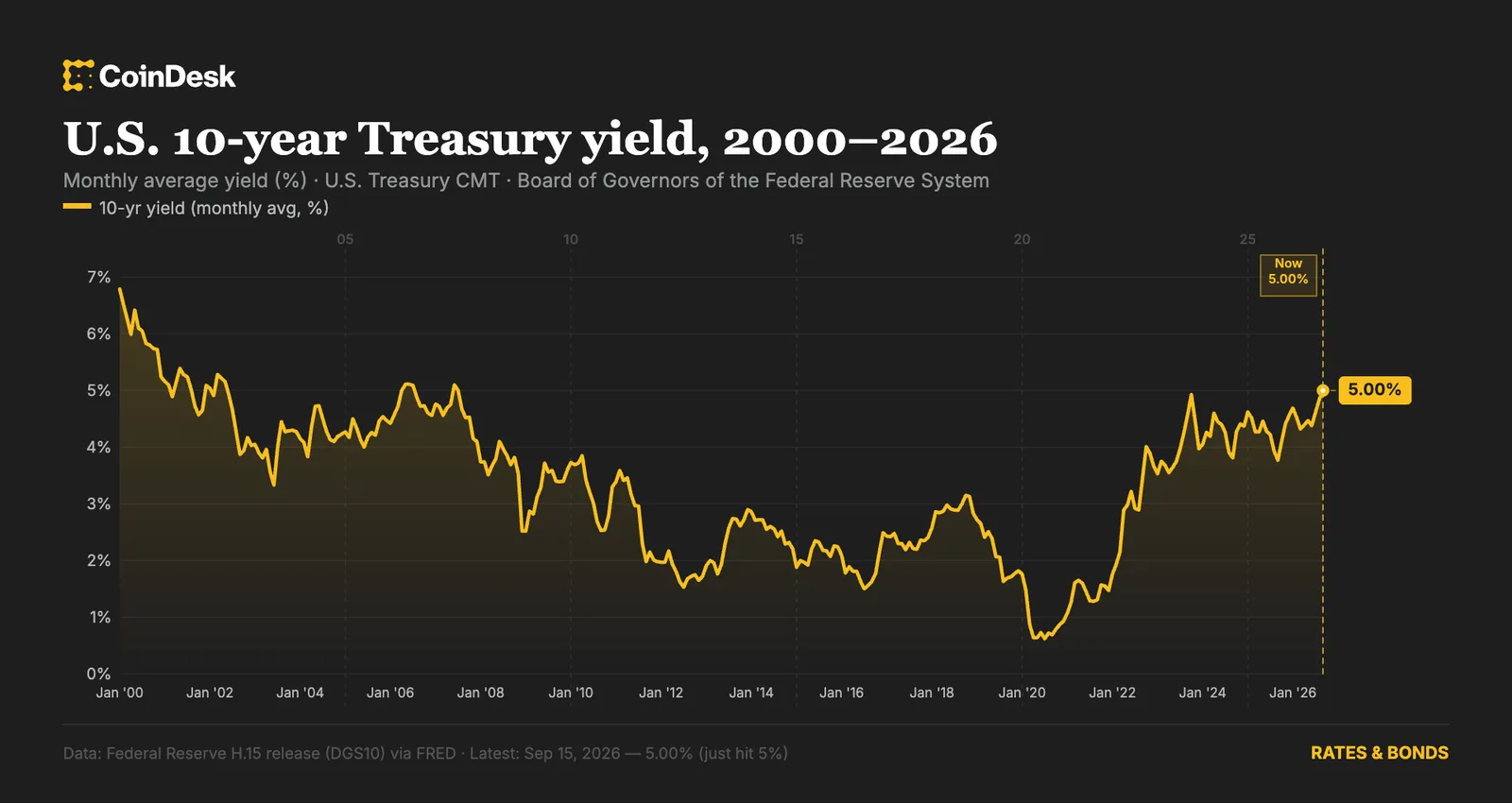
Meanwhile, another institution raised its estimate of the long-run policy rate to 3.25%, signaling a growing belief that the era of historically low borrowing costs is firmly behind us. This recalibration has important implications for mortgage rates, corporate lending, and investment yields going forward.
What to Watch This Week
The Fed’s concluding decision on Wednesday will be the central event, but global markets will also be watching the Bank of Japan closely for any policy signals that could ripple across international financial markets. Investors are bracing for a potentially pivotal announcement that could reshape the trajectory of borrowing costs for everything from home loans to corporate bonds.
For everyday Americans, the stakes are tangible: higher rates mean more expensive credit, tighter mortgage conditions, and potentially slower economic growth. If the Fed does move to hike this week, the ripple effects will be felt across household budgets and investment portfolios alike.