

The Dual Pressure of Yields and Retail Weakness
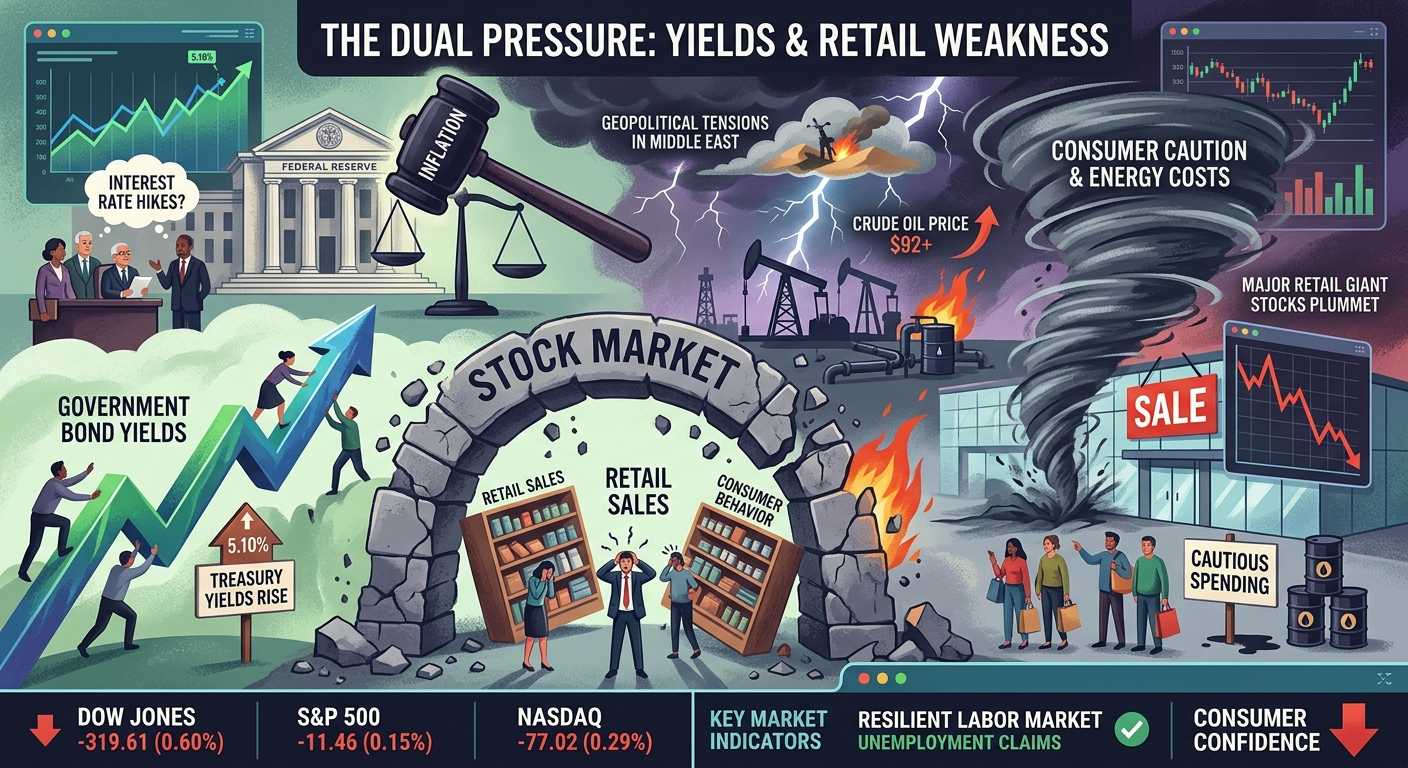
U.S. equity markets faced a challenging session as major indexes retreated. The downturn was fueled by a resurgence in government bond yields, which often acts as a headwind for stock valuations. As investors shift focus toward fixed-income returns, the pressure on equities becomes increasingly evident.
Adding to the complexity, the retail sector—a key indicator of economic health—showed signs of strain. A major retail giant saw its stock plummet after reporting quarterly sales that failed to meet market expectations. This decline was largely attributed to cautious consumer behavior, as rising energy costs force households to tighten their belts.
Geopolitical Tensions and Energy Markets
The energy sector remains a volatile component of the current economic landscape. Recent disruptions in Middle East supply chains, coupled with stalled diplomatic efforts, have driven oil prices higher for several consecutive sessions. This upward trend in energy costs creates a ripple effect, impacting both consumer spending power and corporate profit margins.
The instability in oil markets is closely linked to broader market sentiment. As energy costs rise, the cost of living increases, which in turn heightens inflation concerns. This is a critical metric for central bank policymakers, who are currently weighing the necessity of maintaining or even increasing interest rates to combat persistent inflationary pressures.
The Macroeconomic Outlook and Interest Rates
The Federal Reserve remains under the microscope as recent discussions among policymakers suggest a growing concern regarding inflation. The possibility of further interest rate hikes remains a central theme for market participants. Investors are closely monitoring upcoming commentary from regional Fed presidents to gauge the future trajectory of monetary policy.
Key Market Indicators at a Glance
While the tech sector saw some support from semiconductor leaders, the broader market reflected a cautious stance. The consumer staples and discretionary sectors were particularly hard hit, reflecting a broader trend of retreating consumer confidence. Despite this, the labor market appears to remain resilient, according to recent unemployment claims data.
Summary of Market Movement
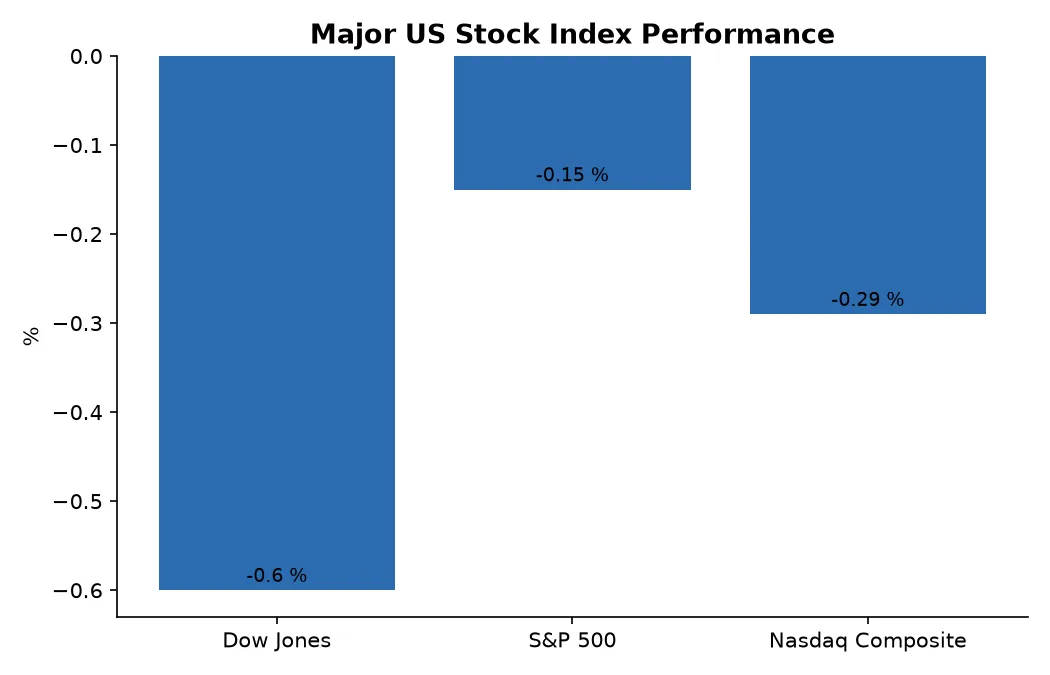
- Dow Jones Industrial Average: Fell by 319.61 points (0.60%).
- S&P 500: Decreased by 11.46 points (0.15%).
- Nasdaq Composite: Dropped by 77.02 points (0.29%).