


The Growing Energy Dilemma for Artificial Intelligence
The rapid expansion of artificial intelligence has created a massive, unpredictable appetite for electricity. Unlike traditional computing tasks, training large language models and handling real-time AI prompts causes power demand to fluctuate wildly. This volatility presents a significant challenge for traditional power infrastructure, which often struggles to balance sudden spikes in demand with steady generation.
For data centers, the goal is to secure a constant, reliable power supply. While natural gas turbines have been used to manage these swings, they often face mechanical stress from constant adjustments. To mitigate this, many operators have turned to massive battery banks, adding significant complexity and cost to their facilities.
A New Breed of Nuclear Reactors
Traditional nuclear plants are known for their high capacity factor, meaning they operate at maximum output for the vast majority of the time. In the United States, these plants typically run at full capacity about 92.5% of the time. However, their inability to quickly adjust output makes them difficult to pair with the intermittent nature of renewable energy or the erratic demands of a modern data center.
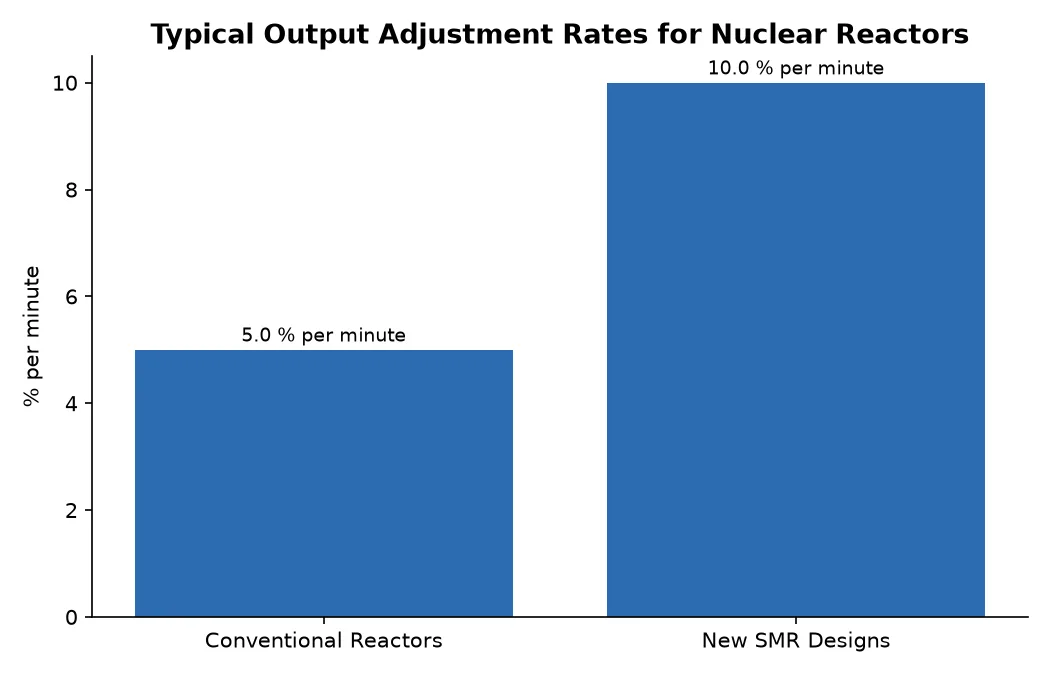
Newer Small Modular Reactors (SMRs) are aiming to solve this flexibility issue. While current SMR designs can adjust their output at a rate of roughly 10% per minute, they still face an economic hurdle: nuclear plants require massive upfront capital investment. To remain profitable, these plants need to operate at peak capacity as much as possible. Running them at a reduced output to match demand is not a sustainable business model.
The Molten Salt Advantage
A breakthrough approach involves decoupling the nuclear reaction from the immediate electricity supply. Instead of trying to throttle the reactor itself, new designs use thermal energy storage. In this model, the reactor continues to operate at a steady, maximum rate, producing intense heat that is captured and stored in a large reservoir of molten sodium.
This storage system acts as a thermal buffer, providing several key advantages:
- Grid Flexibility: The stored heat can be released to generate extra steam during periods of high demand, allowing the plant to respond to spikes instantly.
- Economic Efficiency: Because the reactor never needs to slow down, the high initial costs of the plant can be amortized over a much longer period of continuous operation.
- Renewable Integration: This ability to store energy makes nuclear power a perfect partner for wind and solar, which are inherently intermittent.
As tech giants seek massive, reliable energy contracts to fuel their AI ambitions, this hybrid approach—combining the steady power of nuclear with the flexibility of thermal storage—is positioned to become a cornerstone of the next generation of data center infrastructure.