

The GPU Story Is No Longer the Whole Picture
For years, Nvidia‘s identity in the AI era was straightforward: the company made the most powerful graphics processing units on the planet, and every AI company needed them. That narrative is now incomplete. While GPUs remain central to artificial intelligence workloads, Nvidia’s competitive edge has expanded into the infrastructure that surrounds those chips — and that shift could redefine how the industry thinks about AI hardware advantage.
Competition Heats Up at the Chip Level
Between early 2023 and mid-2025, Nvidia’s market valuation multiplied tenfold, fueled by insatiable demand for its accelerators. But over the past year, the stock’s ascent has cooled as Amazon, Google, and other hyperscalers began designing their own silicon. Investors started asking a pointed question: how long can Nvidia’s dominance truly last when the biggest customers are becoming competitors?
The answer, according to recent developments, lies in a layer of the stack that many overlooked.
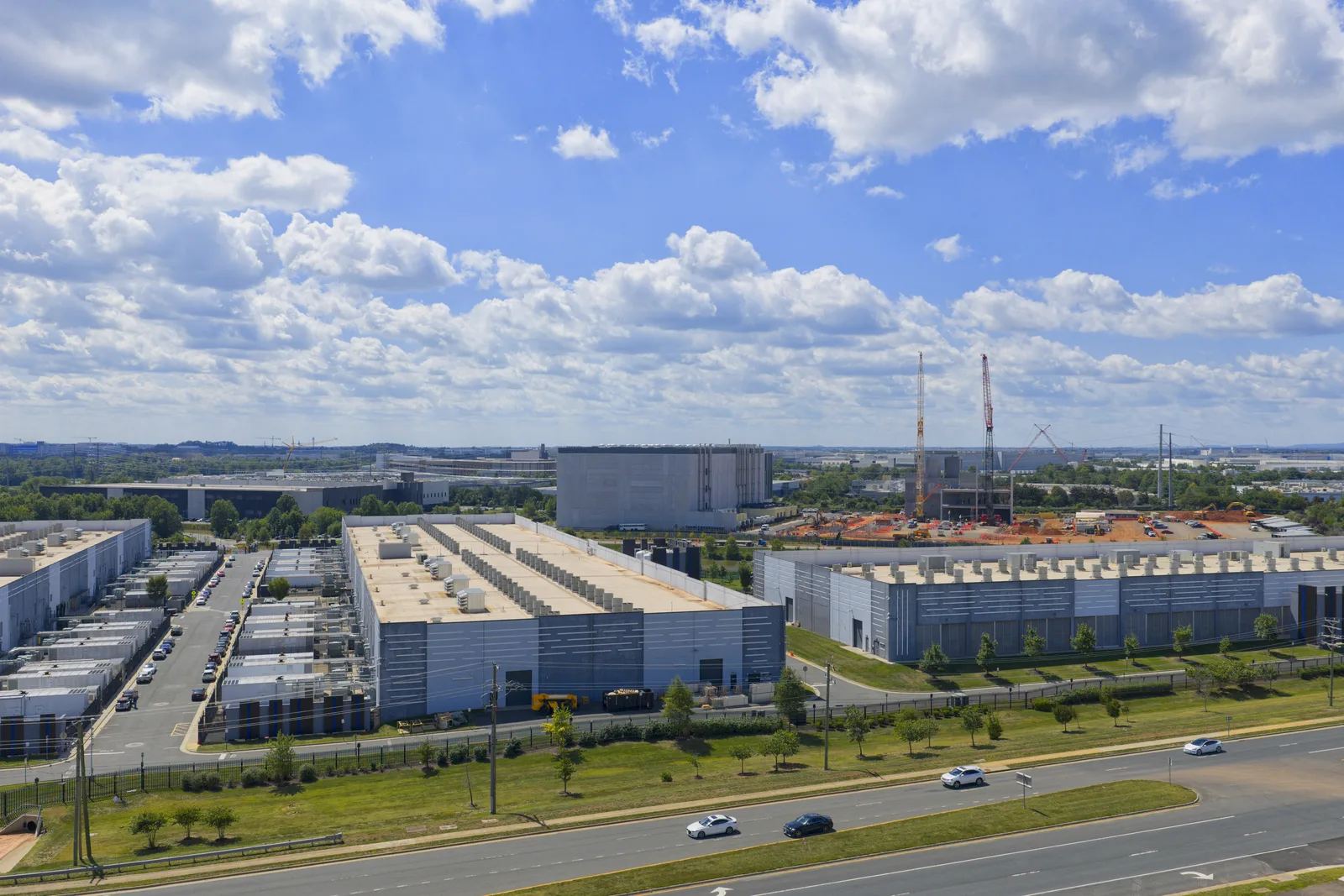
The Real Moat: Orchestrating Gigawatt-Scale AI
As AI data centers swell to gigawatt-scale operations, the challenge is no longer just about raw compute power — it’s about coordination. Moving data efficiently between processors, memory, storage, and networking equipment has become a critical bottleneck. And this is where Nvidia has been quietly building a formidable lead.
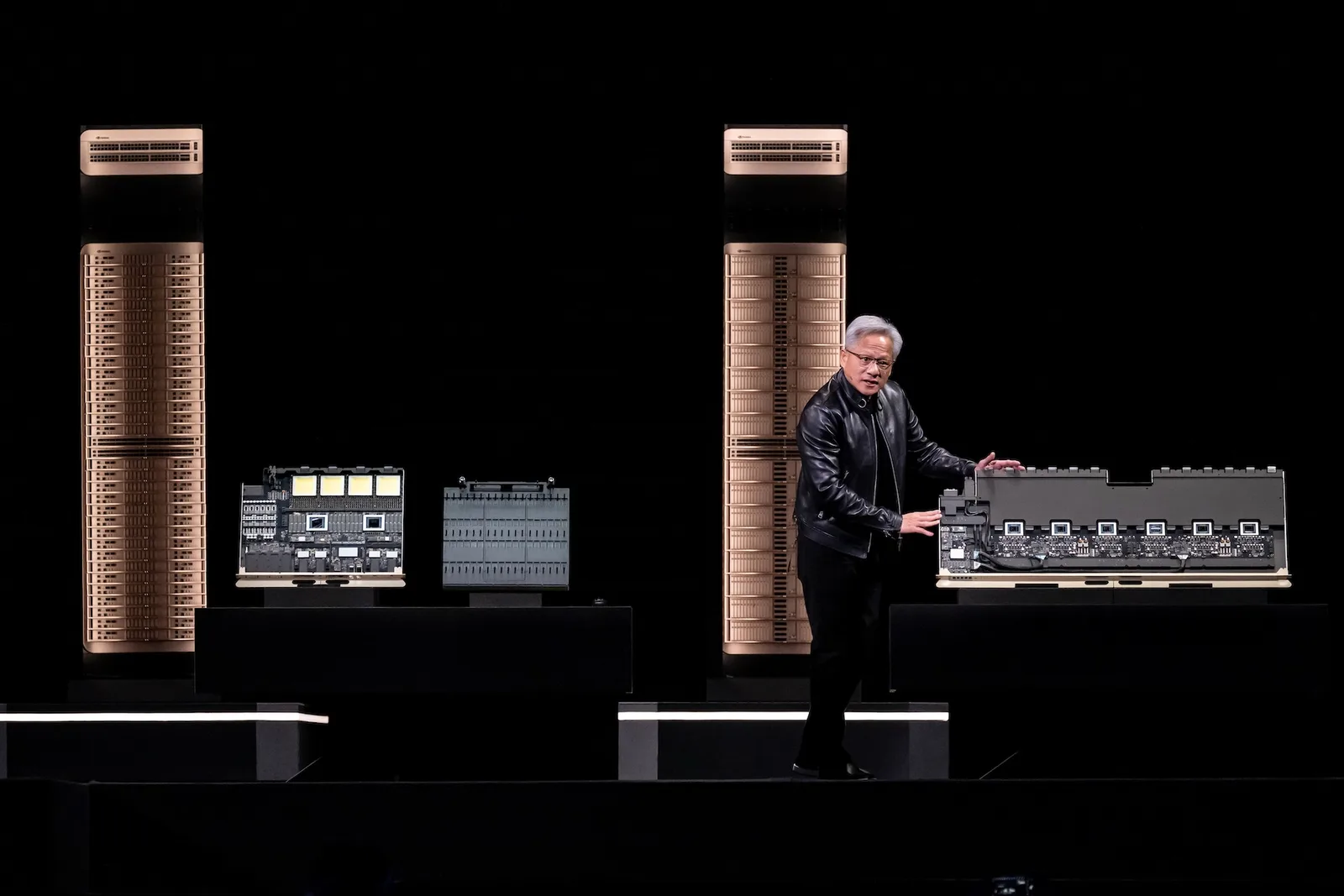
The company’s newly rolling-out Vera Rubin platform illustrates the strategy. Rather than shipping a single GPU, Nvidia is delivering an integrated stack: the Rubin GPU paired with the Vera CPU, the Groq 3 LPX inference accelerator, and dedicated racks for storage and networking. Each component is engineered to ensure the others operate at peak efficiency.
« If the GPU is the engine, these other components are the rest of the car, » described one Nvidia storage technology executive, explaining that these systems don’t generate tokens — they make sure everything around the GPU runs without friction.
Data Movement: The Hidden Battlefield
The Vera CPU addresses a specific and growing problem: as memory capacity expands in modern servers, getting data to the GPU at precisely the right moment becomes enormously complex. Nvidia’s vice president of storage technology noted that the Vera CPU delivers up to a threefold improvement in data orchestration operations, allowing the company’s flash storage to perform at full capacity without becoming a bottleneck.
This insight — that smarter data traffic control matters as much as raw processing — is not unique to Nvidia. OpenAI recently revealed its Jalapeño chip, designed with the explicit goal of minimizing data movement by keeping entire workloads within a single integrated system. Different architecture, same philosophy: efficiency comes from intelligent routing, not just more transistors.
What This Means for the AI Hardware Race
Nvidia’s expansion into system orchestration doesn’t guarantee victory. The company will face competition at this new layer just as it has on the GPU front — from chipmakers, hyperscalers, and startups alike. But the nature of the competition has fundamentally shifted. Building a rival GPU is one challenge; designing an entire data center ecosystem that works harmoniously is an entirely different proposition.
In the early going, Nvidia appears to hold a significant advantage. Its years of experience building tightly integrated hardware stacks give it a head start in a domain where software alone cannot compensate for poorly orchestrated infrastructure. As AI deployments grow larger and more complex, the companies that master the full system — not just the chip — will define the next era of the industry.