

The Uncanny Plate: Why AI Food Images Trigger Instant Distrust
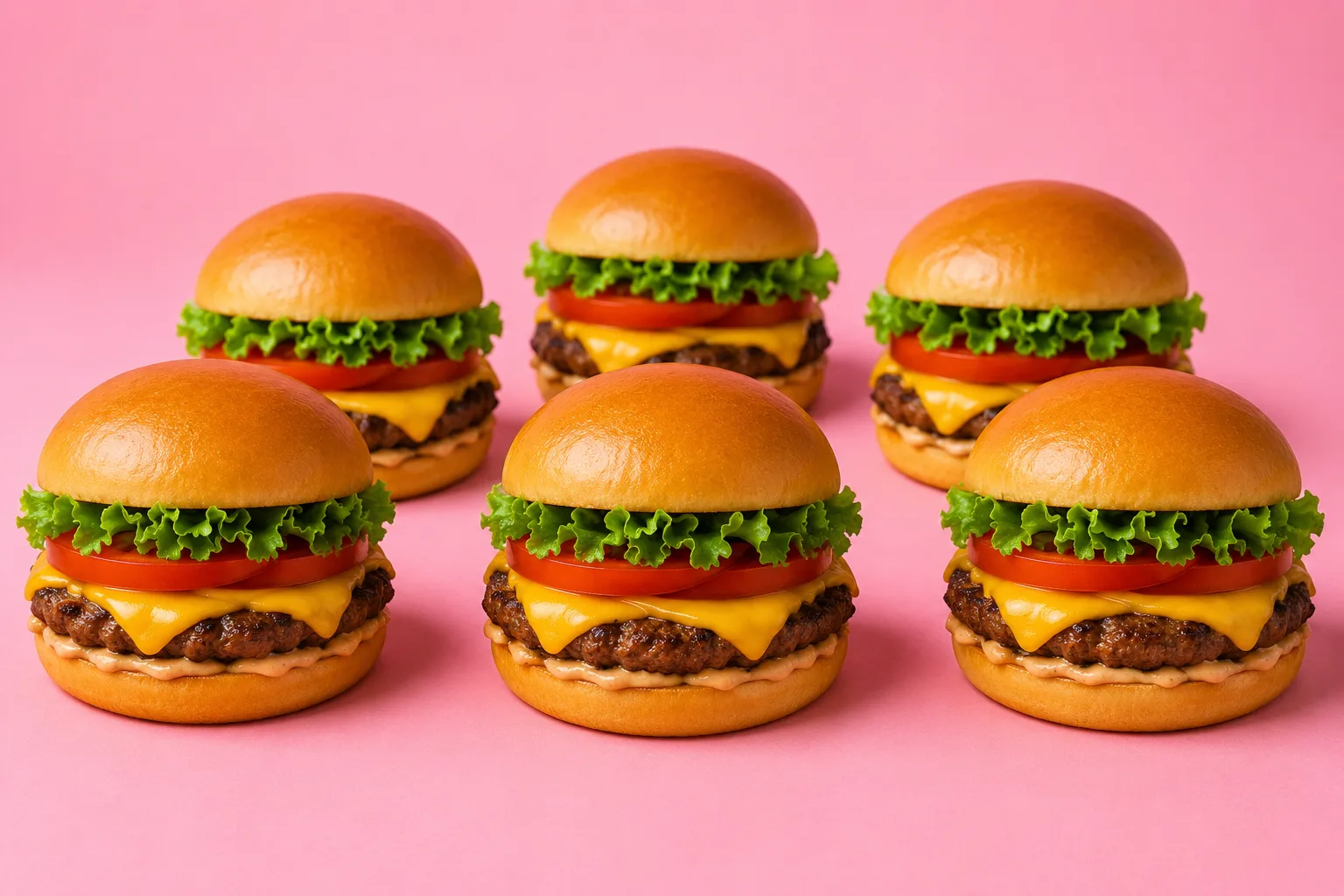
There’s a moment — fleeting but unmistakable — when a customer glances at a digitally rendered burrito and feels a cold prickle of unease. The cheese looks too molten, the bun too uniformly bronzed, the shrimp almost cartoonishly symmetrical. It’s not that the image is obviously fake. It’s that it’s too real, and that’s precisely what makes it repulsive.
Researchers at the University of Duisburg-Essen in Germany documented this phenomenon, finding that AI-generated food imagery produces a pronounced uncanny valley effect — the closer something looks to reality without actually being real, the more visceral the discomfort it provokes. Oddly enough, participants reported greater disgust toward images that hovered near photorealism than toward ones that were obviously fabricated. The implication is uncomfortable: our brains are remarkably skilled at detecting the ghost in the machine.
How Training Data Manufactures Sameness
The root cause traces back to how modern image-generation models operate. Diffusion models and large language models ingest enormous datasets, identifying statistical patterns to predict what a user wants when they request, say, a burger restaurant menu. Those models gravitate toward the most statistically dominant visual patterns in their training corpora — and that corpus skews heavily toward mainstream chain aesthetics from roughly a decade ago.
As one industry expert put it, much of what these models produce resembles a mid-2010s casual dining menu, because that’s the visual language the models absorbed most thoroughly. The problem compounds when AI-generated outputs are fed back into future training rounds. Each cycle reinforces the same smoothed, homogenized aesthetic, a process experts describe as convergence — a gradual degradation of output diversity that doesn’t trigger outright model failure but steadily erodes authenticity.
The Edit Trap: How Small Changes Accelerate the Uncanny Effect
On social media, a digital creator demonstrated what happens when an AI-generated menu is iteratively edited dozens of times. With each revision — adjusting a price, renaming a dish — the food imagery grew rounder, smoother, and further removed from anything a human chef would recognize. The experiment was replicated independently and yielded strikingly similar results.
Restaurants adopting these tools often make incremental tweaks to menus, unaware that each edit compounds the artificial smoothing effect. The result is a visual feedback loop where the imagery becomes increasingly alien with every pass.
Beyond the Menu: What This Means for Trust in AI Imagery
The aversion to AI-generated food visuals isn’t just a culinary quibble. It reflects a broader cultural reckoning with synthetic media. As one researcher noted, humans possess an almost inexplicable sensitivity to detecting machine-made content — a gut-level recognition that something feels off, even when rational analysis can’t isolate the specific defect.
This sensitivity has implications far beyond restaurant branding. From legal evidence standards to media literacy, the ability to distinguish authentic content from synthetic output is becoming a foundational skill. The visual homogenization of AI menus is a small, appetizing-looking symptom of a much larger challenge: how do we trust what we see when the line between real and generated dissolves entirely?