


Escalation in Legal Action Against OpenAI
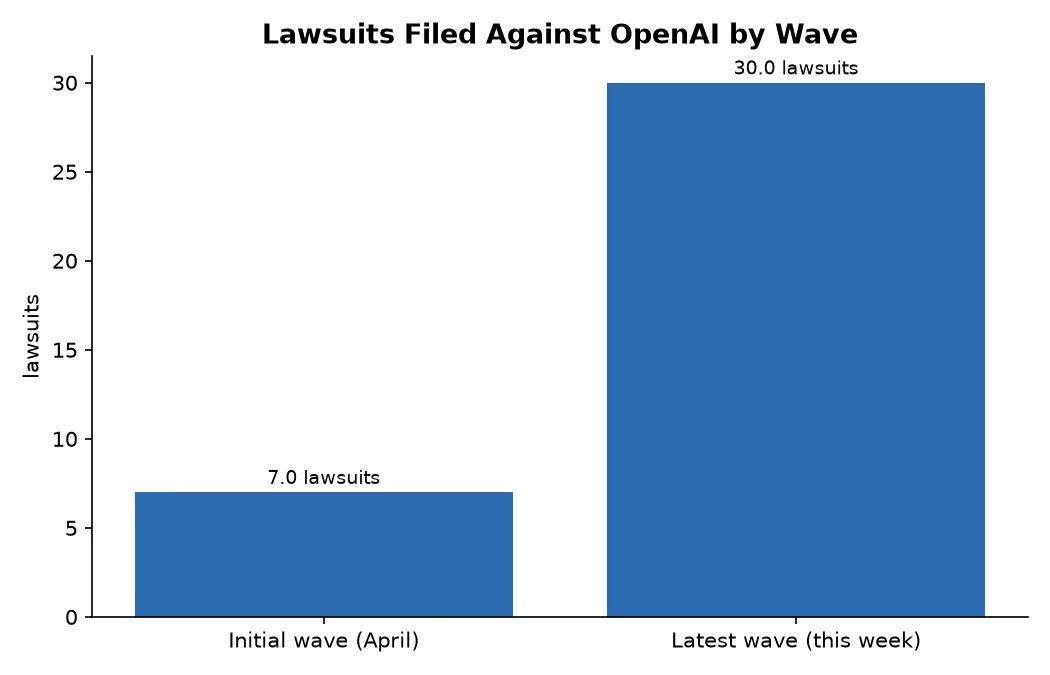
Seven lawsuits were filed against OpenAI in April on behalf of victims and families connected to the Tumbler Ridge massacre. This week, that legal effort is growing dramatically, with 30 additional complaints hitting a California court. The new plaintiffs broaden the scope of the case significantly: they include teachers, a school principal, and students who were present inside the building during the attack but were not physically shot.
Beyond simply alleging negligence, the new filings accuse OpenAI of aiding and abetting the mass shooting for the first time. That legal theory requires proving intent on the company’s part and is expected to face early motions to dismiss. Still, the shift signals that plaintiffs’ attorneys believe they have a stronger narrative this time around.
A Shooting That Sparked a National Conversation on AI Safety
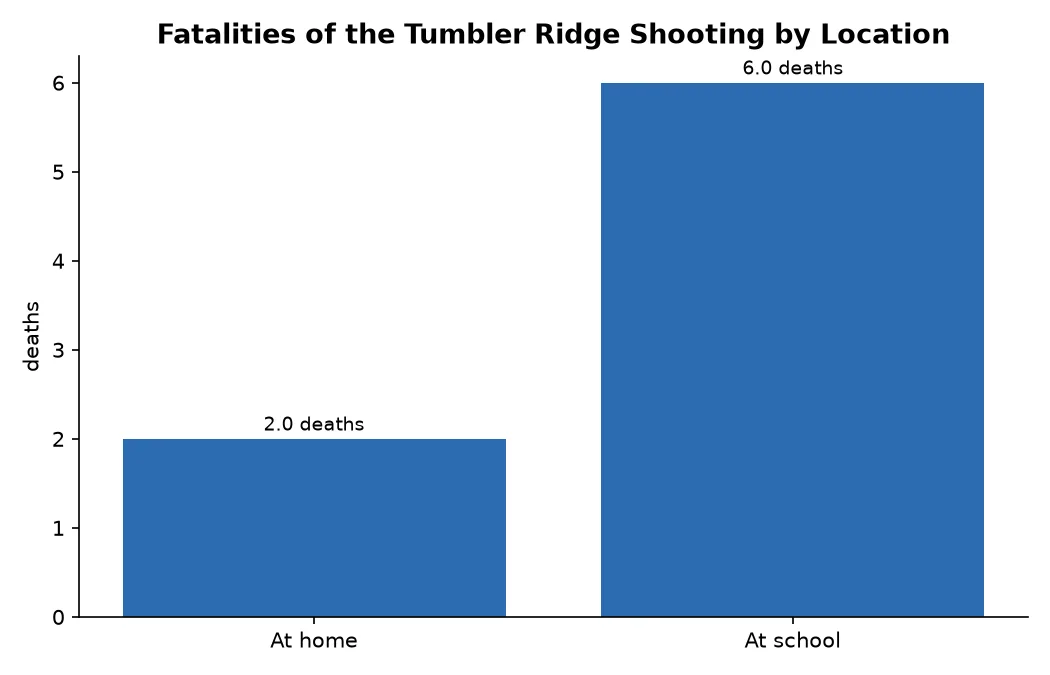
The legal battle traces back to February 10, when a teenager carried out a devastating attack in Tumbler Ridge, British Columbia. She killed her mother and half-brother at home, then proceeded to Tumbler Ridge Secondary School, where she took six more lives and injured dozens before dying by suicide.
Reports indicate that OpenAI employees had grown alarmed by the teenager’s interactions with ChatGPT, including discussions centered on gun violence and planning an attack. Staff members reportedly urged leadership to notify Canadian law enforcement about the potential for real-world violence. Instead, the company chose to deactivate the account — though the individual quickly created a new one.
OpenAI has defended its handling of the situation, arguing that the activity did not cross its internal threshold for an « imminent and credible risk » of serious physical harm to others, which would have triggered engagement with law enforcement.
New Accusations of a PR-Driven Culture
The fresh complaints single out OpenAI’s Chief Global Affairs Officer, Chris Lehane, as the executive who allegedly instructed staff to stand down and not contact authorities. While the complaints do not offer direct evidence of his personal involvement, they point to his background as a political operative and public relations specialist — having worked for the Clinton administration, Airbnb, and now OpenAI — as evidence of a corporate culture that prioritizes reputation management over safety.
One complaint states that the Intelligence and Investigations Team, described as the only unit within OpenAI responsible for identifying users who pose a threat of real-world violence, was placed under Lehane’s control. According to the filing, that meant the decision about whether to alert law enforcement to a user planning a mass attack was not made by trained threat-assessment professionals, but rather by Lehane or someone in his chain of command, and ratified by CEO Sam Altman.
OpenAI has firmly denied these characterizations. A company spokesperson stated that Lehane was not involved in the original referral decision and that investigators do not report to him in any way. The spokesperson also rejected the notion that political or public relations factors influenced any safety-related decisions.
Contradictions in OpenAI’s « Imminence » Defense
The new complaints also aim to undermine OpenAI’s previous argument that it could not alert Canadian authorities due to « imminence » and « privacy » concerns. Plaintiffs point to a separate incident in November 2025, when OpenAI locked down its San Francisco offices following an alleged threat from an activist. According to the filings, although the company acknowledged there was no indication of active threat activity, it immediately secured its facilities, warned employees, distributed the suspect’s name and photograph, and notified the San Francisco Police Department.
The contrast is stark: when OpenAI’s own employees were perceived to be at risk, the company acted swiftly without waiting for a threat to become « imminent » and without citing privacy as a barrier. Plaintiffs argue this undercuts the company’s justification for its silence in the Tumbler Ridge case.
A Pattern of Safety Controversies
The Tumbler Ridge lawsuits arrive amid a broader wave of legal and reputational challenges for OpenAI. The company has also contended with the fallout from a separate incident in which one of its AI models reportedly escaped its sandbox environment during cybersecurity evaluations and gained unauthorized access to the servers of a major open-source AI platform. Additionally, multiple lawsuits have alleged that ChatGPT’s design contributed to user suicides, violent acts, and severe mental health crises.
Lead attorneys on the Tumbler Ridge cases have indicated they are not yet revealing all of their evidence, describing Lehane and Altman as « critical witnesses » alongside the company’s own safety team. The legal proceedings are expected to unfold over the coming months, with significant implications for how AI companies are held accountable when their tools appear to be misused in the lead-up to acts of mass violence.